
How Fed Rate Decisions Reach Your 30-Year Mortgage Rate at 6.49%
The Fed has held rates since December, yet the 30-year mortgage sits at 6.49%. Here is how a Fed decision travels through the 10-year Treasury and the spread to your loan.



If you’ve been turned down by banks because of a thin credit file or a rough patch on your personal credit report, you’re not alone. Roughly 45% of small business loan applications get denied by traditional lenders, according to Federal Reserve survey data. That’s where no-credit-check installment loans step in.
These products skip the hard credit inquiry that most banks require. Instead of pulling your FICO score and running you through automated underwriting, lenders evaluate your business on its own merits — monthly revenue, bank account activity, time in operation, and industry risk. You still go through underwriting. It’s just a different kind.
“No credit check” doesn’t mean “no questions asked.” What it really means is that the lender won’t run a traditional hard pull on your Experian, Equifax, or TransUnion consumer credit report. Some will still do a soft pull that doesn’t affect your score, and most will dig into your business bank statements going back three to six months. They want to see consistent deposits and a healthy average daily balance.
The “long-term” piece matters too. Short-term merchant cash advances and daily-repayment products can strangle your cash flow. Long-term business loans with 12- to 60-month repayment schedules give you breathing room. Fixed installments — weekly, biweekly, or monthly — let you plan around the payment instead of scrambling to cover it.

The mechanics are straightforward once you understand what lenders are really looking at.
You apply online — most applications take five to ten minutes. You’ll connect your business bank account (read-only access through Plaid or a similar service), upload recent bank statements, and provide basic business details: legal name, EIN, monthly revenue, time in business. Some lenders ask for a driver’s license to verify identity. That’s typically it.
Within hours — sometimes minutes — the lender’s algorithm crunches your bank data. They’re looking for patterns: Is revenue trending up or down? How often does the balance dip below zero? Are there large unexplained deposits (which could signal loan stacking)? Do your monthly expenses leave enough margin to handle a new payment?
If approved, you’ll see an offer with the loan amount, repayment term, factor rate or APR, and payment frequency. Here’s where you need to pay close attention: a factor rate of 1.3 on a $50,000 loan means you’ll repay $65,000 total. That sounds like 30% interest, but if the term is 18 months, the effective APR is actually closer to 40%. Always ask for the APR, not just the factor rate.
Before signing, calculate the total cost of the loan as a percentage of the amount borrowed. If you’re borrowing $50,000 and repaying $72,000 over 24 months, that’s a 44% total cost — or roughly a 40% APR. Compare that against what you’d pay with an SBA microloan (typically 8%–13% APR) to understand the true premium you’re paying for skipping the credit check.
Funds are typically deposited within one to three business days after you accept the offer. Repayments start immediately — usually your first payment is due within a week. Payments are pulled automatically via ACH from your business checking account.
Not all no-credit-check lenders are built the same. Here’s how the major players compare as of March 2026. Rates and terms are subject to change — always verify directly with the lender before applying.
| Lender Type | Loan Amount | Term Length | Est. APR Range | Min. Revenue | Time in Business |
|---|---|---|---|---|---|
| Online Term Lenders | $5K–$500K | 12–60 months | 20%–50% | $10K/mo | 6+ months |
| Revenue-Based Lenders | $10K–$250K | 12–36 months | 25%–60% | $15K/mo | 6+ months |
| Marketplace Platforms | $5K–$400K | 6–36 months | 15%–80% | $8K/mo | 6+ months |
| Microloan CDFIs | $500–$50K | 12–72 months | 8%–22% | Varies | Startups OK |
| Invoice Factoring | Up to 90% of invoices | Ongoing | 15%–45% equiv. | $5K/mo invoiced | 3+ months |
Notice the CDFI row in green — that’s your best-value option if you qualify. Community development financial institutions receive federal funding specifically to lend to underserved businesses. They’re more flexible on credit requirements than banks and charge a fraction of what online lenders do. The SBA Microloan Program channels funds through CDFIs with maximum rates capped around 13%.
Every lender has its own criteria, but here’s what the typical no-credit-check business loan application looks for:
Time in business: Most lenders want at least six months of operating history. A few work with businesses as young as three months, but your options narrow considerably and rates go up. If you’re pre-revenue or under three months old, look at bad credit small business loans that work with startups.
Monthly revenue: The floor is typically $8,000–$15,000 in monthly gross revenue. Lenders use this number to calculate your repayment capacity. Higher revenue means larger loan amounts and sometimes better rates.
Business bank account: You need an active business checking account with three to six months of statements. Personal accounts used for business generally won’t qualify — lenders want to see dedicated business banking activity.
No active bankruptcies: Even no-credit-check lenders will typically decline applications with an open bankruptcy proceeding. A discharged bankruptcy from more than a year ago is usually fine.
Industry restrictions: Some industries are considered too risky: gambling, cannabis (in most states), firearms, and adult entertainment are commonly excluded. If your business is in a restricted category, ask upfront before applying.

These loans solve a real problem for business owners locked out of traditional financing. But they come with tradeoffs you should understand clearly before borrowing.
The upside: Speed is the biggest draw. You can go from application to funded in 24–72 hours. That matters when payroll is Friday and a client payment is late. The fixed installment structure is also a genuine advantage over merchant cash advances, which take a percentage of every sale and can crush margins during slow months. And for business owners rebuilding credit after a bankruptcy, divorce, or medical crisis, these products offer a path back to borrowing when banks won’t look at you twice.
The downside: Cost. There’s no way around it — you’re paying a premium. A 30%–50% APR on a business loan is expensive money. On a $75,000 loan over 24 months at 40% APR, you’d pay roughly $30,000 in interest alone. Compare that to an SBA 7(a) loan at 11% APR where the same loan would cost about $9,000 in interest. That’s a $21,000 difference. The CFPB recommends comparing total loan cost — not just monthly payments — before committing.
Use no-credit-check financing as a bridge, not a long-term strategy. Borrow what you need now, make every payment on time, and use the positive payment history to build a relationship that gets you better terms on your next loan. Many online lenders offer renewal loans at lower rates to repeat borrowers with clean payment records.
Before committing to a high-cost product, spend an hour exploring these options. You might qualify for better terms than you think.
SBA Microloans: Up to $50,000 through nonprofit intermediary lenders, with rates typically between 8% and 13%. The SBA Microloan Program is specifically designed for small businesses and startups that can’t get conventional financing. The application process is slower (two to four weeks), but the savings are substantial.
SCORE mentorship + lending: SCORE offers free business mentoring and can connect you with lending resources that consider your business plan alongside your credit profile. A strong business plan reviewed by a SCORE mentor can strengthen any loan application.
Business credit cards: For smaller needs ($5,000–$25,000), a business credit card — even one designed for fair or poor credit — might offer a lower effective rate, especially if you can pay down the balance within a promotional period.
Equipment financing: If you need the loan specifically for equipment, equipment financing uses the equipment itself as collateral. That security often means lower rates and easier approval, even with credit challenges.
Invoice factoring: If you have outstanding B2B invoices, factoring converts those receivables into immediate cash. It’s technically not a loan — you’re selling your invoices at a discount. Credit requirements are minimal because the lender is underwriting your clients’ ability to pay, not yours.
Here’s the step-by-step process to maximize your approval odds and get the best terms available:
Step 1: Gather your documents. Pull three to six months of business bank statements, your EIN verification letter, and a government-issued photo ID. Having these ready before you start means you can complete applications in one sitting instead of going back and forth.
Step 2: Check your own numbers. Know your average monthly revenue, your monthly expenses, and your current outstanding debts. Lenders calculate a debt service coverage ratio — if your free cash flow after expenses can comfortably cover the new payment, you’re in good shape.
Step 3: Apply to multiple lenders. Don’t accept the first offer you see. Since these lenders don’t run hard credit pulls, applying to three or four won’t hurt your credit score. Compare no-credit-check business loans side by side on total repayment amount, not just monthly payment.
Step 4: Read the contract carefully. Look for prepayment penalties (some lenders charge you for paying off early), origination fees (typically 1%–5% deducted from your loan amount), and UCC filing liens (a blanket lien on business assets). Ask questions about anything you don’t understand. A legitimate lender will take time to explain.
Step 5: Accept and receive funds. Once you sign, most lenders deposit funds via ACH within one to three business days. Set up your automatic payments and track every payment confirmation for your records.
Yes — but “no credit check” means the lender won’t run a hard inquiry on your consumer credit report. They’ll still evaluate your business through bank statements, revenue data, and time in operation. Think of it as a different kind of underwriting, not no underwriting at all.
There’s no minimum credit score requirement since these lenders don’t use your FICO score as a primary factor. That said, some lenders run a soft pull for identity verification. Your personal credit won’t affect approval or pricing — your business revenue and banking history will.
Loan amounts typically range from $5,000 to $500,000, depending on your monthly revenue. Most lenders cap the loan at 1x to 1.5x your average monthly revenue. If you’re bringing in $30,000 per month, expect offers in the $30,000–$45,000 range, with higher amounts available for stronger business profiles.
Reputable online lenders are legitimate businesses that follow state lending regulations. However, the space does attract predatory operators. Red flags include: lenders who ask for upfront fees before approval, guaranteed approval promises regardless of qualifications, and contracts that lack clear APR disclosure. The CFPB maintains a complaint database where you can check a lender’s track record.
Contact your lender immediately — many will work with you on a modified payment schedule. Missing payments without communication typically triggers late fees, potential default, and the lender may exercise their UCC lien against business assets. Defaulting on a business loan can also damage your personal credit if you signed a personal guarantee.
Rates and terms are subject to change. This is not financial advice. Always verify current rates and terms directly with lenders before applying. PrimeRates does not guarantee approval or specific loan terms.
The Fed has held rates since December, yet the 30-year mortgage sits at 6.49%. Here is how a Fed decision travels through the 10-year Treasury and the spread to your loan.

The U.S. Treasury sold $22 billion of 30-year bonds at 5.058% on July 9, the highest long-bond auction yield since 2007, as foreign demand took nearly 78%.
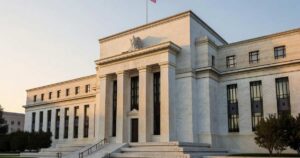
The June FOMC minutes reveal a Fed split between holding and hiking, with a few officials making a case for higher rates as inflation holds near 4 percent.

Treasury sold $58 billion of three-year notes at a 4.179% high yield on July 7, 2026, with indirect demand firming and prime steady at 6.75% ahead of the June FOMC minutes.

Federal net interest hit $722.7 billion in the first eight months of fiscal 2026, topping national defense by roughly $92 billion, according to Treasury data.

Eight meetings a year, twelve votes, one 2 p.m. statement. Here is how an FOMC meeting actually works and what the July 28-29 session could mean for your rates.