
- $350,000 falls in the SBA $150K-$700K tier — 75% guarantee, max rates of prime + 5.5% (12.25%) for terms over 7 years, guarantee fee of 3% on the guaranteed portion ($262,500 x 3% = $7,875)
- SBA 7(a) at 11% over 10 years: $4,821/month, $228,509 total interest — still the cheapest broadly available option for mixed-use business capital at this size
- Bank term loans from community banks offer 7-12% for established businesses with existing relationships — sometimes faster and cheaper than SBA for borrowers with 720+ credit and $1M+ revenue
- At $350K, the cost gap between cheapest and most expensive financing exceeds $120,000 — an online loan at 25% costs $127K in interest over 3 years, while an SBA 504 for qualifying projects costs $58K over 10 years
- Businesses borrowing $350K need $700K-$1.2M+ in annual revenue, 680+ personal credit, 3+ years of operating history, and collateral or a personal guarantee — this is squarely commercial lending territory
The $350K Lending Landscape
Three hundred and fifty thousand dollars puts you in a middle ground that’s both advantageous and tricky. You’re well above the $150K SBA guarantee cliff, so you’re getting 75% instead of 85% — that’s already priced in. You’re below the $500K SBA Express cap, so you have faster processing options available. And you’re in a range where community banks, credit unions, and SBA lenders are all actively competing for your application. The problem isn’t finding a lender willing to give you $350K. It’s finding the cheapest one — because the spread between your best and worst option at this amount can exceed six figures over the life of the loan.
I’ve seen business owners walk into a single bank, get offered 14%, and sign because they didn’t know SBA rates are capped at 12.25% for longer terms. I’ve seen others go straight to an online lender for speed and pay $130K in interest on a $350K loan over 3 years — when an SBA loan would have cost $83K over 7 years with lower monthly payments. At $350K, financial illiteracy costs real money. Not pocket change — enough to hire two employees for a year.
The typical business borrowing $350K is doing $800K-$2M in annual revenue, has been operating for 3-7 years, and is making a strategic move: acquiring a competitor, buying their building, launching a second location, or investing in equipment that scales production. The owners have personal credit scores of 700+ and can document 2-3 years of profitable operations. If that profile fits you, multiple lenders will fight for your business. Your job is to make them compete.

At $350K, the difference between the cheapest and most expensive financing option can exceed $120,000 — comparison shopping isn’t optional.
Financing Options Ranked by Cost
1. SBA 504 — 5%-7% fixed (real estate and major equipment only). If your $350K is for commercial property or large fixed assets, the 504 program is unbeatable. You put down 10% ($35K), a bank funds 50%, and a CDC funds 40% backed by the SBA. Fixed rates tied to the 10-year Treasury currently produce 5-7% effective rates. On $350K at 6% over 20 years, your monthly payment is just $2,508 — lower than most apartment rents in major cities. Total interest: $251,862. The catch: restricted to fixed assets (no working capital), requires a CDC partner, and takes 60-90+ days.
2. SBA 7(a) — 9.75%-12.25%. The most versatile option at $350K. In the $150K-$700K tier, the SBA guarantee is 75% and the maximum rate for terms over 7 years is prime + 5.5% = 12.25%. Guarantee fee: 3% of $262,500 = $7,875. Terms up to 10 years for working capital, 25 years for real estate. At 11% over 10 years: $4,821/month. This is the default recommendation for any $350K need that doesn’t qualify for 504.
3. Bank term loan — 7%-12%. Community banks and credit unions can be very competitive at $350K, especially for existing customers. A bank that watches your $80K-$150K monthly deposits has real-time insight into your cash flow health. At this size, the bank’s commercial lending team handles the deal with potential for customized terms: step-up payments, seasonal adjustments, interest-only periods during buildout phases. Rates: 7-12% depending on credit, collateral, and relationship. Timeline: 2-4 weeks.
4. Equipment financing — 5%-20%. If the $350K targets specific assets — a fleet of specialty vehicles, manufacturing equipment, or medical/dental technology — equipment financing uses those assets as collateral, driving rates well below unsecured alternatives. Some equipment lenders offer 100% financing (no down payment) for strong borrowers. On $350K at 7% over 5 years: $6,931/month, $65,833 total interest. Compare that to unsecured at 15%: $8,324/month, $149,413 total interest. The collateral discount saves $83,580.
5. Business line of credit — 8%-25%. If you don’t need the full $350K at once, a revolving credit line from Bluevine (up to $250K) plus a bank line can cover it. You pay interest only on drawn amounts. At $350K, this structure makes sense for seasonal businesses, bridge financing, or staged project draws. But if you draw the full amount immediately, a term loan is almost always cheaper.
6. Online term loan — 15%-35%. OnDeck, Funding Circle, Credibly, and marketplace lenders all fund $350K. At 25% over 3 years: $13,255/month, $127,142 total interest. That’s $127K on top of the $350K principal — more than a third of the loan in interest alone. At this size, online lending should be treated as emergency bridge financing with an immediate plan to refinance to SBA or bank within 90 days.
Lender Comparison Table
| Loan Type | APR Range | Max Term | Speed | Total Cost (est.) | Mo. Payment |
| SBA 504 | 5%-7% | 10-25 yr | 60-90 days | $408K (6%/10yr) | $3,887 |
| SBA 7(a) | 9.75%-12.25% | 10-25 yr | 30-90 days | $579K (11%/10yr) | $4,821 |
| Bank Term | 7%-12% | 5-10 yr | 2-4 weeks | $462K (9%/7yr) | $5,507 |
| Equipment | 5%-20% | 3-7 yr | 3-10 days | $416K (7%/5yr) | $6,931 |
| Online Term | 15%-35% | 1-5 yr | 1-3 days | $477K (25%/3yr) | $13,255 |
Total cost = principal + interest at representative rates. SBA rates based on current prime of 6.75%. March 2026.
Total Cost Breakdown
At $350K, the total interest numbers become genuinely shocking when you compare across products. Let me lay out three scenarios that cover the realistic range.
Best case — SBA 504 at 6% over 10 years (qualifying fixed assets): $3,887/month. Total interest: $116,367. Total cost: $466,367. This is the cheapest path. The monthly payment fits a business doing $465K+ in annual revenue. If you’re buying a building or major equipment, pursue this aggressively — the rate is lower than many home mortgages.
Middle case — SBA 7(a) at 11% over 10 years (general purpose): $4,821/month. Total interest: $228,509. Total cost: $578,509 (plus $7,875 guarantee fee). That’s nearly $229K in interest over 10 years — a significant cost, but with the longest payment runway and lowest monthly obligation of any general-purpose option. At $4,821/month, you need $48K-$60K/month in revenue to carry it safely.
Worst case — Online lender at 25% over 3 years: $13,255/month. Total interest: $127,142. Total cost: $477,142. Here’s the twist: the online option has lower total interest ($127K) than SBA 7(a) ($229K) because it’s paid over 3 years instead of 10. But the monthly payment is brutal — $13,255/month requires $132K-$166K/month in revenue ($1.6M-$2.0M annually). And you have zero breathing room — miss one slow month and the payment crushes your cash flow. The SBA’s higher total interest buys you time, stability, and survivability.
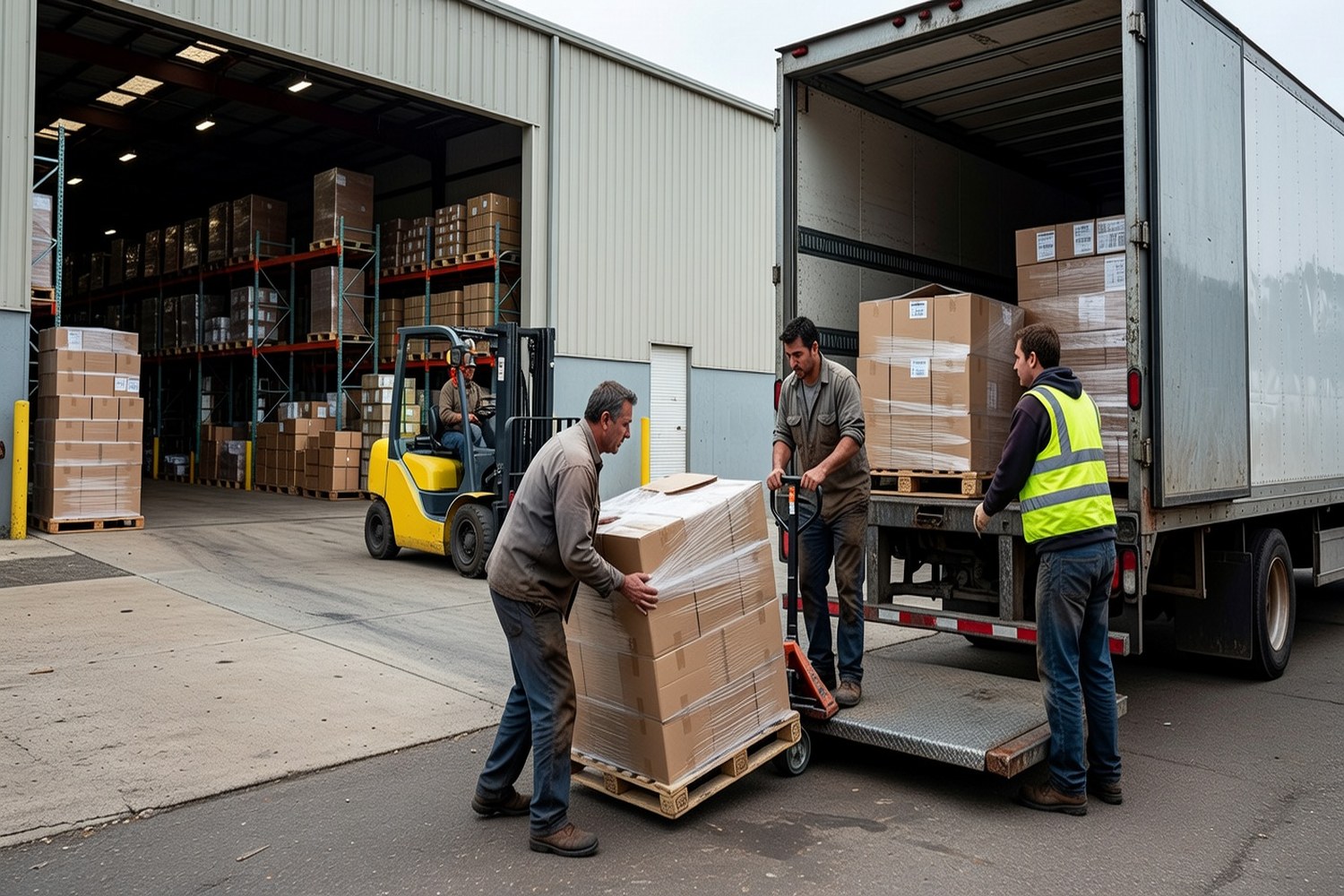
Major inventory purchases and supply chain investments are common uses for $350K business loans — timing these with seasonal demand peaks maximizes ROI.
Qualification Requirements
Revenue. At $350K, lenders want $700,000-$1,200,000+ in annual revenue. The SBA 7(a) payment at 11% over 10 years ($4,821/month) should stay below 8-10% of gross monthly revenue = $48,210-$60,263/month, or $579K-$723K annually. Most banks want to see revenue at least 2x the loan amount — so $700K+ minimum. Online lenders may approve at lower revenue thresholds but charge 25%+ for the added risk.
Credit score. SBA: 680+ personal, with 720+ getting the most competitive offers. At $350K, lenders scrutinize credit more closely — any derogatory marks (late payments, collections, judgments) within the last 2 years can derail an application even with a 700+ score. Banks: 700+ for best rates. Most online lenders: 620+ minimum with aggressive pricing for sub-680 borrowers.
Time in business. Three years minimum is the practical threshold at $350K. Some SBA Preferred Lenders will consider 2-year businesses with exceptional financials, but it’s the exception. Under 2 years, your options narrow dramatically — online lenders are essentially the only path, and at rates that make the math questionable.
Collateral. At $350K, fully unsecured lending is extremely rare. Expect a personal guarantee from all 20%+ owners (SBA requires this) plus either a blanket UCC lien on all business assets or specific collateral pledged. Equipment financing uses the purchased equipment. Real estate loans use the property. For working capital loans, lenders typically file a blanket lien covering equipment, inventory, and receivables.
DSCR. 1.25x minimum is standard. For the SBA $4,821/month payment, that means $6,026/month in net operating income after all other expenses and obligations. Lenders at this size often want 1.3-1.5x for comfortable approval, which means $6,267-$7,232/month in net operating income.
What $350K Funds in Practice
Commercial real estate purchase. A small office building, retail storefront, or medical/dental practice space in a secondary market. SBA 504 is purpose-built for this — 10% down ($35K), fixed rate (5-7%), and 20-25 year terms that keep payments manageable. Buying instead of leasing starts building equity immediately, and the building becomes an asset on your balance sheet.
Franchise launch. Most franchise buildouts in the $250K-$500K range: franchise fee ($25K-$50K) + buildout ($150K-$250K) + equipment ($50K-$100K) + working capital ($30K-$50K). SBA 7(a) explicitly covers franchise purchases — your franchise must be listed on the SBA Franchise Directory. The franchisor’s existing financial data helps support your loan application even if your location hasn’t opened yet.
Business acquisition. Buying a competitor, a complementary business, or a route/territory at $350K. SBA 7(a) is the go-to product here because the SBA allows the acquired business’s cash flow to count toward your qualification. You’re not just proving your existing business can carry the payment — you’re showing the combined entity can. Some lenders specialize in acquisition financing and can structure creative deals.
Major equipment + working capital. A common $350K split: $200K-$250K in equipment (financed with the equipment as collateral at lower rates) plus $100K-$150K in working capital (SBA 7(a) or line of credit). This split-financing approach often produces a lower blended cost than putting the full $350K on a single product.
How to Apply
Step 1: Define purpose with line-item precision. “$350K for franchise buildout” becomes “$350K: $40K franchise fee, $180K buildout and construction, $80K equipment and fixtures, $50K working capital and reserves.” Lenders at this size expect a detailed use-of-funds schedule. Vague requests trigger additional documentation requests and delays.
Step 2: Prepare full documentation before starting. At $350K, the documentation bar is high. You’ll need: 3 years of business and personal tax returns, current YTD P&L and balance sheet, 12 months of business bank statements, personal financial statement (SBA Form 413), business plan with financial projections (especially for SBA and franchise), debt schedule (all existing obligations), collateral documentation, and copies of licenses, leases, and franchise agreements. Have everything in organized PDF format before you approach any lender.
Step 3: Apply to 3 lenders in parallel. One SBA Preferred Lender (find via SBA.gov Lender Match). One community bank or credit union with an existing relationship. One marketplace (Lendio or NerdWallet) that shops your application across multiple lenders. Three parallel applications give you competing offers and genuine leverage for negotiation.
Step 4: Compare total cost of capital. At $350K, fees add up: SBA guarantee fee ($7,875), bank origination fees ($1,750-$7,000), online origination fees (1-6% = $3,500-$21,000), equipment financing fees (0-2%). The only honest comparison: total dollars repaid over the full term, including every fee. Get that number from every lender and compare.
Frequently Asked Questions
What credit score do I need for a $350,000 business loan?
SBA: 680+ personal, with 720+ getting the best rates. Banks: 700+ for preferred terms. Online lenders: 620+ minimum but at 20-35% APR. At $350K, the rate spread between 680 and 740 credit translates to $25,000-$45,000 in total interest over the loan term.
What revenue does my business need for $350K?
Most lenders want $700,000-$1,200,000+ annual revenue. The SBA monthly payment at 11% over 10 years is $4,821, which should stay under 8-10% of monthly gross revenue. DSCR of 1.25x or higher is the standard benchmark.
How long does it take to get a $350K business loan?
Online lenders: 1-3 days. Bank term loans: 2-4 weeks. SBA Express: 30-60 days. Standard SBA 7(a): 45-90 days. SBA 504: 60-90+ days. SBA Preferred Lenders may close in 20-30 days with complete documentation.
SBA 504 vs. 7(a) at $350K — which is better?
504 for commercial real estate or major fixed assets (5-7% fixed, lowest rate). 7(a) for working capital, franchise, acquisition, or mixed purposes (9.75-12.25%, most flexible use). You cannot use 504 for working capital or inventory.
Can I get a $350K business loan with bad credit?
Extremely difficult through legitimate lenders. Some online lenders accept 620+ but charge 25-35% — on $350K, that’s $127K+ in interest over 3 years. SBA and bank loans are not realistic below 660 at this amount. If your credit is below 680, spending 3-6 months improving it before applying can save $30,000+ in total interest.
References
- SBA, “7(a) Loan Program,” sba.gov
- SBA, “504 Loan Program,” sba.gov
- Federal Reserve Bank of Kansas City, “Small Business Lending Survey Q3 2025,” kansascityfed.org
- SBA, “7(a) Fees Effective October 1, 2025 for FY2026,” sba.gov
Keep Reading
- Best Small Business Loans: Compare Rates & Apply Online
- SBA Loans: Compare 7(a), 504 & Microloan Programs
- $300K Business Loans
- $400,000 Business Loans
- Best Long-Term Business Loans
Rates and terms are subject to change. This is not financial advice. All information is for educational and comparison purposes only. SBA rates based on current prime rate of 6.75% as of March 2026. Always compare multiple lenders and verify current terms before committing to business financing.