
Warsh Gives No Signal on Oct 28 Fed Vote After 3.7% Inflation Print
Fed Chair Kevin Warsh declined to signal the October 28 vote during Friday remarks in Bangkok, his last comments before the FOMC communications blackout began October 17.


Here’s what most people don’t realize about medical bills: the number on the bill isn’t fixed. It’s a starting point for negotiation. Taking 30 minutes before reaching for a loan can save you hundreds or thousands of dollars — money that directly reduces what you need to finance.
Request an itemized bill. The summary bill hospitals send shows totals by category, not individual charges. The itemized version lists every single charge — and billing errors are shockingly common. Medicare data shows that 7.66% of payments are coded incorrectly, resulting in over $31 billion in improper payments system-wide. Look for duplicate charges, services you didn’t receive, and charges that don’t match your treatment. Disputing errors can reduce your bill by hundreds or thousands.
Negotiate the bill directly. Call the billing department and ask: “Is there a discount for paying in cash?” or “Can you reduce this bill? I’m paying out of pocket.” Hospitals routinely offer 20-50% discounts for cash payment or prompt payment. A $8,000 emergency room bill negotiated down to $5,000 saves $3,000 — more than the total interest on a 5-year personal loan.
Ask about financial assistance. Nonprofit hospitals (the majority of hospitals in the U.S.) are legally required to offer financial assistance programs. These programs can reduce or eliminate bills for patients below certain income thresholds — often up to 200-400% of the federal poverty level. You don’t have to be destitute to qualify. A family of four earning $62,400 (200% FPL) may qualify for significant bill reductions at many hospitals.
Set up a 0% payment plan. Most hospitals and medical offices offer interest-free payment plans — 6, 12, 18, or 24 months of equal payments with no interest. This is almost always cheaper than any loan. A $6,000 bill on a 12-month payment plan costs exactly $6,000. That same amount financed at 9% over 12 months costs $6,297. Ask for a payment plan before applying for a loan.
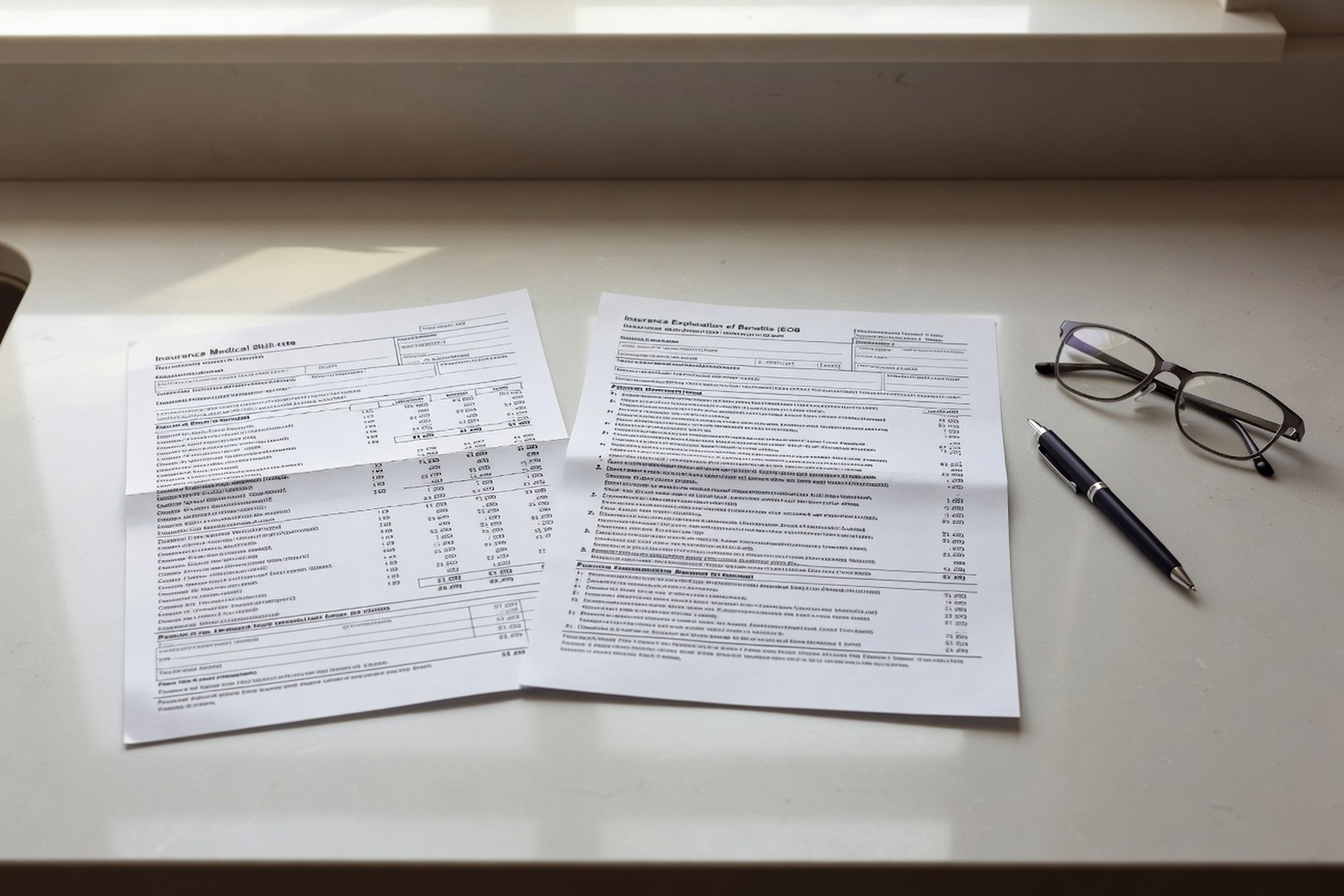
Always request an itemized bill and negotiate before financing — hospitals routinely reduce bills by 20-50% for patients who ask.
1. Hospital/provider payment plan (try this first). Most providers offer 0% interest payment plans of 6-24 months. No credit check, no application. You simply call billing and ask to set up monthly payments. This is the cheapest option for any medical bill where the provider offers it. Best for: any medical bill where you can afford the monthly payment over 12-24 months.
2. Personal loan (best for consolidating multiple bills or elective procedures). When you have bills from multiple providers (surgeon, anesthesiologist, hospital, lab, imaging center — a single surgery can generate 5+ bills), a personal loan consolidates them into one fixed payment. Also the right choice for elective procedures (cosmetic surgery, LASIK, fertility treatments) where the provider requires payment upfront. LightStream offers medical-related personal loans at 6.49%+. On $10,000 at 8% over 48 months: $244/month, $1,710 total interest.
3. HSA or FSA (best if you have pre-tax health savings). If you have a Health Savings Account (HSA) or Flexible Spending Account (FSA), use those tax-advantaged dollars first. HSA funds grow tax-free and can be used for qualified medical expenses at any time. FSA funds are use-it-or-lose-it (typically by year-end). Using $5,000 from an HSA instead of borrowing $5,000 at 9% saves you $1,175 in interest — plus the $5,000 was contributed tax-free, so you effectively saved another $1,000-$1,750 in taxes.
4. CareCredit or medical credit card (careful with deferred interest). CareCredit is a credit card exclusively for healthcare expenses, accepted at 260,000+ providers. Offers 0% interest for 6, 12, 18, or 24 months. The catch: deferred interest at 26.99% APR if you don’t pay in full before the promo ends — retroactive from the purchase date. On $5,000 with 12-month deferred interest, failing to pay it off costs $1,350 in retroactive interest. Only use CareCredit if you’re absolutely certain you can pay in full before the promo expires.
5. 0% intro APR credit card (best for bills under $5,000 you can pay off quickly). Many credit cards offer 0% APR for 12-21 months on new purchases. Unlike CareCredit, most regular credit cards switch to their standard rate (18-25%) after the promo — they don’t charge retroactive interest. Use this for a single medical bill you can pay off within the promo period. $3,000 at 0% for 15 months = $200/month, zero interest.
6. Medical bill advocate (for large, complex bills). Professional medical billing advocates review your bills for errors, negotiate with providers, and navigate insurance appeals. They typically charge 25-35% of whatever they save you — so on a $20,000 bill reduced to $12,000, you’d pay the advocate $2,000-$2,800 and still save $5,200-$6,000. Worth exploring for any bill over $10,000.
| Option | Rate | Amount | Speed | Best For |
| LightStream | 6.49%-25.49% | $5K-$100K | Same day | Lowest rate, large procedures |
| SoFi | 8.74%-29.99% | $5K-$100K | Same day | No fees, hardship assistance |
| Discover | 7.74%-24.99% | $2.5K-$40K | Next day | No fees, mid-range bills |
| Upstart | 7.80%-35.99% | $1K-$50K | 1-2 days | Low/no credit (AI underwriting) |
| CareCredit | 0% promo / 26.99% | Varies | Instant (at provider) | Short-term, pay in full quickly |
| Upgrade | 8.49%-35.99% | $1K-$50K | 1-3 days | Fair/bad credit (580+) |
Rates are general ranges as of early 2026. CareCredit promo rate is 0% deferred interest for 6-24 months. Pre-qualify to see your specific offer.
LightStream — best rate for planned medical procedures. If you’re scheduling LASIK ($4,000-$6,000), cosmetic surgery ($8,000-$25,000), fertility treatments ($12,000-$25,000 per IVF cycle), or dental implants ($3,000-$6,000 per tooth), LightStream’s 6.49% starting rate and same-day funding make it the clear first choice. On $15,000 at 7% over 60 months: $297/month, $2,831 total interest. Rate Beat guarantee, zero fees. Requires roughly 695+ credit.
SoFi — best for medical bills during uncertain times. Medical crises often coincide with income disruption — illness or injury can reduce work hours or force leave. SoFi’s hardship programs and unemployment protection provide a safety net that other lenders don’t offer. No origination fee, rates from 8.74%, up to $100K, same-day funding. On $8,000 at 10% over 48 months: $203/month, $1,730 total interest.
Upstart — best for borrowers with limited credit history. Young adults, recent immigrants, and people rebuilding credit often face unexpected medical bills without established credit profiles. Upstart uses AI underwriting that considers education and employment alongside credit scores — no minimum credit score required. Rates from 7.80%, up to $50K, funding in 1-2 business days.
CareCredit deserves its own section because it’s the most common financing tool offered at doctor’s offices, dental practices, and surgical centers — and it’s also the most misunderstood.
How it works: CareCredit offers 0% interest promotional periods (6, 12, 18, or 24 months) on purchases of $200+. During the promo period, no interest is charged. If you pay the full balance before the promo ends, you pay zero interest total. That’s the appealing part.
The trap: CareCredit uses deferred interest, not waived interest. Interest accrues at 26.99% APR from the date of purchase during the entire promo period — it’s just suspended. If you have even $1 remaining when the promo expires, all that accrued interest gets added to your balance retroactively. On a $5,000 dental procedure with a 12-month promo: if you’ve paid $4,900 by month 12 but still owe $100, you’re charged approximately $1,350 in retroactive interest on the original $5,000. Your $100 remaining balance becomes $1,450 overnight.
When CareCredit makes sense: Only when you can commit to paying the full balance within the promo period — and you have a concrete plan to do so. Divide the balance by the promo months: $5,000 over 12 months = $417/month. If $417/month fits your budget without strain, CareCredit works. If it’s tight, a personal loan at 8% over 36 months ($157/month, $640 total interest) is the safer choice — $640 in planned interest beats $1,350 in surprise interest.

Planned medical procedures (LASIK, dental implants, fertility) are best financed with a personal loan — you know the cost in advance and can shop rates deliberately.
The relationship between medical debt and credit scores has been in flux. Here’s what matters right now.
Medical debt under $500 no longer appears on credit reports. Since 2023, the three major credit bureaus (Equifax, Experian, TransUnion) voluntarily stopped reporting medical collections under $500. This means smaller medical bills that go to collections won’t affect your credit score — but you still owe the money.
Larger medical collections still appear after 365 days. Medical debts over $500 that go to collections appear on your credit report after one year of non-payment. This gives you a full year to negotiate, set up a payment plan, or arrange financing before any credit impact.
The CFPB rule situation. In January 2025, the CFPB ruled to remove all medical debt from credit reports. A federal judge in Texas blocked the rule in July 2025. The legal status is still uncertain — but the voluntary credit bureau policies (no collections under $500, one-year waiting period) remain in effect regardless of the legal outcome.
What this means for financing decisions: You have time. A medical bill doesn’t immediately hurt your credit the way a missed credit card payment does. Use that time to negotiate the bill, explore financial assistance, and set up a payment plan — rather than panic-borrowing at a high rate because you’re afraid of credit damage.
Step 1: Negotiate and explore alternatives first (30 minutes). Request an itemized bill. Call billing and ask for a discount or payment plan. Check if you qualify for hospital financial assistance. Use HSA/FSA funds for qualified expenses. This step alone can reduce or eliminate the need for a loan.
Step 2: Determine the financing gap. Total medical costs minus insurance payments minus HSA/FSA funds minus any negotiated discounts = what you actually need to finance. Many people borrow more than necessary because they don’t take these steps first.
Step 3: Pre-qualify at 2-3 lenders (15 minutes). LightStream (best rate for good credit), SoFi (hardship protection), Discover (no fees, lower minimum). If credit is below 650: Upgrade and Upstart. Compare APR, monthly payment, and total cost. Soft credit check only.
Step 4: Compare against CareCredit (if offered). If your provider offers CareCredit, calculate whether you can pay in full within the 0% promo period. If yes, CareCredit wins on cost. If there’s any doubt, the personal loan’s predictable interest is safer than CareCredit’s deferred interest bomb.
Step 5: Apply and fund. Choose the best option, formal-apply, receive funds in 1-3 days. Pay the medical provider. Set up autopay on the loan to avoid late fees and get the autopay discount (0.25-0.50% at most lenders).
Only after you’ve tried cheaper alternatives: negotiating the bill (20-50% reductions are common), hospital financial assistance programs, 0% provider payment plans, and HSA/FSA funds. A personal loan makes sense when you have multiple bills to consolidate, need to finance an elective procedure, or can’t get a 0% payment plan.
740+ for best rates (6.49-8%). 670-739 for competitive rates (8-14%). 580+ for Upgrade. No minimum for Upstart (AI underwriting). Below 580: consider negotiating the bill or seeking financial assistance before borrowing at high rates.
Only if you can pay the full balance before the 0% promotional period ends. CareCredit uses deferred interest at 26.99% — if any balance remains after the promo, you’re charged retroactive interest from day one. A personal loan at 8-10% with predictable payments is safer for most borrowers.
Medical bills under $500 no longer appear on credit reports. Larger medical debts only appear after 365 days of non-payment. You have a full year to negotiate, set up a payment plan, or arrange financing before any credit impact.
Yes, and you should. Request an itemized bill to check for errors. Ask for a cash discount (20-50% off is common). Check if you qualify for the hospital’s financial assistance program. For bills over $10,000, consider hiring a medical billing advocate who can negotiate on your behalf for 25-35% of whatever they save you.
Rates and terms are subject to change. This is not financial advice. All information is for educational and comparison purposes only. Medical billing practices, financial assistance eligibility, and credit reporting rules vary. Always negotiate medical bills, explore provider payment plans, and verify current lender rates before committing to financing.
Fed Chair Kevin Warsh declined to signal the October 28 vote during Friday remarks in Bangkok, his last comments before the FOMC communications blackout began October 17.

The Fed’s October 14 Beige Book found price growth robust in three of twelve districts and picking up in four, with higher oil prices in every district report.

Federal Reserve Board minutes show Reserve Bank requests for a 4.00% discount rate grew from two banks in August to seven by the September 16 meeting.

The federal government spent $1.360 trillion on interest in fiscal 2026, Treasury’s closing accounting shows, up $140.4 billion from fiscal 2025 and a record high.

Treasury bills ended fiscal 2026 at $7.118 trillion, or 22.36% of marketable federal debt, the largest fiscal year end share since 2020. Bills grew $721.1 billion over the year.

Fed Governor Christopher Waller said 16 of 18 officials who filed September projections expect another 2026 rate increase, and that the hikes need not come at back to back meetings.