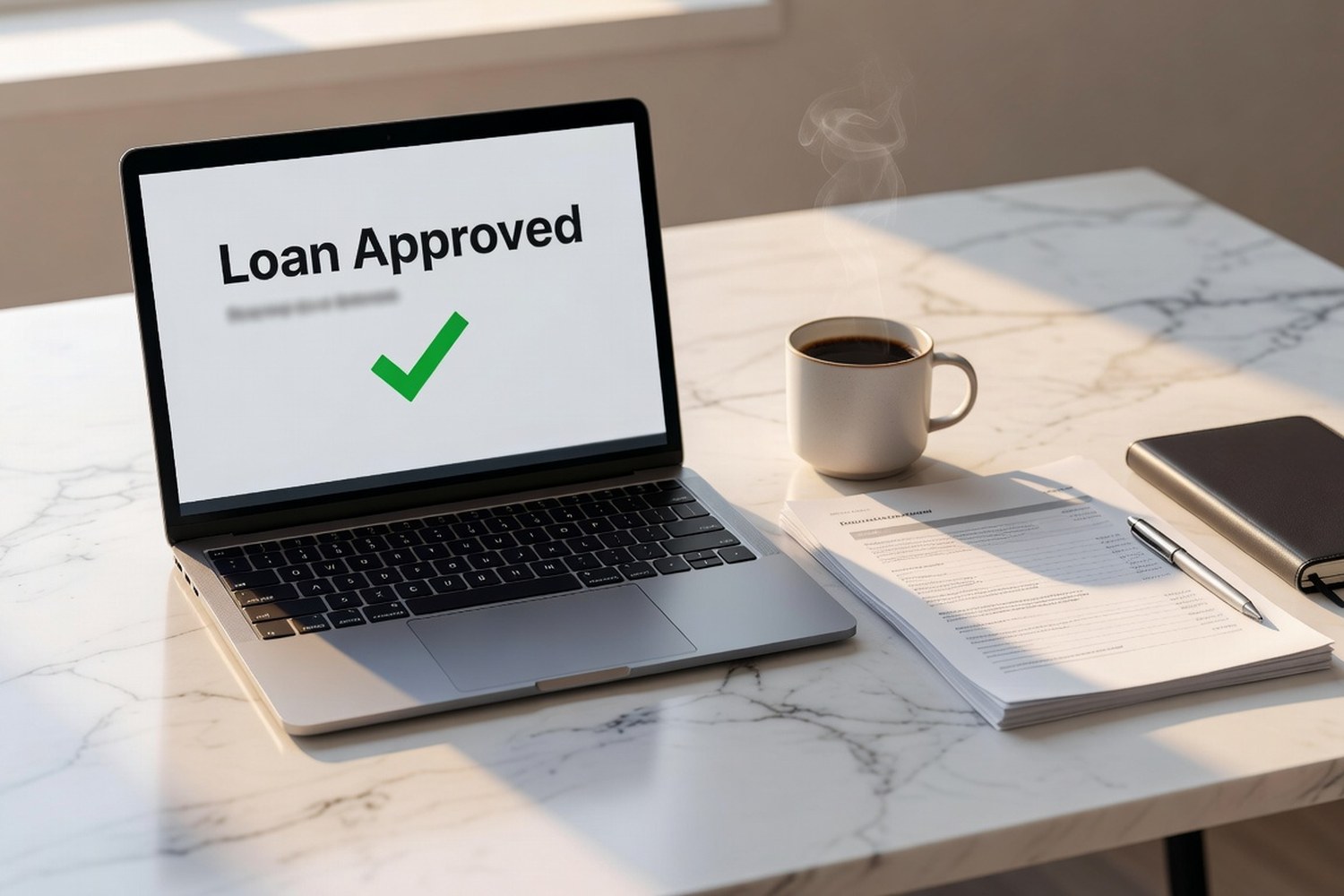
PrimeRates provides access to personalized loan offers through our simple and quick pre-qualification application. Once you’re pre-qualified, you can select the best offer for you and finalize the loan application with the lender.
1
Apply in minutes
Simple pre-qual application in less than 1 minute.
2
Select your loan offer
Choose the offer that best fits your needs.
3
Receive funds quickly
Finalize your loan offer, get approved, and receive funds.
With a credit score of 700 or higher, you’re in an excellent position to secure a personal loan with competitive interest rates and favorable terms. Lenders view good credit borrowers as lower risk, which means you can access larger loan amounts, lower APRs, and more flexible repayment options.
The lenders below offer some of the best terms available for borrowers with good credit.
Complete Guide to Personal Loans for Good Credit
Lisa Weinberger Financial Writer • Published January 12, 2026 ✓ Reviewed by Emily Gerson
Last Updated: January 2026
Key Takeaways
Good credit (670–739 FICO) puts you in a strong position for personal loans. You qualify for most mainstream lenders and can expect APRs between 8% and 15% — well below the average credit card rate of nearly 20%.
The best rates for good credit borrowers come from lenders that charge zero origination fees. SoFi, LightStream, Discover, and PenFed all offer no-fee personal loans, meaning every dollar you borrow goes into your pocket.
At 700+, you are close to “excellent” territory. A few smart moves — paying down one card, waiting for a hard inquiry to age off — can push you above 740 and unlock rates under 7%.
For large loans ($25K–$100K), good credit opens doors that fair credit does not. SoFi lends up to $100K and LightStream offers same-day funding on amounts that smaller lenders cap at $35K–$40K.
Autopay discounts are your friend. Most lenders shave 0.25–0.50% off your APR for enrolling in automatic payments — a free rate reduction that also protects your credit score from missed payment risk.
A FICO score of 670–739 puts you in the “good credit” category — right where most Americans are. The national average FICO score is about 715, which means good credit borrowers are the mainstream market that every lender wants. That competition works in your favor.
With good credit, you unlock access to virtually every major personal loan lender. Approval is not the challenge — rate optimization is. The spread between the best and worst offers you will receive can be 5–8 percentage points on the same loan amount. On a $20,000 loan over 4 years, that gap translates to $2,500–$4,000 in extra interest if you take the wrong offer. Shopping matters enormously at this credit level.
According to Federal Reserve data, the average personal loan APR is about 12% in early 2026. Good credit borrowers consistently beat that average, with typical offers ranging from 8–15% depending on the lender, loan amount, and term. The best-qualified good credit borrowers (scores near 740, low DTI, stable income) can see offers below 8%.
Best Personal Loans for Good Credit
These lenders offer the most competitive combination of rates, fees, and features for borrowers with 670–739 FICO scores. All offer prequalification with a soft credit pull.
Lender
APR Range
Amounts
Terms
Orig. Fee
Standout Feature
LightStream
6.49–25.49%
$5K–$100K
2–7 yr
None
Lowest starting rate + rate beat program + same-day funding
SoFi
8.99–29.99%
$5K–$100K
2–7 yr
None
No fees at all + unemployment protection + member perks
Discover
7.99–24.99%
$2.5K–$40K
3–7 yr
None
No fees + no late fees + direct creditor pay option
PenFed
7.74–17.99%
$600–$50K
1–5 yr
None
Lowest max APR (17.99%) + credit union rates + co-borrowers
Marcus by Goldman Sachs
6.99–28.99%
$3.5K–$40K
3–6 yr
None
No fees + due date flexibility + on-time payment reward
LendingClub
8.98–36.00%
$1K–$40K
2–5 yr
0–8%
Direct creditor pay + joint applications + fast approval
Achieve
5.99–35.99%
$5K–$50K
2–5 yr
1.99–8.99%
Lowest min APR + direct-pay discount + co-borrower discount
Rates from lender websites as of January 2026. Your rate depends on creditworthiness. Rates subject to change.
Disclaimer: PrimeRates is not a lender. Loan terms, rates, and availability are subject to change. This is for informational purposes only and does not constitute financial advice.
Zero-Fee Lenders: Why They Matter More Than Low APR
Here is a mistake good credit borrowers make constantly: they compare APRs without accounting for origination fees. An origination fee of 3–6% is deducted from your loan proceeds before you receive them. On a $20,000 loan with a 5% fee, you get $19,000 but repay $20,000 plus interest. That fee effectively raises your true cost well above the stated APR.
Example: Lender A offers 9% APR with no fees on a $20,000 / 3-year loan. Your total interest is $2,862. Lender B offers 8% APR but charges a 5% origination fee ($1,000). Your total interest is $2,533, but add the $1,000 fee and your true cost is $3,533. Lender A — with the “higher” rate — saves you $671.
Five lenders on our list charge zero origination fees: LightStream, SoFi, Discover, PenFed, and Marcus. For good credit borrowers, these should be your first stop. Only consider fee-charging lenders if they offer something the no-fee lenders do not — like direct creditor payment (LendingClub) or co-borrower rate reductions (Achieve).
⚡ Pro Tip
LightStream has a “rate beat” program: if you receive a lower rate from another lender on a similar loan, LightStream will beat it by 0.10 percentage points. Get your best offer from SoFi or Marcus first, then show it to LightStream. This is the only lender that formally offers rate matching.
Good Credit vs. Excellent: Is It Worth Waiting?
Excellent credit starts at 740 FICO. If your score is 720–739, you are close enough that a few strategic moves can push you over the line. The rate difference is meaningful: good credit borrowers typically see 8–15% APR, while excellent credit unlocks 6–9% APR. On a $30,000 loan over 5 years, dropping from 12% to 8% saves approximately $3,700 in interest.
Worth waiting if: Your score is 720+ and you can reach 740 within 30–60 days by paying down one card or waiting for a hard inquiry to age past 6 months. The savings on a large loan easily justify a short delay.
Not worth waiting if: You need the loan for debt consolidation and your current card APRs are 20%+. Every month you wait costs you more in card interest than you would save by getting a slightly better personal loan rate. Move now and refinance later if your score improves.
The practical approach: prequalify today to see what rates you actually get. If the offers are in the 10–12% range and you need the loan for high-interest debt payoff, take it. If the offers are in the 13–15% range and the loan is for a non-urgent purpose (home improvement, wedding), consider spending 60 days on score optimization first.
Best Uses for a Good Credit Personal Loan
Debt consolidation. The highest-impact use. If you carry $10K–$30K in credit card debt at 18–24% APR, a good credit personal loan at 9–13% saves thousands and gives you a fixed payoff date. Compare credit card consolidation loans on PrimeRates.
Home improvement. Kitchen remodels, bathroom renovations, and major repairs typically cost $10K–$50K. A personal loan avoids the risk of a home equity loan (where your house is collateral) and funds faster — often within 24–48 hours vs. weeks for a HELOC.
Major life events. Weddings, relocations, and medical procedures are one-time expenses where a fixed-rate personal loan provides structure. The predictable monthly payment is easier to budget than a credit card balance with variable minimums.
Large purchases. Anything over $5,000 where a 0% financing offer is not available or practical. Good credit personal loan rates (8–15%) are almost always better than store financing or retail credit card rates.
When NOT to use a personal loan: Small balances under $3,000 (use a 0% APR card instead), expenses you cannot afford at all (the loan does not solve the income problem), or refinancing debt at a rate similar to what you already pay (the origination fee makes it a wash).
How to Rate-Shop Without Hurting Your Score
Step 1: Prequalify with 3–5 lenders. Every lender on our list offers prequalification via soft credit pull. This shows your estimated rate, loan amount, and terms with zero impact on your credit score. Do this with all 5 no-fee lenders (LightStream, SoFi, Discover, PenFed, Marcus) plus any fee-charging lenders that interest you.
Step 2: Compare the annual percentage rate (APR), not just the interest rate. APR includes the origination fee (if any) and gives you the true cost. A 10% interest rate with a 5% origination fee has an APR closer to 12–13%. The Truth in Lending Act requires lenders to show APR prominently.
Step 3: Apply to your top 1–2 choices within a 14-day window. FICO treats multiple personal loan hard inquiries within 14 days as a single inquiry. This means you can formally apply to your best 2 options without additional score damage beyond one inquiry (typically 5–10 points, recovered within 3–6 months).
Step 4: Choose the shortest term you can afford. A 3-year term at 10% costs $3,228 in interest on a $20,000 loan. A 5-year term at 10% costs $5,497. The monthly payment is lower on the longer term ($425 vs. $645), but you pay $2,269 more in total. Pick the shortest term where the payment fits comfortably in your budget.
⚡ Pro Tip
Even after you lock in a rate, check if your lender offers a rate match. SoFi and LightStream have been known to match or beat competitor offers. Send them a screenshot of a competing prequalification with a lower rate — the worst they can say is no, and the best case saves you hundreds or thousands over the loan term.
How the Prime Rate Affects Your Loan Rate
Personal loan rates are influenced by the prime rate, which tracks the federal funds rate. When the Fed cuts rates, the prime rate drops, and personal loan rates tend to follow within weeks to months. The connection is indirect — unlike credit card APRs (which are directly pegged to prime + a margin), personal loan rates respond to broader capital market conditions.
With the prime rate at 6.50–6.75% in early 2026 and multiple Fed rate cuts expected through the year, personal loan rates are on a gentle downward trajectory. Good credit borrowers are best positioned to benefit: as base rates fall, the competitive spread between lenders widens, and no-fee lenders get even more aggressive to capture mainstream borrowers.
Should you wait for lower rates? For debt consolidation — no. The daily interest on 20%+ card debt far exceeds any future rate savings. For discretionary purposes (home improvement, large purchases), a 2–3 month wait could save you 0.25–0.50%, but only if the Fed actually delivers cuts on schedule. Rate predictions are not guarantees.
Frequently Asked Questions
What credit score do I need for the best personal loan rates?
Good credit (670–739) gets you access to most lenders with APRs of 8–15%. Excellent credit (740+) unlocks the very best rates of 6–9%. The biggest jump in rate quality happens between 699 and 700, and again between 739 and 740.
Which personal loan lenders have no fees?
LightStream, SoFi, Discover, PenFed, and Marcus by Goldman Sachs all charge zero origination fees. For good credit borrowers, these should be your first choices since every dollar of fees adds to your true borrowing cost.
How much can I borrow with good credit?
Most lenders offer $1,000 to $50,000. SoFi and LightStream go up to $100,000. The amount you qualify for depends on your income and debt-to-income ratio in addition to your credit score. A $50,000+ loan typically requires annual income above $60,000–$80,000.
Is it better to get a personal loan or use a credit card?
Personal loan if: you need a fixed payoff timeline, the amount is over $5,000, or you want to consolidate existing card debt. Credit card if: you can pay the balance in full within 15–21 months using a 0% intro APR offer, or the amount is under $3,000.
Will a personal loan affect my credit score?
Short-term: the hard inquiry drops your score 5–10 points for a few months. Long-term: on-time payments build positive history, and if used for card payoff, your credit utilization ratio improves dramatically. Most borrowers see a net score increase within 2–3 months of taking the loan.
SoFi offers some of the largest personal loan amounts available, up to $100,000. SoFi charges no origination fees, no prepayment penalties, and no late fees. Members get access to financial planning, career coaching, and unemployment protection that pauses payments if you lose your job.
Marcus charges no fees — no origination fees, no prepayment penalties, and no late fees. Backed by Goldman Sachs, Marcus offers competitive rates and flexible payment terms from 36 to 72 months.
LightStream, a division of Truist Bank, offers loans up to $100,000 with no fees whatsoever. Same-day funding is available, and they offer a Rate Beat program where they’ll beat any qualifying rate by 0.10%.
Best Egg has funded over $24 billion in loans since 2014. They offer a simple online application with funding as fast as one business day. Origination fees range from 0.99% to 8.99%.
Prosper is a peer-to-peer lending marketplace connecting borrowers with individual investors. Offers loans from $2,000 to $50,000 with terms of 24 to 60 months.
The Federal Reserve’s G.19 release shows consumer credit rose $18.1 billion in July 2026, pushing revolving card balances to a record $1.3572 trillion a week before the September 16 FOMC decision.
Treasury held $967.9 billion at the Fed in the week ended September 2, a four month high, pulling bank reserves to $2.895 trillion, their lowest in 39 weeks.
U.S. employers added 162,000 jobs in August and the BLS revised June and July up by a combined 55,000, erasing the reported July decline days before the September 15-16 FOMC meeting.
Fed Governor Christopher Waller said he would back a September hold if August inflation keeps cooling, citing three-month core inflation of 3.05 percent, and a hike if it does not.