
How Personal Loans Affect Your Credit Score
A personal loan affects your credit score at three distinct stages: the application (hard inquiry, typically –5 to –10 FICO points), the new account opening


Photography business loans range from 6.0% to 36.0% APR for $5,000 to $500,000, with equipment financing at 6%–16% APR being the most popular option because cameras, lenses, and lighting rigs serve as their own collateral. Bluevine and Fundbox fund working capital in 24–72 hours, while SBA 7(a) loans offer the lowest rates at 10.5%–13.5% for studio build-outs and acquisitions.
Table of Contents
Photography businesses qualify for equipment loans, lines of credit, and SBA products. The lenders below have funded creative professionals and their requirements match typical photographer income levels. Rates are current as of March 2026.
| Lender | APR Range | Loan Amount | Min FICO | Term | Funding Speed | Best For |
|---|---|---|---|---|---|---|
| Equipment financing | 6.0%–16.0% APR | $5K–$500K | 600 | 2–7 yr | 3–7 days | Camera bodies, lenses, lighting |
| Bluevine | 7.8%–25.0% APR | $5K–$250K | 625 | 6–12 mo (LOC) | 24 hours | Working capital, seasonal cash flow |
| Fundbox | 10.1%–20.0% APR | $1K–$150K | 600 | 12–24 wk | Next day | Freelancers, new businesses |
| Kabbage (Amex) | 3.0%–18.0% APR | $2K–$250K | 640 | 6–24 mo | Same day | Small equipment purchases under $20K |
| SmartBiz (SBA 7a) | 10.5%–14.0% APR | $30K–$350K | 675 | 10–25 yr | 7–30 days | Studio build-out, business acquisition |
| SBA Microloan | 8.0%–13.0% APR | Up to $50K | 620 | Up to 6 yr | 2–6 weeks | Startup studios under $50K |
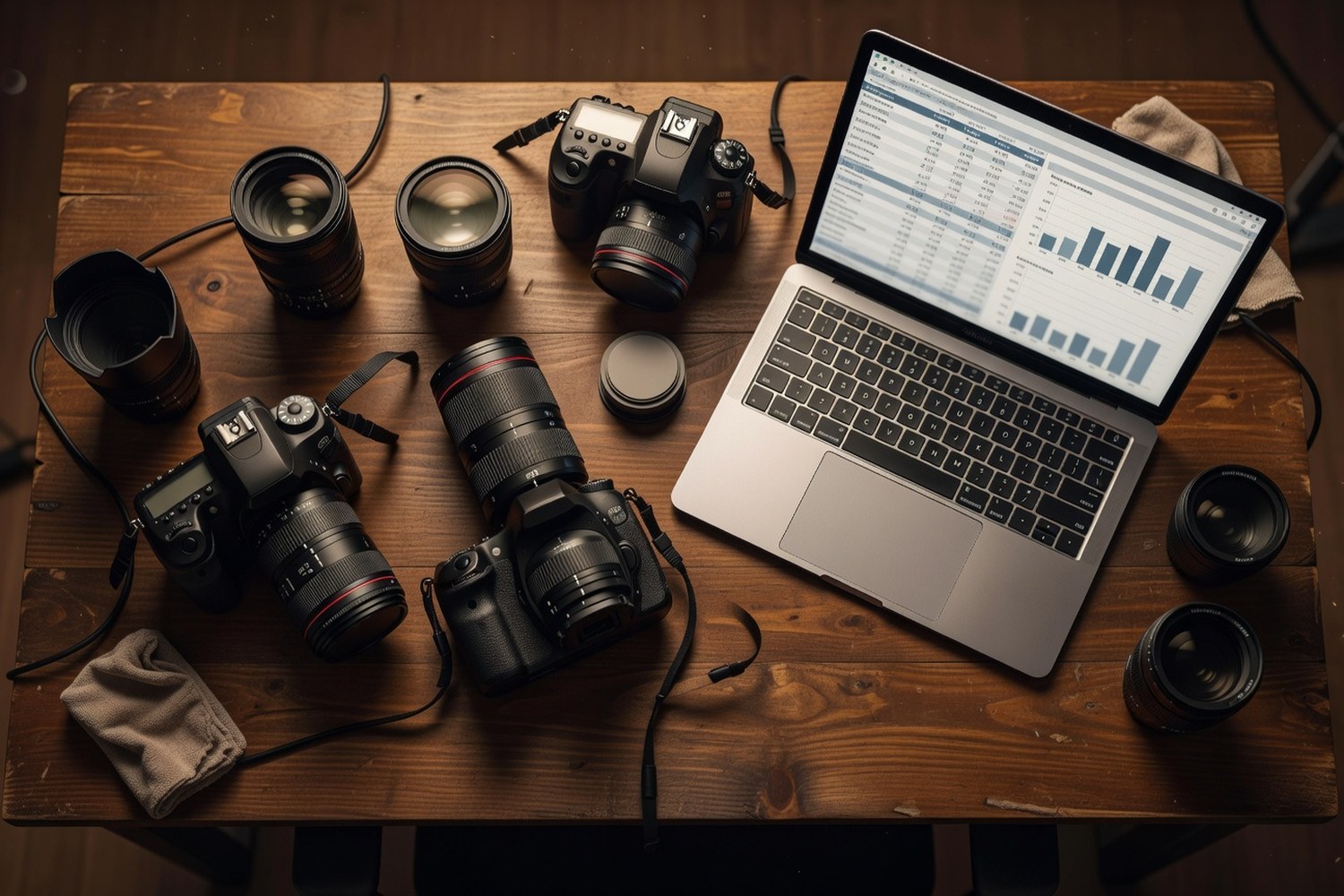
A professional photography business requires $7,500–$25,000 in equipment alone, before studio costs. A full-frame camera body runs $2,500–$6,500 (Canon R5 Mark II, Sony A7R V, Nikon Z8). A three-lens kit covering portrait, wide, and telephoto costs $3,000–$9,000. Professional lighting (strobes, modifiers, stands) adds $2,000–$8,000. Editing workstations with calibrated monitors cost $2,000–$5,000.
Studio space pushes costs significantly higher. Leasing a 1,000–2,000 sq ft commercial studio runs $1,500–$5,000/month depending on market. Build-out for shooting bays, client waiting areas, and product staging costs $15,000–$50,000. The SBA recommends budgeting 6 months of operating expenses as reserve, adding $15,000–$45,000 to the startup total. All in, opening a studio-based photography business costs $50,000–$120,000.
Freelance photographers working on location need less capital. A $15,000–$25,000 equipment loan covers a professional kit with insurance for the first 2–3 years. Use our Equipment Loan Calculator to model specific scenarios.
Equipment financing. The most natural fit for photographers. Cameras, lenses, lighting, printers, and drones all qualify. The equipment itself serves as collateral, producing rates of 6%–16% APR with no additional assets required. A $15K equipment loan at 8% over 3 years costs $470/month. Approval takes 3–7 days with 600+ FICO. The Federal Reserve’s G.19 report tracks commercial lending trends that affect equipment financing rates.
Business lines of credit. Ideal for photographers with variable income. Wedding photographers may earn $50K+ in May–October and $10K in January–March. A $25K line from Bluevine at 12% APR costs only $250/month in interest on a full draw, and nothing when paid down. Draw for marketing before peak season, repay as bookings come in. Compare fast business loan options if you need capital within 48 hours.
SBA microloans. Capped at $50,000 with 8%–13% APR and terms up to 6 years. Excellent for first-time studio owners who need $30K–$50K for build-out and initial equipment. Available through local SBA intermediary lenders with counseling included. According to SCORE, creative services businesses have a 78% survival rate past 5 years when they access SBA resources.
SBA 7(a) loans. For established studios expanding to a second location or acquiring another photography business. $30K–$350K through SmartBiz at 10.5%–14% APR with 10–25 year terms. Requires 675+ FICO and 2+ years in business. A $100K SBA loan at 11.5% over 10 years costs $1,411/month. The CFPB’s small business lending portal explains your rights during the application process.
Short-term online loans. For urgent needs — a stolen camera kit, a last-minute destination wedding requiring travel expenses, or a large print order for a gallery show. OnDeck funds same-day at 27%–99% APR. Expensive, but a $5K emergency equipment replacement at 30% for 6 months costs $800 in interest — far less than losing a $15K contract.
Credit score. Equipment financing and Fundbox accept 600+ FICO. Bluevine and Kabbage require 625–640. SBA microloans require 620+. SBA 7(a) requires 675+. A photographer at 720 FICO gets 6%–8% on equipment financing while a 610 FICO photographer gets 14%–16% — a difference of $960/year on a $12K balance.
Revenue. Online lenders require $100K+ annual revenue. The average full-time professional photographer earns $50,000–$120,000 annually according to the Bureau of Labor Statistics. Studio owners with event and portrait contracts typically exceed $100K. Freelancers under $100K may qualify for equipment financing (which weighs the asset value more than income) or SBA microloans.
Time in business. Equipment financing and online lenders accept 6–12 months. SBA 7(a) requires 2+ years. New photographers with a portfolio but no business history can apply for SBA microloans through nonprofit intermediaries that evaluate the business plan rather than operating history.
Business structure. Operating as an LLC or S-Corp strengthens your application and separates personal from business liability. Sole proprietors can qualify but face higher rates because lenders cannot distinguish personal from business risk. The SBA’s business structure guide walks through the options.
Camera and lens upgrades. Upgrading from crop-sensor to full-frame systems ($5K–$15K) directly increases booking rates for weddings and commercial work. Equipment financing at 6%–16% APR uses the gear as collateral. A $10K upgrade at 8% over 3 years costs $313/month.
Studio lease and build-out. A dedicated studio generates recurring revenue from portrait sessions, headshots, product photography, and rental fees ($50–$200/hour to other photographers). SBA 7(a) loans keep payments manageable on $50K–$100K build-outs with 10–25 year terms.
Marketing and booking platforms. A $5K–$15K investment in a professional website, SEO, paid advertising, and booking software (HoneyBook, Dubsado) can double inquiries within 6 months. Use a line of credit so you pay interest only during the ramp-up period.
Drone and video capabilities. Adding drone ($1,500–$5,000) and cinema camera ($3,000–$8,000) capabilities expands your service offering to real estate, commercial, and corporate clients. These assets qualify for equipment financing individually.
Seasonal cash flow bridging. January–March is slow for most event photographers. A $10K–$20K line of credit from Kabbage at 3%–18% bridges rent and insurance during lean months. Repay from May–October wedding revenue.
Equipment financing at 6%–16% APR, where the camera gear itself serves as collateral. No additional assets required. A $15,000 equipment loan at 8% over 3 years costs $470/month. Approval takes 3–7 days with 600+ FICO. Lenses hold value especially well as collateral because they depreciate slowly.
Freelance photographers need $15,000–$25,000 for a professional camera kit and insurance. Studio-based businesses cost $50,000–$120,000 including lease build-out, equipment, and 6 months of operating reserves. The SBA recommends detailed startup cost planning before applying for financing.
Equipment financing accepts 600+ FICO because the gear serves as collateral. Fundbox offers lines at 10.1%–20% for 600+ FICO. Below 600, options are limited to merchant cash advances (40%–200%+ effective APR) or asking a co-signer with stronger credit to support the application.
SBA loans require a formal business plan with market analysis, revenue projections, and a use-of-funds statement. Online lenders and equipment financers do not require a business plan — they underwrite based on credit, revenue, and bank statements. However, having a plan strengthens any application.
Show lenders your peak-season revenue (May–October for wedding photographers) alongside annual totals. Lines of credit are ideal because you draw during slow months and repay during peak season. Bluevine and Fundbox evaluate 6–12 months of bank deposits, not monthly consistency, so seasonal spikes count in your favor.
Finance lenses (they hold 70%–90% of value for 10+ years) and lease camera bodies (they depreciate 30%–50% in 2 years). Equipment loans on lenses at 6%–16% APR build equity in assets you can resell. Leasing bodies through manufacturer programs provides upgrade paths without resale hassle.
A personal loan affects your credit score at three distinct stages: the application (hard inquiry, typically –5 to –10 FICO points), the new account opening

The most common personal loan fee is the origination fee, which ranges from 1% to 10% of your loan amount and gets deducted before you

A personal loan is the cheaper choice for borrowing $3,000 or more when you need longer than 60 days to repay — the average personal

You can prequalify for a personal loan in under five minutes at most online lenders — SoFi, Upstart, Prosper, Best Egg, and Upgrade all let

Most personal loan lenders approve borrowers with a debt-to-income ratio (DTI) under 50%, though the best rates and terms go to applicants below 36%. SoFi,
The prime rate forecast for 2026 is one of the most closely watched financial data points of the year — and for good reason. Every