
Treasury Sells $213 Billion in Notes as the Fed Decides on Oct. 28
Treasury will auction $213 billion of 2-year, 5-year, 7-year and floating rate notes across the four days surrounding the Fed’s October 28 decision, all settling November 2.


The best secured business loans offer APRs from 6.0% to 25.0% when backed by collateral such as equipment, real estate, or inventory. SBA 7(a) loans start at prime + 2.25% (currently ~9.0%), while equipment financing ranges from 6%–16% APR with the purchased asset serving as automatic collateral and no additional pledge required.
Table of Contents
The lenders below offer competitive rates when collateral is pledged. Secured pricing is typically 2–5 points lower than unsecured from the same lender.
| Lender | Secured APR | Loan Amount | Min FICO | Term | Collateral Type | Best For |
|---|---|---|---|---|---|---|
| SBA 7(a) | 10.5%–13.5% APR | $25K–$5M | 680 | 7–25 yr | RE, equipment, inventory | Lowest long-term cost |
| Equipment financing | 6.0%–16.0% APR | $5K–$500K | 600 | 2–7 yr | Equipment purchased | Asset purchases, fastest secured |
| Bluevine | 7.8%–25.0% APR | $5K–$250K | 625 | 6–12 mo | Blanket UCC lien | Fast LOC with lien |
| SmartBiz (SBA) | 10.5%–14.0% APR | $30K–$350K | 675 | 10–25 yr | RE or business assets | Streamlined SBA process |
| CAN Capital | 15.0%–36.0% APR | $2.5K–$250K | 550 | 3–24 mo | Future receivables | Low credit, revenue-based |
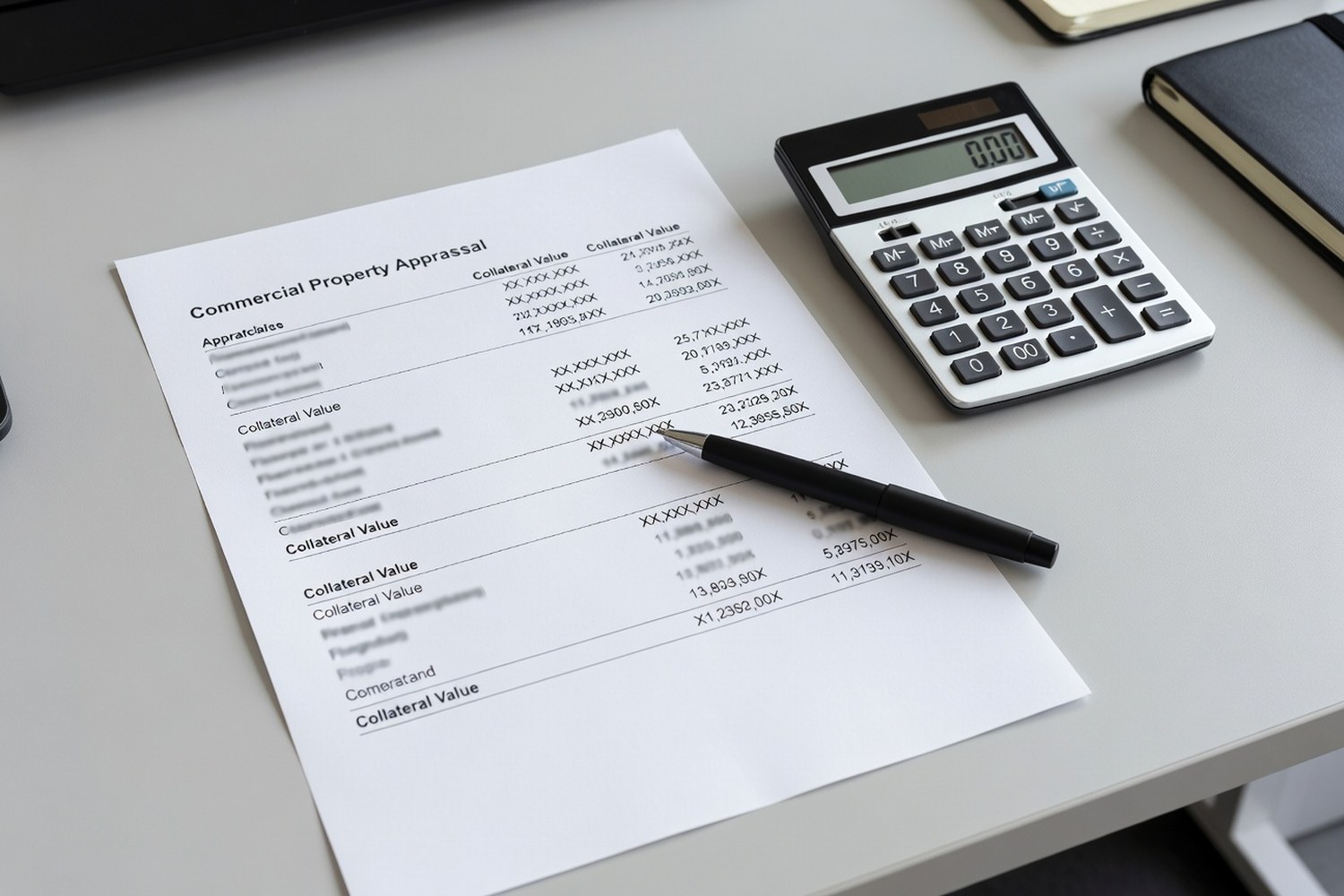
Commercial real estate. The most valuable collateral. Lenders typically advance 80–90% of appraised value. SBA 504 loans specifically use real estate collateral for amounts up to $5 million with 25-year terms. Owners who hold property free and clear can leverage it for significant borrowing capacity.
Equipment. The purchased equipment serves as its own collateral, which makes equipment loans the simplest secured product. Lenders finance 80–100% of appraised value at 6%–16% APR. If you default, the lender repossesses the asset. No additional pledge is required.
Inventory. Accepted at 50–80% of wholesale value. Perishable goods (food, flowers) get lower LTV around 50%, while durable merchandise (electronics, furniture) can reach 80%. Works best for retailers and wholesalers with predictable stock levels.
Accounts receivable. Outstanding invoices secure loans at 70–90% of face value. Ideal for B2B companies with net-30/60/90 payment terms. Fundbox and Bluevine offer AR-backed lines with next-day funding. The risk: if customers do not pay, your collateral disappears.
Blanket UCC lien. Many online lenders file a UCC-1 lien against all business assets rather than specific collateral. Common with Bluevine, OnDeck, and Kabbage. Less burdensome than pledging a single asset, but prevents you from using those assets as collateral for future loans until the lien is released.
Pledging collateral reduces lender risk, which directly lowers your rate. Here is the cost difference on $100,000 across secured and unsecured options.
| Loan Type | APR | Term | Monthly Payment | Total Interest |
|---|---|---|---|---|
| SBA secured (RE) | 11% | 10 yr | $1,377 | $65,200 |
| Equipment secured | 10% | 5 yr | $2,125 | $27,480 |
| Online unsecured | 25% | 3 yr | $3,991 | $43,676 |
| MCA unsecured | ~80%+ | 6–12 mo | Varies | $30,000+ |
Credit score. Equipment financing accepts 600+ FICO. Bluevine and OnDeck require 625+. SBA 7(a) requires 680+. Higher credit still matters even with collateral — a 720 FICO borrower with equipment collateral can get 6% APR while a 600 FICO borrower with the same collateral may see 14%.
Collateral value. The asset must appraise for enough to cover the loan amount at the lender’s LTV ratio. For a $100K loan with 80% LTV, you need collateral worth at least $125,000. Lenders discount collateral value because resale in a default scenario typically recovers less than market value.
Revenue. Online lenders require $100K–$250K annual revenue. SBA lenders look for a DSCR of 1.25x or higher. Equipment lenders are more flexible on revenue because the asset provides recovery.
Time in business. Equipment financing and online lenders accept 6–12 months. SBA 7(a) requires 2+ years. CAN Capital works with businesses as young as 3 months if revenue is strong.
Asset seizure. The fundamental risk: if you default, the lender takes your collateral. For equipment loans, they repossess the machine. For RE-backed loans, they foreclose. This is not a theoretical risk — the SBA liquidates collateral on roughly 15% of defaulted loans according to the SBA Office of Inspector General.
Personal guarantee. Most secured business loans still require a personal guarantee (PG), meaning you are personally liable even beyond the collateral value. If your $100K loan is secured by $80K in equipment and you default, the lender takes the equipment and comes after you personally for the remaining $20K. Ask specifically whether a limited or full PG is required.
UCC lien complications. A blanket UCC lien encumbers all business assets. While the lien is active, you cannot use those assets as collateral for other loans. This can block future financing. Before accepting a blanket lien, ask the lender whether they will subordinate the lien for future borrowing needs.
How to protect yourself. Only pledge collateral you can afford to lose. Get an independent appraisal. Read the personal guarantee terms carefully. Ask whether the PG is limited to the collateral value or unlimited. And maintain insurance on pledged assets — most lenders require it, but verify the coverage matches the loan amount.
A secured business loan requires collateral — a business asset that the lender can seize if you default. Common collateral includes equipment, real estate, inventory, and accounts receivable. Because collateral reduces lender risk, secured loans offer lower APRs (6%–25%) compared to unsecured options (15%–99%).
Lenders accept commercial real estate (80–90% LTV), equipment (80–100% of value), inventory (50–80% of wholesale value), accounts receivable (70–90% of face value), and blanket UCC liens on all business assets. The collateral type and value directly affect your approved amount and rate.
Generally yes. Collateral gives lenders a recovery path if you default, so they accept lower credit scores and higher loan amounts. Equipment financing approves borrowers with 600+ FICO that would be declined for unsecured loans. However, you must own qualifying assets to pledge.
The lender seizes and liquidates the pledged collateral to recover the outstanding balance. If collateral does not cover the full amount and you signed a personal guarantee, the lender pursues you personally for the difference. Defaulting also damages your business and personal credit scores for 7 years.
Yes. Equipment financing accepts 600+ FICO, and CAN Capital works with scores as low as 550 when future receivables serve as collateral. Rates are higher (15%–36%) but still significantly cheaper than unsecured options for borrowers below 620 FICO. Improving credit to 680+ before borrowing saves thousands.
It depends on the lender’s loan-to-value (LTV) ratio. At 80% LTV, you need collateral appraised at $125,000 to secure a $100K loan. Equipment loans may go up to 100% LTV on new equipment. SBA loans require collateral for amounts over $25K but will not decline solely for insufficient collateral.
Treasury will auction $213 billion of 2-year, 5-year, 7-year and floating rate notes across the four days surrounding the Fed’s October 28 decision, all settling November 2.

Treasury sold $26 billion of five-year TIPS on October 22 at a 2.367% high real yield, the highest for the maturity since October 2023, on a 2.41 bid-to-cover.

The 10-year Treasury yield fell 17 basis points to 4.96% on October 22, its largest one-day drop since August 2024 and its first close below 5% in a month.

The one-year Treasury yield reached 4.50% on October 19, a full 50 basis points above the Fed’s 4.00% ceiling, pricing two more hikes before the October 28 FOMC vote.

Treasury auctions $13 billion of the 5-1/8% bond due August 2046 on October 21, with the 20-year yielding 5.53% against 5.48% at 30 years.

China’s U.S. Treasury holdings fell to $590.7 billion in August, the lowest since August 2008, while Britain topped $1 trillion and official accounts kept selling.