Federal Reserve Vice Chair for Supervision Michelle Bowman used a May 29 speech in Reykjavik to defend keeping the door open to interest rate cuts, arguing that policymakers should look past an oil-driven jump in inflation rather than tighten in response to it. Speaking at the Central Bank of Iceland’s Reykjavik Economic Conference, Bowman said she supported retaining the language in the Federal Open Market Committee’s recent post-meeting statement that signals additional rate reductions remain possible. That stance places her against a growing group of officials who want the Fed to drop its easing bias and treat the next move as equally likely to be a hike. Her remarks land two weeks before the June 16-17 FOMC meeting, the first decision under new Chair Kevin Warsh, who signaled a slower cut path in his first week. Bowman’s framework matters to borrowers because the federal funds rate anchors the prime rate, currently 6.75%, which sets the floor for credit card, home equity, and many small business loan costs. With total PCE inflation at 3.8% and the labor market showing scattered strain, the Fed faces a real tension between its price stability and employment goals.
- Bowman backed keeping FOMC statement language that signals additional rate cuts remain possible, splitting from a growing hawkish camp.
- She urged the Fed to look past temporary, oil-driven inflation instead of adding policy restraint.
- Total PCE inflation reached 3.8% in April; core PCE rose to 3.3%, mostly on higher gasoline and fuel oil.
- Unemployment held at 4.3% in April, but Bowman flagged continuing signs of labor market fragility.
- The June 16-17 FOMC, Warsh’s first as Chair, is widely expected to hold rates at 3.50% to 3.75%.
What Bowman Said in Reykjavik
Bowman devoted most of the speech to the framework she uses to set the federal funds target range, walking through the conditions that would lead her to cut, hold, or raise the policy rate. On current conditions, she described a resilient U.S. economy with real GDP growing at a moderate to solid pace, supported by strong AI-related business investment, though growth has slowed since last summer. On inflation, she said progress had stalled, with total PCE inflation picking up to 3.8% in April on a 12-month basis, driven mostly by gasoline and fuel oil, while core PCE rose to 3.3%. Her read of the labor market was more cautious: the unemployment rate held at 4.3% in April and payroll gains have been stronger this year, yet other indicators still point to softening beneath the surface.

The heart of her argument concerned how to treat the energy shock tied to the conflict in the Middle East. Bowman said it was still early to gauge the size and persistence of the effects, and she expressed optimism that supply disruptions would ease once the conflict resolves, leaving only a temporary imprint on PCE inflation. Citing economic research, she warned that “reacting to temporarily elevated energy price inflation would add unwarranted policy restraint, weighing unnecessarily on economic activity and labor market conditions.” She framed the current stance as moderately restrictive, meant to keep the labor market stable while inflation resumes its path toward 2% once tariffs and oil prices fade. Bowman has leaned dovish before, dissenting at the July 2025 meeting in favor of a 25 basis point cut.
A Widening Split Inside the Fed
Bowman’s defense of an easing bias cuts against a hardening view among her colleagues. A growing number of policymakers want the Committee to retire language suggesting the next move is likely a cut and replace it with a neutral signal that treats a hike and a reduction as equally probable. By backing the existing language, Bowman sided with keeping cuts on the table even as headline inflation runs well above the 2% goal. The disagreement is not about the April hold, which was nearly unanimous, but about the message the Fed sends on where policy goes next.
The split gains weight from the leadership change at the top. Warsh took office in late May and used his first remarks to signal a more cautious approach, telling markets he wants the oil-driven inflation impulse to fade before committing to cuts. Bowman’s speech sketches the opposite instinct: look through the temporary shock and avoid tightening into a labor market that still shows cracks. The Committee sets policy by majority vote, not by the Chair’s preference, but the gap frames the central question heading into June. Investors can track each official’s posture through the Fed rate forecast for 2026 and the guide to how the Fed affects loans.
The Rate Picture Bowman Is Reading
The numbers framing the debate are firm. The FOMC’s April 29 implementation note set the target range at 3.50% to 3.75%, a level Bowman calls moderately restrictive. That upper bound translates directly into the 6.75% prime rate lenders post. On inflation, the Bureau of Economic Analysis reported total PCE up 3.8% over the year through April and core PCE up 3.3%, both higher than the Fed wants and both lifted by energy. The unemployment rate at 4.3% sits near most estimates of its longer-run level, which is why the cut-versus-hold question is so finely balanced.
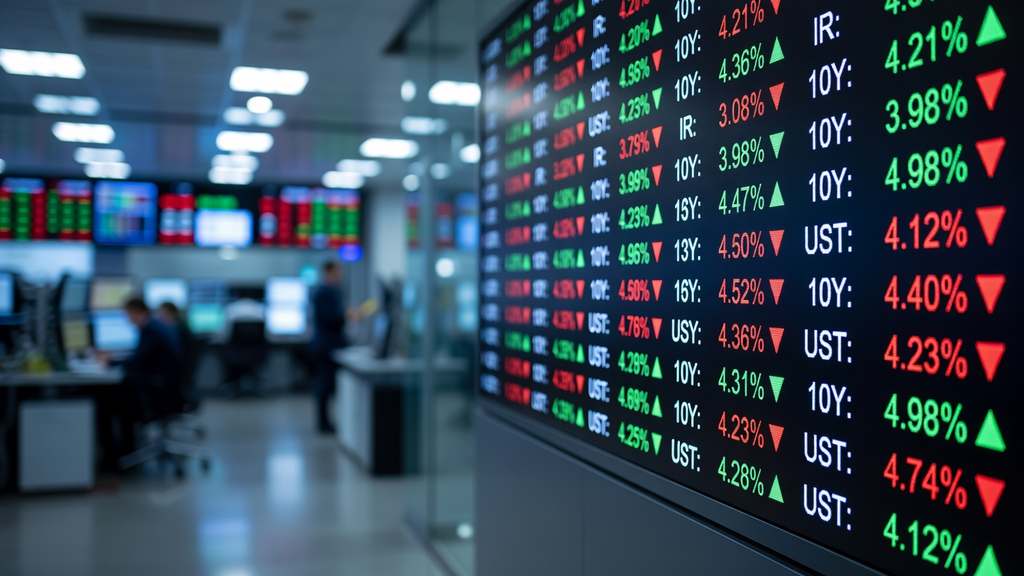
Bond markets have absorbed the message that cuts are not imminent. The 10-year Treasury yield closed near 4.45% in late May, the 2-year near 3.99%, and the 30-year just under 5.00% at 4.98%, according to Federal Reserve and FRED data. Those longer yields, not the funds rate, drive mortgage pricing, so a Fed that holds keeps borrowing costs sticky across the curve. Futures markets price the June meeting as a likely hold. You can follow the moves on the Treasury yield curve dashboard and the inflation tracker.
What It Means for Your Money
For households, the practical takeaway is that relief on borrowing costs is not arriving this month, whichever camp prevails. As long as the funds rate holds at 3.50% to 3.75%, the prime rate stays at 6.75%, and variable products tied to it move only at the margin. Credit card APRs in the low-to-mid 20s do not fall, home equity lines stay expensive, and many small business loans hold their elevated pricing. If Bowman’s view wins out over the medium term and the Committee delivers a cut later in the year, the easing would pass through to those same variable products within a statement cycle or two. The consumer credit and loan rates dashboard shows where those costs sit today.
Mortgage shoppers should watch the 10-year Treasury rather than the Fed directly, since fixed home loan rates track that benchmark. With the 10-year holding near 4.45%, current mortgage rates have little room to fall until the inflation picture clears. Savers are on the other side of the same coin: a higher-for-longer funds rate keeps yields on high-yield savings accounts attractive, and locking a competitive rate now hedges against the cuts Bowman would prefer. Borrowers carrying expensive variable debt may find that a fixed-rate personal loan offers more certainty than waiting for a policy path that two Fed officials cannot yet agree on.
Treat the June 16-17 meeting as a signal-reading exercise, not a rate event. A hold is widely expected, so the market-moving content will be the updated Summary of Economic Projections, the dot plot, and Warsh’s first press conference. Watch whether the statement keeps the language about possible cuts that Bowman defended, or shifts to a neutral tone. If the easing bias survives, a later-2026 cut stays live; if it is dropped, plan your borrowing and saving around rates that hold near current levels into next year.
Frequently Asked Questions
What did Bowman say about rate cuts?
In her May 29 speech at the Central Bank of Iceland’s Reykjavik Economic Conference, Federal Reserve Vice Chair for Supervision Michelle Bowman said she supported keeping the language in the FOMC’s recent post-meeting statement that signals additional rate cuts remain possible. She argued the Fed should look through a temporary, oil-driven rise in inflation rather than add restraint, warning that reacting to elevated energy prices would weigh unnecessarily on activity and the labor market. That separates her from a growing group of colleagues who want a neutral signal treating the next move as equally likely to be a hike or a cut.
Is the Fed going to cut rates in June 2026?
Most likely not. Futures markets price the June 16-17 FOMC meeting as a probable hold, with the target range expected to stay at 3.50% to 3.75%. Inflation at 3.8% gives the Committee little room to ease, and new Chair Kevin Warsh wants the energy-driven price impulse to fade before committing to cuts. Bowman argued for keeping cuts on the table, but a single official’s view does not set policy. The decision rests with a majority vote, so the more probable June outcome is a hold paired with updated projections that clarify the path for the rest of the year.
What is the prime rate right now, and how does it relate to the Fed?
The U.S. prime rate is 6.75%. It is not set by the Fed directly, but it tracks the top of the federal funds target range, sitting 3 percentage points above the upper bound. With the funds range at 3.50% to 3.75%, banks post prime at 6.75%. When the FOMC cuts or raises the funds rate, prime moves the same amount, usually within a day. Because lenders index credit cards, home equity lines, and many business and personal loans to prime, a Fed hold like the one expected in June keeps those variable costs steady rather than cheaper.
Why is inflation rising if the Fed wants to cut?
The recent pickup is concentrated in energy. The Bureau of Economic Analysis reported total PCE inflation at 3.8% over the year through April, driven mostly by higher gasoline and fuel oil prices linked to the conflict in the Middle East. Core PCE, which strips out food and energy, rose to 3.3%. Bowman argues that an energy supply shock tends to be temporary, so tightening to offset it would damage employment without addressing the underlying trend. Other officials counter that persistent above-target inflation, whatever its source, argues against signaling cuts. That disagreement is the crux of the debate.
What does an energy-driven inflation spike mean for my loans?
In the near term, it keeps rates higher for longer. If the Fed holds in June, as markets expect, the prime rate stays at 6.75% and variable borrowing costs do not fall. Fixed mortgage rates, which follow the 10-year Treasury near 4.45%, also stay elevated while inflation runs hot. If the Committee later looks past the shock to cut, variable products tied to prime would ease within a statement cycle or two. The practical move is to plan around current rates and treat any cut as a bonus, not a base case.
How does the Fed’s decision affect my mortgage and savings?
They respond to different levers. Fixed mortgage rates track the 10-year Treasury yield, not the funds rate. With the 10-year near 4.45%, they have limited room to drop until inflation cools. Savings yields follow short-term rates closely, so a Fed that holds at 3.50% to 3.75% keeps top high-yield savings and certificate yields competitive. If you expect cuts eventually, locking a fixed savings rate now protects your return.
Watching the Road to June 17
The next signal comes June 16-17, when the FOMC releases its decision, a fresh Summary of Economic Projections, and Warsh’s first press conference as Chair. The language Bowman defended, and whether it survives, will tell borrowers and savers more than the decision itself. For ongoing tracking, the current prime rate page, the Fed rate forecast for 2026, and the Federal Reserve meeting schedule are updated as each release lands.
References
- Federal Reserve. “Speech by Vice Chair for Supervision Bowman on monetary policy,” May 29, 2026. federalreserve.gov
- Federal Reserve. “Implementation Note issued April 29, 2026.” federalreserve.gov
- Federal Reserve. “H.15 Selected Interest Rates.” federalreserve.gov
- Bureau of Economic Analysis. “Personal Income and Outlays, April 2026.” bea.gov
- FRED. “Bank Prime Loan Rate (DPRIME).” fred.stlouisfed.org
- FRED. “10-Year Treasury Constant Maturity (DGS10).” fred.stlouisfed.org
Keep Reading
- Current U.S. Prime Rate Today
- Fed Rate Forecast 2026
- Federal Reserve Meeting Schedule 2026
- Treasury Yield Curve Dashboard
- How the Fed Affects Your Loans
- U.S. Inflation Dashboard
- Consumer Credit and Loan Rates Dashboard
- Warsh Takes Office as Fed Chair: June FOMC Outlook
- April PCE Inflation Climbs to 3.8%