
- $200,000 crosses the SBA 85% guarantee threshold ($150K) into the 75% tier — but SBA 7(a) still offers the best rates at 9.75%-13.75% with terms up to 10 years for working capital and 25 years for real estate
- Bank term loans for established businesses (3+ years, 700+ credit, $500K+ revenue) run 7-12% — competitive with SBA and faster to close (2-4 weeks vs. 30-90 days)
- Online lenders fund $200K in 1-3 days at 15-35% APR — on $200K over 3 years, that rate premium costs $35,000-$60,000 more than an SBA or bank loan
- At this loan size, most lenders require collateral, a personal guarantee, or both — fully unsecured $200K business loans are reserved for businesses with $1M+ revenue and excellent credit
- The monthly payment on a $200K SBA loan at 11% over 7 years is roughly $3,147 — your business should generate at least $31,000-$39,000/month in revenue to carry this comfortably
Who Borrows $200K for Business
Two hundred thousand dollars is where small business lending gets serious. You’re past the startup-scraping phase and past the mid-range territory where a line of credit or credit cards might bridge the gap. At $200K, you’re making a move — opening a second location, purchasing a commercial vehicle fleet, building out a production facility, or acquiring a competitor’s customer base. The average small business loan in the U.S. is around $660,000 according to Federal Reserve data, so $200K is actually below the midpoint. But it’s large enough that every lender treats you as a commercial borrower, not a retail customer.
The businesses that land $200K loans share a few traits. They’ve been operating for at least 2-3 years. They’re generating $400,000-$1,000,000+ in annual revenue. Their owners have personal credit scores above 680. And critically, they can articulate exactly what the $200K will do: “I’m opening a second restaurant location — $90K for buildout, $60K for equipment, $50K for inventory and working capital” is the kind of precision that gets loans funded. Vague requests like “general business purposes” raise flags at this amount.
What catches some borrowers off guard is how much the financing source matters at $200K. The spread between the cheapest and most expensive option is staggering. An SBA 7(a) at 11% over 7 years costs $264,370 total. An online term loan at 25% over 3 years costs $272,652 total — and that’s with monthly payments nearly double the SBA option ($7,573 vs. $3,147). Same amount borrowed, wildly different outcomes. Spending an extra two weeks shopping and comparing can save you $30,000+ over the loan term. That’s not an exaggeration — it’s basic math.

At $200K, the difference between the cheapest and most expensive lender can exceed $30,000 — always compare at least 3 options.
Loan Types Ranked by Cost
1. SBA 7(a) — 9.75%-13.75%. At $200K, the SBA guarantee drops to 75% (from 85% under $150K), and the max rate climbs to prime + 7% = 13.75% for loans over $150K with terms under 7 years. For terms of 7+ years, the max is prime + 5.5% = 12.25%. Even at the 75% tier, SBA remains the cheapest broadly available option. The guarantee fee is 3% of the guaranteed portion ($150,000 x 3% = $4,500). Terms: up to 10 years for working capital, 25 years for real estate. Timeline: 30-90 days.
2. SBA 504 — 5%-7% fixed. If your $200K is for real estate or major fixed assets, the 504 program delivers the lowest rate available. You put 10% down ($20K), a bank funds 50%, and a CDC funds the SBA-guaranteed 40%. Rates are tied to the 10-year Treasury note. The trade-off: strict use restrictions (no working capital), 60-90+ day timeline, and the requirement for a CDC partner. But for qualifying projects, nothing comes close on price.
3. Bank term loan — 7%-13%. Community banks and credit unions at $200K offer rates competitive with SBA — sometimes better for established customers. A bank that already holds your business checking, has watched $50K+ in monthly deposits for 3 years, and processed your previous $75K loan may offer 8-9% without the SBA paperwork and guarantee fees. Timeline: 2-4 weeks. Requirements: 3+ years in business, $500K+ revenue, 700+ credit.
4. Equipment financing — 5%-25%. If your $200K is for specific assets — delivery trucks, manufacturing equipment, commercial kitchen buildout, medical devices — equipment financing uses the assets as collateral and often delivers rates below unsecured alternatives. A $200K CNC machine financed at 7% over 5 years costs $3,960/month with $37,600 in total interest. Same amount unsecured at 15% = $4,758/month with $85,500 in interest. The equipment path saves $48,000.
5. Business line of credit — 8%-25%. If you don’t need the full $200K at once, a revolving line saves money because you only pay interest on drawn amounts. Bluevine offers up to $250K. But if you draw the full $200K immediately and don’t repay for years, the effective cost can exceed a term loan due to higher per-dollar rates.
6. Online term loan — 15%-35%. OnDeck, Funding Circle, Credibly, and Lendio marketplace all fund $200K. Speed: 1-3 days. At 25% over 3 years, total cost is $272,652 — that’s $72,652 in interest alone. Online should be reserved for genuine time-critical opportunities where the ROI of having money this week exceeds the $30K-$60K premium over SBA/bank options.
Lender Comparison Table
| Loan Type | APR Range | Max Term | Speed | Min. Credit | Total Cost (est.) |
| SBA 7(a) | 9.75%-13.75% | 10-25 yr | 30-90 days | 680+ | $264K (11%/7yr) |
| SBA 504 | 5%-7% | 10-25 yr | 60-90 days | 680+ | $243K (6%/10yr) |
| Bank Term | 7%-13% | 5-10 yr | 2-4 weeks | 700+ | $249K (9%/5yr) |
| Equipment | 5%-25% | 3-7 yr | 3-10 days | 600+ | $238K (7%/5yr) |
| Online Term | 15%-35% | 1-5 yr | 1-3 days | 580+ | $273K (25%/3yr) |
Total cost estimates include principal + interest at representative rates. SBA rates based on current prime of 6.75%. Actual rates vary by lender and borrower profile. March 2026.
Real Cost Scenarios at $200K
I’m going to lay out four scenarios because at $200K, the dollars involved are large enough to justify spending 20 minutes understanding them before you apply anywhere.
SBA 7(a) at 11% over 7 years: $3,147/month. Total interest: $64,370. Total cost: $264,370 (plus ~$4,500 guarantee fee). This is the benchmark. The monthly payment is manageable for businesses doing $375K+ in annual revenue. You have 7 years to pay it off, which gives a new location or major investment time to generate returns before the debt is retired.
Bank term at 9% over 5 years: $4,153/month. Total interest: $49,178. Total cost: $249,178. Higher monthly payment than SBA, but $15,000 less in total interest because you’re paying it down faster. If your cash flow supports $4,153/month comfortably, this is actually the cheaper option and closes in 2-4 weeks instead of 30-90 days.
Online lender at 25% over 3 years: $7,573/month. Total interest: $72,652. Total cost: $272,652. The monthly payment is brutal — $7,573 requires roughly $75K-$95K/month in revenue to stay within safe ratios. And you pay $72,652 in interest in just 3 years, compared to $64,370 over 7 years with SBA. Online at this size only makes sense when the alternative is losing a revenue opportunity worth more than $70K.
Equipment financing at 7% over 5 years: $3,960/month. Total interest: $37,600. Total cost: $237,600. If your $200K need is equipment, this is the cheapest total cost by a wide margin — $27,000 less than SBA and $35,000 less than online. The equipment is collateral, which drives the rate down.
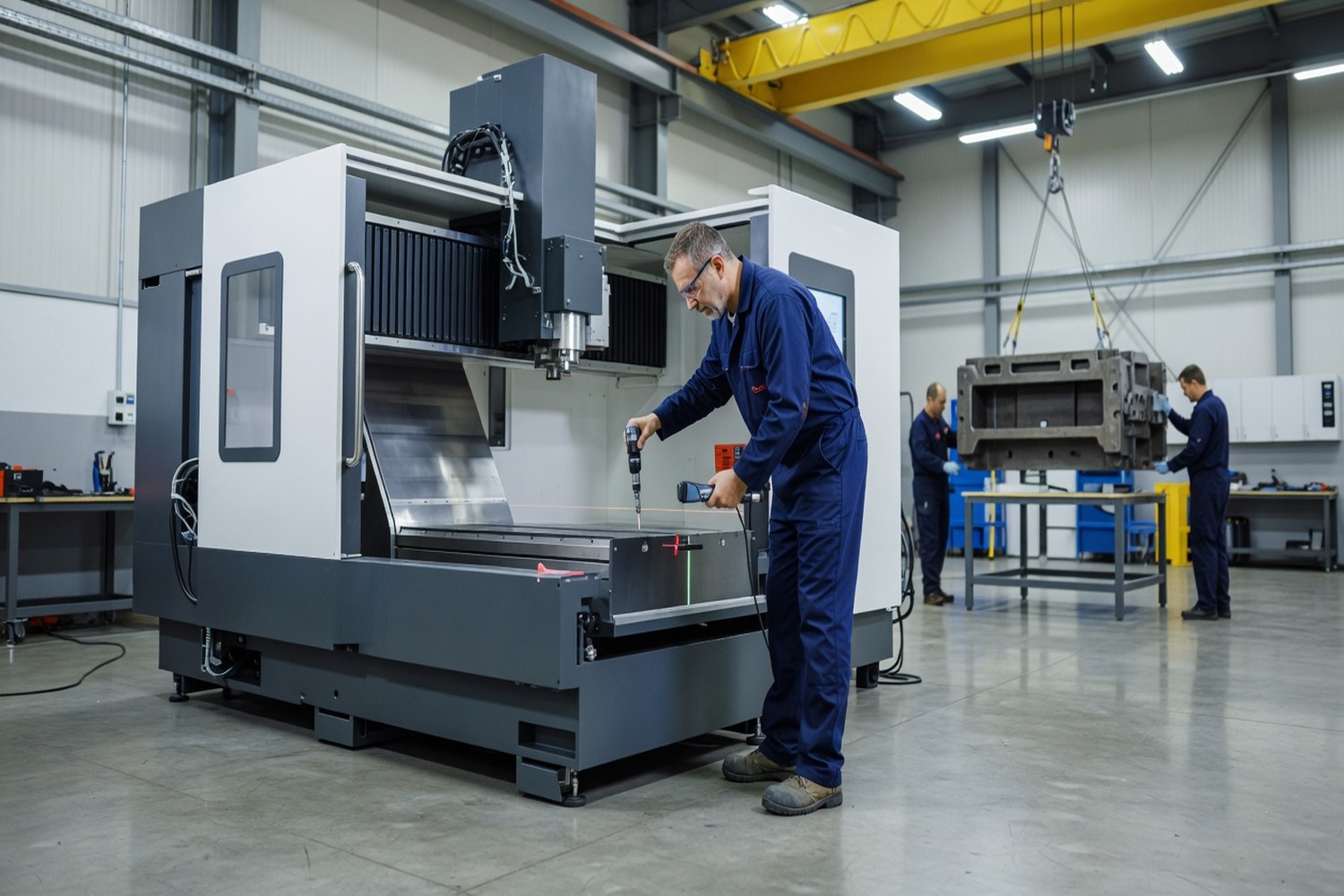
Equipment purchases at $200K often qualify for the lowest rates because the machinery itself secures the loan.
Qualification Requirements
Revenue. The 8-10% payment-to-revenue rule: at $3,147/month (SBA, 7 years), you need $31,470-$39,340/month in revenue — roughly $375,000-$470,000 annually. At $4,153/month (bank, 5 years), you need $41,530-$51,910/month — roughly $500,000-$625,000 annually. Banks and SBA lenders typically want $500K+ annual revenue for a $200K approval.
Credit score. SBA: 680+ personal, with most successful applicants at 700+. Banks: 700+ for best rates, some will go to 680 with strong revenue. Online: 580-620 minimum but at punishing rates. At $200K, the rate spread between a 680 and 750 score can be 2-4 percentage points, which translates to $10,000-$25,000 in total interest difference over the loan term.
Time in business. SBA and banks: 2+ years is standard. Some SBA Preferred Lenders will consider 1.5 years with exceptional financials. Under 2 years, online lenders are your primary path. Under 1 year, $200K from any legitimate source is extremely unlikely.
Collateral and personal guarantee. At $200K, expect a personal guarantee from every lender. Most will also want collateral — real estate, equipment, inventory, or accounts receivable. SBA requires a personal guarantee from all owners of 20%+ and may require collateral if available (though they won’t decline solely for lack of collateral). Fully unsecured $200K business loans exist but require $1M+ revenue, 750+ credit, and an established lending relationship.
DSCR. Lenders want 1.25x minimum at $200K. That means for every dollar of loan payment, you have $1.25 in net operating income. For the SBA $3,147/month payment, you need at least $3,934/month in net income after all other expenses and debt payments. Below 1.1x, most lenders decline. Above 1.5x, you’re in strong territory for rate negotiation.
What $200K Funds in Practice
Second location. Lease deposit and buildout ($80K-$120K) + opening inventory ($30K-$50K) + working capital runway ($30K-$50K) = $140K-$220K. A $200K SBA loan with 10-year terms gives the new location 12-18 months to ramp to profitability while keeping payments at $2,360/month — manageable even before the new revenue kicks in.
Major equipment. Commercial kitchen ($100K-$180K), manufacturing line ($150K-$300K), medical imaging equipment ($120K-$250K), delivery fleet ($100K-$200K for 5-8 vehicles). Equipment financing is often the cheapest path because the assets serve as collateral. If the equipment directly generates revenue, the loan’s ROI can be calculated precisely.
Acquisition. Buying a competitor’s customer list, route, territory, or entire business at $200K. SBA 7(a) explicitly covers business acquisition. The acquired business’s cash flow helps service the debt, and the existing customer base provides immediate revenue — no ramp-up period.
Debt consolidation and refinancing. If you’re carrying $200K across a merchant cash advance ($80K at 40%), an online loan ($70K at 28%), and credit cards ($50K at 24%), consolidating into one SBA 7(a) at 11% saves $20,000-$35,000 in annual interest. This is one of the most mathematically compelling uses of a $200K business loan.
How to Apply
Step 1: Define your purpose with dollar-level specificity. “$200K for a second location” becomes “$200K: $85K lease and buildout, $55K equipment, $35K inventory, $25K working capital reserve.” Lenders fund specific plans, not vague ambitions.
Step 2: Prepare full documentation before starting any application. At $200K, every lender requires documentation. Gather: 2-3 years of business and personal tax returns, current YTD profit and loss + balance sheet, 6-12 months of business bank statements, personal financial statement, business plan or project summary (especially for SBA), debt schedule (all existing loans/lines with balances, payments, and terms), and copies of business licenses, leases, and contracts.
Step 3: Apply to 3 lenders in parallel. One SBA Preferred Lender (find via SBA.gov Lender Match or your SCORE chapter). One community bank or credit union where you have an existing relationship. One online marketplace (Lendio, NerdWallet, or Credible) that shops your profile across multiple lenders. Three parallel applications give you competing offers.
Step 4: Compare total cost of capital. At $200K, fees add up: SBA guarantee fee ($4,500), bank origination fees ($1,000-$4,000), online origination fees (1-6% = $2,000-$12,000). Ask every lender: “What is the total dollar amount I will repay over the full term, including every fee?” That single number is the only honest comparison.
Frequently Asked Questions
What credit score do I need for a $200,000 business loan?
SBA: 680+ personal, ideally 700+. Banks: 700+ for best rates. Online lenders: 580-620 minimum but at 20-35% APR. At $200K, the rate spread between 680 and 750 credit translates to $10,000-$25,000 in total interest difference.
What revenue does my business need for $200K?
Most lenders want $400,000-$500,000+ annual revenue. The SBA monthly payment of $3,147 (at 11%/7yr) should stay under 8-10% of monthly gross revenue, meaning $31K-$39K/month minimum. DSCR of 1.25x or higher is expected.
How long does it take to get a $200K business loan?
Online lenders: 1-3 days. Bank term loans: 2-4 weeks. SBA 7(a): 30-90 days (SBA Preferred Lenders may be faster). SBA 504: 60-90+ days. Apply online for speed while starting the SBA process for long-term savings.
Can I get a $200K business loan with bad credit?
Very difficult. Some online lenders accept 580+ but charge 25-35% — on $200K that means $72,000+ in interest over 3 years. SBA and bank loans are not realistic below 650. At bad-credit rates, seriously question whether the investment generates enough ROI to justify the cost.
SBA 7(a) vs. bank loan at $200K — which is better?
SBA wins on term length (10 years vs. 5-7 at banks), lowering monthly payments significantly. Banks win on speed (2-4 weeks vs. 30-90 days) and may match SBA rates for strong existing customers. If you can wait 4-8 weeks and want the lowest payment, SBA. If you need faster closing, bank.
References
- SBA, “7(a) Loan Program,” sba.gov
- SBA, “504 Loan Program,” sba.gov
- Federal Reserve Bank of Kansas City, “Small Business Lending Survey Q3 2025,” kansascityfed.org
- SCORE, “Small Business Resources,” score.org
Keep Reading
- Best Small Business Loans: Compare Rates & Apply Online
- SBA Loans: Compare 7(a), 504 & Microloan Programs
- $150,000 Business Loans
- $250K Business Loans
- Best Long-Term Business Loans
Rates and terms are subject to change. This is not financial advice. All information is for educational and comparison purposes only. SBA rates based on current prime rate of 6.75% as of March 2026. Always compare multiple lenders and verify current terms directly before committing to business financing.