The yield on the 10-year Treasury note climbed back toward 4.5 percent this week, touching an intraday high near 4.52 percent on June 3 before settling around 4.46 percent, as a fresh jump in oil prices revived a question that markets had mostly set aside this spring: whether the Federal Reserve’s next move could be a rate increase rather than a cut. West Texas Intermediate crude surged almost 6 percent to about 92.50 dollars a barrel on June 1 after Iran reportedly halted negotiations with the United States, and the energy spike fed straight into inflation expectations. Fed funds futures now imply roughly an 85 percent probability of a quarter-point Fed rate increase by the end of 2026, up from about 60 percent a week earlier. The prime rate, which tracks the Fed’s policy band, has held at 6.75 percent since December, and our current prime rate tracker shows no change yet. The repricing still matters for borrowers, because the 10-year yield sets the tone for mortgages, auto loans, and corporate credit, and the Treasury yield curve has steepened. The Federal Open Market Committee meets June 16 and 17, and what looked like a quiet hold has turned into a tense read on whether the oil shock forces a harder line.
Key Takeaways
- The 10-year Treasury yield rose toward 4.5 percent on June 3, near its highest level in weeks, on renewed inflation worry.
- Fed funds futures price about an 85 percent chance of a 2026 rate increase, up from 60 percent a week earlier.
- A near 6 percent jump in oil to roughly 92.50 dollars a barrel on June 1 drove the move.
- The prime rate holds at 6.75 percent; a quarter-point Fed hike would lift it to 7.00 percent.
- The FOMC meets June 16 and 17, with futures still favoring a hold this month.
What Changed in the Bond Market
The bond market did its repricing in a matter of days. On May 29 the 10-year Treasury yield sat near 4.45 percent. By June 3 it had pushed to an intraday 4.52 percent before easing to about 4.46 percent. The 2-year yield, which is more sensitive to Fed policy, rose to roughly 4.05 percent from 3.98 percent over the same stretch, a sign that traders moved their near-term rate expectations higher. The 30-year bond, already trading near 4.97 percent, has hovered close to its highest level in 19 years after a May auction cleared at a 5 percent yield for the first time since 2007. The Federal Reserve’s H.15 release confirms the prime rate at 6.75 percent and the federal funds effective rate at 3.62 percent, inside the Committee’s 3.50 to 3.75 percent target range.
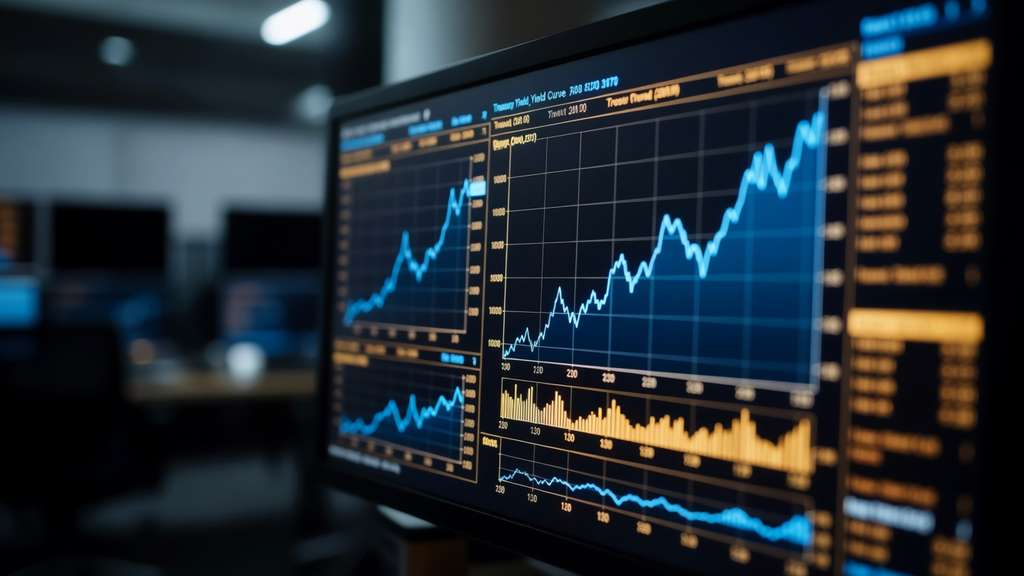
What shifted was not the Fed, which has not met since April 29, but the inflation outlook embedded in those yields. When oil jumps, headline inflation tends to follow within weeks, and bond investors demand higher yields to protect the real value of fixed coupons. The spread between the 10-year and 2-year yields widened to about 0.41 percentage point, a steepening that often signals the market expects higher inflation or heavier Treasury issuance ahead. For readers tracking the policy band directly, our Fed prime rate dashboard and interest rate dashboard update these figures every day. The move is striking because for most of the spring, futures had leaned toward a cut in 2026, not a hike.
Why Oil Is Driving the Repricing
The trigger was energy. West Texas Intermediate crude rose about 5.93 percent to close near 92.50 dollars a barrel on June 1, while Brent gained about 4.24 percent to roughly 97.80 dollars, after Iran’s state media reported that negotiators were stopping talks with the United States. Energy prices flow into inflation through two channels: directly, as gasoline, diesel, and heating costs feed the headline Consumer Price Index and the Personal Consumption Expenditures index, and indirectly, as higher fuel costs raise the price of shipping, manufacturing, and food. Headline PCE inflation already climbed to 3.8 percent in April, with core PCE at 3.3 percent, both above the Fed’s 2 percent goal. A sustained oil spike on top of that backdrop is what pushed traders to price a possible rate increase.
The worry is not that one month of expensive oil changes policy, but that a prolonged conflict keeps energy elevated long enough to lift inflation expectations, the measure the Fed watches most closely. Breakeven rates derived from inflation-protected Treasuries have drifted higher alongside the move. For a closer look at how these forces reach household budgets, see our inflation tracker, which follows the major price gauges as they are released.
What the Fed Has Signaled
Fed officials have not endorsed the hike narrative. At its April 29 meeting, the Committee held the target range at 3.50 to 3.75 percent in a divided vote, with Governor Stephen Miran dissenting in favor of a quarter-point cut. The statement and the minutes pointed to a labor market that is cooling and inflation that remains sticky, a combination that argues for patience rather than action in either direction. Speaking on May 29, Governor Michelle Bowman pushed back directly on the idea of tightening because of energy costs. “Reacting to temporarily elevated energy price inflation would add unwarranted policy restraint, weighing unnecessarily on economic activity and labor market conditions,” she said, framing the oil move as a shock the Fed could look through.

That leaves a gap between what traders are pricing and what policymakers are saying. Fed funds futures still favor a hold at the June 16 and 17 meeting, with roughly a 70 percent probability of no change, even as the same market lifts the odds of a year-end increase. The Committee’s task is distinguishing a temporary energy spike from a durable change in the inflation trend. If oil retreats and the labor market keeps softening, the case for a cut later in the year returns. If energy stays high and feeds into broader prices, the hold could extend and the hike debate sharpens. Our Fed rate forecast for 2026 lays out the scenarios in detail, and the fed meeting schedule lists every decision date for the rest of the year.
What Higher Yields Mean for Your Wallet
The bond market reaches consumers faster than the Fed does. Mortgage rates track the 10-year Treasury yield, so the climb toward 4.5 percent tends to push 30-year fixed rates higher within days, before any FOMC decision. Borrowers shopping now can compare live pricing on our current mortgage rates page. The prime rate is the more direct lever for revolving debt. Credit card APRs and home equity lines move with prime, which sits at 6.75 percent today. If the Fed were to raise its target band by a quarter point, prime would rise to 7.00 percent, and variable card rates would follow within one or two statement cycles, a link we explain on how the Fed affects loans.
Savers see the other side of the trade. Higher yields support the rates on high-yield savings accounts and certificates of deposit, so the same move that raises borrowing costs can lift returns on cash. Our best high-yield savings accounts and best CD rates pages track the top offers as banks adjust. Personal loan borrowers feel the effect more slowly, since fixed installment rates reset only on new loans, but a higher rate environment still nudges new-loan pricing up over time.
If you carry a balance on a variable-rate credit card, the repricing in the bond market is a reminder to act before the Fed does. Paying down high-APR debt now removes the risk that a year-end rate increase raises your carrying cost. If you hold cash, consider locking a competitive CD yield while rates are elevated.
Frequently Asked Questions
Will the prime rate go up in 2026?
The prime rate sits at 6.75 percent and moves only when the Federal Reserve changes its target range. As of early June, fed funds futures imply about an 85 percent chance of a quarter-point increase by year-end, which would lift prime to 7.00 percent. That is a market expectation, not a Fed commitment. The Committee held rates at its April meeting, and several officials have argued against tightening over a temporary oil shock. The June 16 and 17 meeting is still expected to end in a hold.
Why are Treasury yields rising if the Fed has not met?
Treasury yields reflect what investors expect for inflation and policy, not just the current fed funds rate. When oil prices jumped almost 6 percent on June 1, traders raised their inflation forecasts and demanded higher yields to compensate, pushing the 10-year toward 4.5 percent. Longer maturities also price in the supply of new Treasury debt and the term premium investors require to hold long bonds. So yields can move sharply between Fed meetings, driven by data and geopolitics, even when the policy rate itself has not changed since the April decision.
How does the 10-year Treasury yield affect my mortgage?
Thirty-year fixed mortgage rates closely follow the 10-year Treasury yield rather than the fed funds rate. Lenders price home loans off long-term yields plus a spread for risk and servicing, so when the 10-year climbs toward 4.5 percent, mortgage rates usually rise within days. That means the recent bond move can raise your quoted rate before the Fed takes any action. If you are shopping for a home or a refinance, comparing rates quickly matters, because the pricing can shift with the bond market from one morning to the next.
Should I worry about a Fed rate hike?
A rate increase would raise borrowing costs on variable-rate debt, including most credit cards and home equity lines, by about a quarter point soon after the decision. For a household carrying a 10,000 dollar card balance, a quarter-point increase adds roughly 25 dollars in annual interest. The effect is modest per move but compounds if more increases follow. Fixed-rate loans you already hold do not change. The practical step is to reduce high-interest variable balances now, so a possible year-end hike has less impact on your monthly budget.
What would make the Fed raise rates instead of cutting?
The Fed would consider raising rates if inflation expectations climb and the energy spike looks durable rather than temporary. Headline PCE inflation was already 3.8 percent in April, above the 2 percent target, and a sustained oil shock could push it higher. Policymakers watch whether high prices feed into wages and broader goods, which would signal that inflation is becoming entrenched. If the labor market stays firm at the same time, the case for a hike strengthens. A cooling jobs market or falling oil would point back toward a cut.
When is the next Fed decision?
The Federal Open Market Committee meets on June 16 and 17, 2026, with the policy statement and Chair press conference on the second day. Fed funds futures currently favor no change at that meeting, keeping the target range at 3.50 to 3.75 percent and the prime rate at 6.75 percent. The bigger question is the path after June, where the market has shifted toward pricing a possible increase by December. You can follow every scheduled decision date for the rest of the year on our fed meeting schedule page.
Watching the June 17 Meeting
The bond market has done the moving so far, not the Fed. Whether the repricing toward a 2026 rate increase holds depends on oil, inflation data, and the labor market over the next two weeks. Until the Committee acts, the prime rate stays at 6.75 percent, mortgage rates track the 10-year yield, and savers can still capture elevated returns. Follow the numbers on our interest rate dashboard, the Treasury yield curve, and how the Fed affects loans as June 17 approaches.
References
- Board of Governors of the Federal Reserve System, H.15 Selected Interest Rates: federalreserve.gov/releases/h15
- Federal Reserve, FOMC Statement, April 29, 2026: federalreserve.gov
- Governor Michelle W. Bowman, Speech on Monetary Policy, May 29, 2026: federalreserve.gov
- Federal Reserve Bank of St. Louis, 10-Year Treasury Constant Maturity (DGS10): fred.stlouisfed.org
- U.S. Department of the Treasury, Daily Treasury Par Yield Curve Rates: home.treasury.gov
- TreasuryDirect, Upcoming Auctions: treasurydirect.gov
- U.S. Treasury Fiscal Data, Debt to the Penny: fiscaldata.treasury.gov