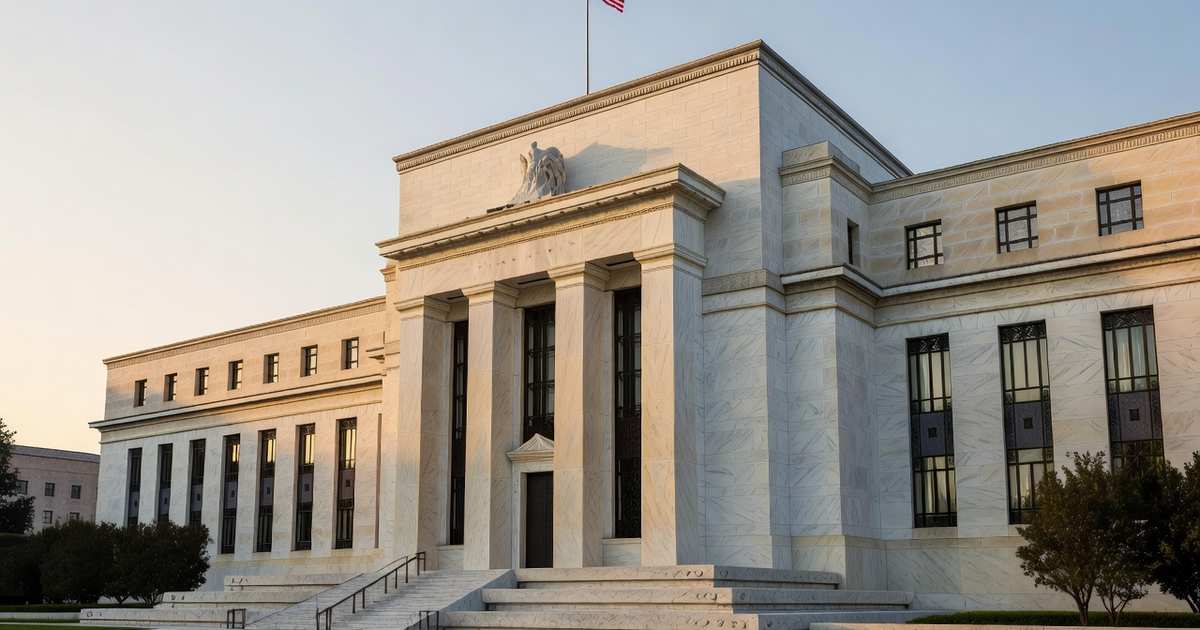
The Federal Reserve released the minutes of its June 16 and 17 meeting on July 8, and the record shows a committee that has moved firmly away from the idea of cutting interest rates this year. Policymakers voted 12 to 0 to hold the federal funds rate in a range of 3.50 to 3.75 percent, the same setting that has kept the U.S. prime rate at 6.75 percent since December. The minutes reveal that a few officials went further inside the room than the unanimous vote suggested, telling colleagues there was a case for raising rates outright. The document arrives three weeks before the next policy meeting on July 28 and 29, and it sharpens the question facing every borrower: not when the Fed will ease, but whether it might tighten again. Inflation still runs well above the 2 percent target, pushed up by tariffs, an energy shock tied to the conflict in the Middle East, and demand from the artificial intelligence buildout. For households, the minutes matter because the prime rate that prices credit cards and home equity lines moves in step with the Fed. Our current prime rate tracker and Fed rate forecast follow every shift.
Key Takeaways
- The FOMC held its benchmark rate at 3.50 to 3.75 percent by a 12 to 0 vote, leaving the prime rate at 6.75 percent.
- A few officials told the committee there was a case for raising rates, though all of them supported holding in June.
- Members dropped the language that had signaled an easing bias, removing any hint that rate cuts come next.
- Officials split on year-end policy, with many seeing rates near today’s level and many others seeing them higher.
- The next decision lands July 28 and 29, with inflation still running above the Fed’s 2 percent goal.
On This Page
What the Minutes Revealed
The unanimous June vote hid a livelier argument than the one-page statement let on. According to the minutes, all participants supported keeping the target range at 3.50 to 3.75 percent, but “a few participants commented that, in light of these developments, there was a case for raising the target range for the federal funds rate.” Those officials still backed the hold for June. The committee also made a pointed edit to its communication, agreeing that the statement “would not repeat the language that had suggested an easing bias regarding the likely direction of the Committee’s future interest rate decisions.” That single change closed the door, at least rhetorically, on the rate cuts that markets had penciled in earlier this year.

The clearest sign of division came in how officials viewed the rest of 2026. The minutes note that “many participants indicated that the appropriate level of the federal funds rate would be within or slightly below the current target range at the end of this year.” In the very next sentence, the record adds that “many other participants” judged the appropriate level “would be above the current target range at the end of this year.” That is a committee cut roughly in half, one side leaning toward patience or a modest cut and the other leaning toward a hike. Several participants also said they did not view current policy as restrictive, a stance that makes further increases easier to justify if inflation refuses to cool. You can track the policy path on our Fed and prime rate dashboard.
The Debate Over Inflation and Risk
Officials spent much of the meeting mapping why inflation has stayed high. Participants “generally noted that inflation had increased further and remained well above the Committee’s 2 percent longer-run objective,” and they tied the increase to the lingering effects of tariffs, supply disruptions from the closure of the Strait of Hormuz, and strong demand linked to AI investment. Fed staff estimated that total personal consumption expenditures inflation rose to 4.1 percent in May, with core inflation at 3.4 percent, both up from April readings of 3.8 and 3.3 percent. Several participants said price pressures had grown more broad based, reaching transportation, airfares, and agricultural inputs. The unemployment rate held at 4.3 percent, and many officials said the labor market was not a source of inflation.
The balance of risks tilted in one direction. Participants “generally assessed” that upside risks to price stability “remained elevated while downside risks to achieving maximum employment had moderated a bit.” That framing explains the hawkish lean, because a committee more worried about inflation than jobs has little reason to cut. Officials did take comfort in one number: most measures of medium and longer-term inflation expectations stayed near the 2 percent objective, which the minutes described as well anchored. Still, a majority flagged the danger that after several years of inflation above target, elevated readings “could begin to affect inflation expectations and wage and price setting decisions.” Our inflation tracker follows each monthly print.
Warsh’s Fed Reshapes Its Message
June was the first meeting run by Chair Kevin Warsh, and the minutes show a committee rethinking how it talks to the public. “A majority of participants remarked that they saw advantages in shortening the statement,” and most preferred to drop the easing-bias phrase for good. Warsh also “described plans to establish five independent task forces to examine issues related to the broad conduct of monetary policy,” a review that could reshape how the Fed sets and explains policy in the years ahead. The changes point to a leaner, less forward-leaning communication style, one that commits the Fed to fewer promises about its next move.

Plumbing beneath the policy rate also drew attention. The minutes recorded that the effective federal funds rate declined 2 basis points during the intermeeting period, “the first such change since November,” after repurchase agreement rates briefly dropped 15 basis points below the interest rate on reserve balances in mid-May. Fed staff judged that reserves remained ample, and the committee left its reinvestment plan in place after ending balance sheet runoff late last year. Longer-dated yields told a firmer story, with the 10-year Treasury yield up about 20 basis points since the April meeting. Our Treasury yield curve dashboard and balance sheet tracker map both trends.
What the Minutes Mean for Your Wallet
The prime rate is the bridge between the Fed and your borrowing costs. Banks set prime at the top of the federal funds range plus 300 basis points, which pins it at 6.75 percent today. Most variable-rate credit cards and home equity lines of credit add a margin on top of prime, so their annual percentage rates have held steady through the Fed’s long pause. If the hawkish camp inside the committee wins out and the Fed raises rates a quarter point at a coming meeting, prime would climb to 7.00 percent, and card and line-of-credit rates would follow within a statement cycle or two. Our guide on how the Fed affects your loans and our consumer credit rates dashboard show the mechanics.
Fixed borrowing costs answer to the bond market rather than the Fed directly. The 10-year Treasury yield, which guides mortgage pricing, sat near 4.55 percent in early July, keeping 30-year home loans elevated even without a rate hike. Savers remain the clear winners of a higher-for-longer stance, since top high-yield savings accounts and certificates of deposit still pay well above inflation. If you carry a balance, prioritize paying it down before any hike arrives; if you hold cash, lock in yields while they last. Compare current offers on our mortgage rates, CD rates, and high-yield savings pages.
Pro Tip: Treat the July 28 and 29 meeting as a live event, not a formality. With officials split on whether the next move is a cut or a hike, a variable-rate balance is exposed in either direction. Pay down high-interest card debt now, and if you want certainty on your savings yield, open a fixed-rate CD before the decision.
Frequently Asked Questions
What did the June Fed minutes say about rate cuts?
The minutes show the committee stepping back from cuts. Members agreed the statement would no longer repeat the language that had suggested an easing bias, which had implied that the next rate move would likely be down. Officials held the federal funds rate at 3.50 to 3.75 percent by a 12 to 0 vote and stressed that inflation remained well above the 2 percent goal. Many participants saw rates ending the year near or slightly below today’s level, but many others saw them higher, so the record does not promise a cut at any point in 2026.
Does this mean the Fed will raise rates in July?
Not necessarily, but the minutes make a hike more plausible than it looked in the spring. A few officials said there was a case for raising rates in June, and several said they did not view current policy as restrictive. Those views make additional tightening easier to justify if inflation stays hot. The committee gave no signal that a July increase is decided, and its next move will depend on the inflation and jobs data that arrive before the July 28 and 29 meeting. Markets now treat a 2026 hike as a real possibility rather than a remote one.
Why is the prime rate stuck at 6.75 percent?
The prime rate follows the Fed. Banks set prime at the top of the federal funds target range plus 300 basis points, a convention that has held for decades. With the funds range at 3.50 to 3.75 percent since December, prime has stayed at 6.75 percent. It will not change until the Fed changes its target range. If the committee raises rates a quarter point, prime moves to 7.00 percent within a day; if it cuts, prime drops to 6.50 percent. Because the Fed has held steady all year, prime has been flat for seven straight months.
What is pushing inflation higher in 2026?
The minutes point to three main forces. Tariffs imposed over the past year continue to pass through to consumer prices, especially for goods. The conflict in the Middle East and the closure of the Strait of Hormuz drove energy and commodity costs higher, feeding into headline inflation. Strong demand tied to the artificial intelligence buildout has lifted prices for technology products and electricity. Fed staff estimated total PCE inflation at 4.1 percent in May and core inflation at 3.4 percent. Officials expect these pressures to ease over time but warned that they could prove more persistent than forecast.
How would another rate hike change my credit card bill?
Most credit cards carry a variable rate tied to the prime rate, so a Fed hike passes through quickly. If the Fed raises rates a quarter point, prime rises from 6.75 to 7.00 percent, and your card’s annual percentage rate typically climbs by the same 0.25 point within one or two statement cycles. On a 5,000 dollar balance, that adds roughly 12 to 13 dollars of interest per year, a modest amount on its own but one that compounds if you carry a balance for months. Home equity lines of credit adjust the same way, which is why paying down variable debt ahead of a hike helps.
When is the next FOMC meeting and what should I watch?
The Federal Open Market Committee meets next on July 28 and 29, 2026. That gathering will not include an updated dot plot, so the decision and the statement wording will carry the message. Watch the June jobs revisions, the next consumer price report, and any Fed speeches for clues on whether the hawkish camp is gaining ground. Our Fed meeting schedule lists every date. Because officials are split, the statement language and Chair Warsh’s press conference will matter more than usual.
Watching the July Meeting
The June minutes reset the debate from how soon the Fed will cut to whether it will hold or hike. With inflation near 4 percent and a committee split down the middle, the July 28 and 29 decision looks less certain than any in months. Borrowers should assume the prime rate stays at 6.75 percent for now while preparing for either direction. Keep watch on our U.S. interest rates dashboard, our current prime rate page, and our Fed rate forecast as the next meeting approaches.
References
- Federal Reserve, Minutes of the Federal Open Market Committee, June 16 to 17, 2026
- Federal Reserve, FOMC Statement, June 17, 2026
- Federal Reserve, June 16 to 17, 2026 Meeting and Summary of Economic Projections
- Federal Reserve, Selected Interest Rates (H.15)
- Federal Reserve Bank of St. Louis, Bank Prime Loan Rate (DPRIME), FRED
- Federal Reserve, FOMC Meeting Calendars and Information