The U.S. Treasury sold $22 billion of 30-year bonds on July 9, 2026 at a high yield of 5.058%, the steepest borrowing cost the government has paid on a long bond auction since 2007. The reopening of the Bonds of May 2056 (CUSIP 912810UU0) drew a bid-to-cover ratio of 2.44, up from 2.33 at the June sale, and stopped just below the 5.061% level that traders had bid in the minutes before the 1 p.m. deadline. That small “stop through” signals that demand held up better than dealers feared even as the yield climbed. It was the third month in a row that a 30-year auction cleared above 5%, following 5.046% in May and 5.020% in June. The result caps a heavy refunding week in which the Treasury also sold three-year notes on Tuesday and reopened 10-year notes on Wednesday. For borrowers, the long bond matters because it anchors the far end of the yield curve that feeds into fixed mortgage rates and corporate lending. Rising long-term yields also raise the government’s own interest bill at a moment when the national debt sits near $39.4 trillion. The prime rate, tied to the shorter end through the federal funds target, held steady at 6.75%.
Key Takeaways
- Treasury sold $22 billion of 30-year bonds at 5.058%, the highest long-bond auction yield since 2007.
- The bid-to-cover ratio rose to 2.44 from 2.33 in June, and the sale stopped through the pre-auction level.
- Indirect bidders, a proxy for foreign buyers, took 77.7% of the sale, well above the June figure of 60%.
- It was the third straight month a 30-year auction cleared above 5%, after May and June both topped that mark.
- The prime rate held at 6.75% and the federal funds target stayed at 3.50% to 3.75% ahead of the July 28 meeting.
What the auction showed
The Treasury reopened an existing 30-year bond, meaning it added supply to a security first issued in May with a 5.000% coupon. Investors bid a high yield of 5.058% and a price of 99.098 per $100 of face value, so the bonds sold at a slight discount to reflect the gap between the coupon and the market yield. The $22 billion offering drew total bids well above the amount sold, producing the 2.44 bid-to-cover ratio. A reading above 2.4 is considered solid for the long bond, and it marked an improvement over the 2.33 recorded in June and the 2.30 at the May new-issue sale. The Federal Reserve also added $2.29 billion for its own account, a routine roll of maturing holdings that does not compete with private bidders.
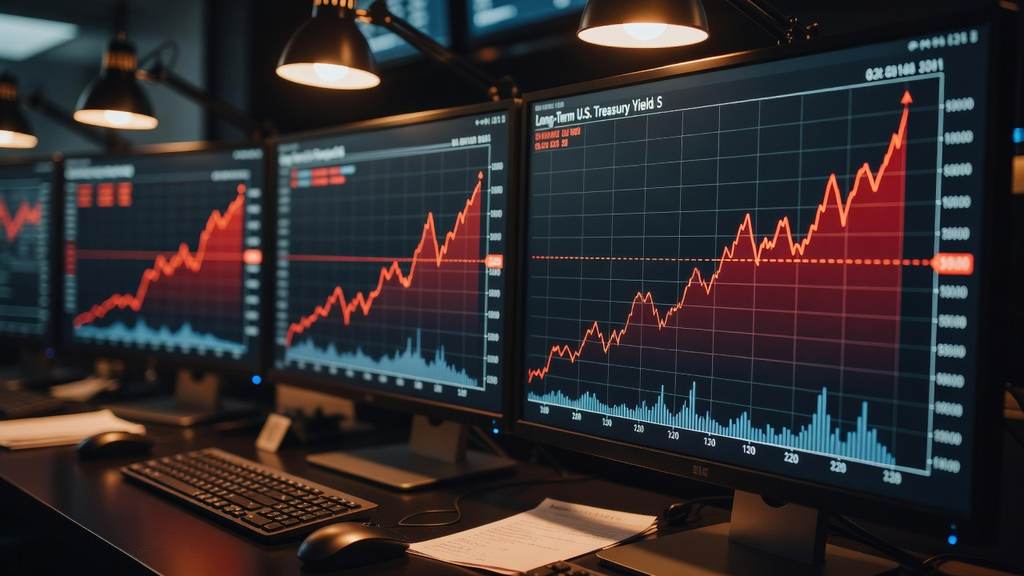
Context makes the print stand out. The last time a 30-year auction stopped this high, the year was 2007 and the housing boom had not yet cracked. The yield has now marched up from 4.871% in March and 4.876% in April to three consecutive months above 5%. Each sale forces the government to lock in that cost for three decades. The auction landed one day after the June Federal Reserve meeting minutes revealed a committee split over whether to raise rates again in 2026, a debate that has kept a floor under yields across the curve.
Who bought the bonds
The bidder breakdown told a clear story about who is willing to hold long U.S. debt at these yields. Indirect bidders, the category that captures most foreign central banks and overseas institutions, were awarded 77.7% of the competitive bonds, or about $17.1 billion. That share jumped from roughly 60% at the June auction and sat well above the recent average, a sign that international buyers stepped in hard once the yield approached 5.06%. Higher yields make U.S. paper more attractive to overseas investors, especially when other developed-market governments pay less.
Direct bidders, which include domestic money managers and pensions buying for their own books, took just 12.2%, down sharply from about 25% in June. Primary dealers, the 26 banks obligated to backstop every auction, were left with only 10.1%, near the low end of the recent range. A small dealer takedown is usually read as a healthy result, because it means real end users absorbed the supply rather than leaving it on bank balance sheets. The strong foreign bid and the light dealer share together suggest the market cleared the record-high yield without strain, even as the government keeps issuing long bonds at a rapid clip to fund its deficit.
Why long yields keep climbing
Three forces are pushing the long end higher. The first is supply. The Treasury is financing a deficit that keeps total debt near $39.4 trillion, and it has leaned on longer maturities to term out its borrowing. More 30-year bonds hitting the market require higher yields to find buyers. The second is Federal Reserve policy. The June Summary of Economic Projections penciled in a median 2026 funds rate of 3.8%, implying one more hike rather than a cut, and the June minutes showed several officials still see a case for tightening. When the market expects the short rate to stay higher for longer, the long rate tends to follow.
The third force is the term premium, the extra yield investors demand to hold a 30-year bond rather than roll over short bills. Sticky inflation and a growing supply of debt have widened that cushion. May consumer prices ran 4.2% above a year earlier, with core inflation at 2.9%, both above the Fed’s 2% goal. In the secondary market, the 30-year yield sat at 5.06% and the 10-year at 4.56% on July 8, according to the Federal Reserve. The gap between the two-year and 10-year notes stayed positive at 0.38 percentage points, a curve shape that has steepened as long yields lead the move. You can track these levels on the Treasury yield curve page.
What it means for your money
The 30-year auction does not move your credit card or savings rate directly, but it shapes the borrowing costs that follow the long end of the curve. Fixed mortgage rates track the 10-year Treasury far more than the prime rate, and both climbed alongside the long bond this week. A higher 10-year yield tends to lift the 30-year mortgage within days, so buyers watching current mortgage rates may see quotes drift up if this pressure holds. Auto loans, corporate bonds, and student refinancing rates also lean on Treasury benchmarks.
Variable-rate debt is a different story. Credit cards, home equity lines, and most personal loans move with the prime rate, which is fixed at 6.75% and will not change until the Fed adjusts the federal funds target. That means cardholders should not expect relief from a single auction, and savers earning yields on cash may keep their edge a while longer. The clearest effect of a 5.058% long bond falls on the federal budget itself. Every basis point the government pays compounds across trillions in debt, which is why interest costs have already climbed past defense spending this fiscal year. Households feel that indirectly through the fiscal pressure it builds.
If you are shopping for a fixed-rate mortgage or refinance, watch the 10-year Treasury yield rather than headlines about the prime rate. The two move on different clocks. When long yields spike after a weak auction, lenders often reprice within a day or two, so locking a rate before the next heavy auction week can save you money. Ask your lender how quickly they reset quotes to Treasury moves.
Frequently Asked Questions
Why did the 30-year yield hit its highest level since 2007?
Two things collided. The Treasury is issuing more long-dated debt to fund a large deficit, and the Federal Reserve has signaled it may hold or even raise short rates in 2026 rather than cut. Both push the long end higher. The July 9 sale cleared at 5.058%, topping the May and June auctions and the highest 30-year auction yield in nearly two decades. Investors demanded that yield to accept a bond that locks their money up for 30 years while inflation still runs above the Fed’s 2% target.
Does this auction change the prime rate?
No. The prime rate is set by banks at 3 percentage points above the top of the federal funds target, and it moves only when the Federal Reserve changes that target. It has stood at 6.75% since December 2025. A 30-year auction reflects long-term borrowing costs and investor demand, which sit at the opposite end of the yield curve. So your credit card and home equity line, both tied to prime, will not shift because of this sale. The next possible change to prime comes only if the Fed acts at its July 28 to 29 meeting.
What is a bid-to-cover ratio and why does 2.44 matter?
The bid-to-cover ratio measures total bids received against the amount of debt sold. A reading of 2.44 means investors offered to buy about $2.44 for every $1 of bonds available. Higher numbers point to stronger demand. For the 30-year bond, anything above roughly 2.4 is considered healthy, so July’s 2.44 was a solid outcome and an improvement on June’s 2.33. Combined with a high foreign bid and a light dealer takedown, it told the market that buyers were willing to absorb the record yield without forcing the Treasury to pay an even larger concession.
Will my mortgage rate go up because of this?
Possibly, but indirectly. Fixed mortgage rates track the 10-year Treasury yield, not the 30-year bond and not the prime rate. The 10-year sat at 4.56% on July 8 and has risen with the long end, so mortgage quotes have edged higher. If long yields keep climbing, lenders usually reprice within a day or two. If yields stabilize or fall after the July Fed meeting, mortgage rates could ease. Checking current quotes daily and locking when you see a rate you like is the practical way to manage that risk.
Who actually buys these 30-year bonds?
The July sale went mostly to indirect bidders, a group that includes foreign central banks and overseas institutions, which took 77.7%. Direct bidders such as U.S. pension funds and money managers took 12.2%, and primary dealers, the banks required to bid at every auction, were left with 10.1%. A large foreign share at a record yield shows that global investors still view U.S. Treasuries as a core holding, especially when the yield beats what other major governments offer. The light dealer takedown signals that real buyers, not banks, absorbed the supply.
How does a 5% long bond affect the national debt?
It raises the government’s future interest bill. Total federal debt sits near $39.4 trillion, and much of it must be refinanced as older, lower-coupon securities mature. Each auction that clears above 5% replaces cheaper debt with more expensive debt, so the average interest rate the Treasury pays keeps drifting up. Net interest costs have already climbed past what the country spends on defense this fiscal year. Over three decades, the difference between a 4% and a 5% long bond compounds into hundreds of billions of dollars in added interest across the full stock of debt.
Watching the July 28 Fed meeting and the next refunding
The July 9 result sets a marker for how much yield the market needs to clear long-dated supply, and the next test comes fast. The Federal Reserve meets July 28 to 29, and while the prime rate is expected to hold at 6.75%, the tone of the statement will steer the long end into August. Traders will also watch the June inflation report due July 14 for any sign that price pressure is easing. Follow the moving pieces on the U.S. interest rates dashboard, the Fed rate forecast, and the national debt tracker as the year unfolds.
References
- U.S. Department of the Treasury, TreasuryDirect, Auction Query and Results, 30-Year Bond, July 9, 2026. treasurydirect.gov
- U.S. Department of the Treasury, Fiscal Data, Debt to the Penny, July 8, 2026. fiscaldata.treasury.gov
- Federal Reserve Board, H.15 Selected Interest Rates, July 8, 2026. federalreserve.gov
- Federal Reserve Board, FOMC Statement and Projections, June 17, 2026. federalreserve.gov
- Federal Reserve Board, Minutes of the June 16 to 17, 2026 FOMC Meeting. federalreserve.gov
- Federal Reserve Bank of St. Louis, FRED, 30-Year Treasury Constant Maturity (DGS30). fred.stlouisfed.org