Private employers added 122,000 jobs in May, payroll processor ADP reported on June 3, a faster pace of hiring than economists expected and the strongest monthly gain since January 2025. The increase topped the roughly 110,000 that forecasters surveyed by Dow Jones had penciled in, and it came with broad participation across industries and company sizes rather than the narrow gains of prior months. ADP said eight of the 10 sectors it tracks added workers, and employers of every size were hiring. The report lands 13 days before the Federal Open Market Committee meets on June 16 and 17, the first decision under new Chair Kevin Warsh, who signaled a slower path for rate cuts in his opening week. A labor market that keeps adding jobs gives the Committee one less reason to ease, and futures markets now price a hold as close to certain. For households, the read-through runs straight to borrowing costs: the federal funds rate anchors the prime rate, currently 6.75%, which sets the floor for credit card, home equity, and many loan rates. The official government payroll count from the Bureau of Labor Statistics follows on June 5.
- ADP reported private payrolls rose 122,000 in May, above the 110,000 consensus and the strongest gain since January 2025.
- Hiring was broad, with eight of ADP’s 10 sectors adding workers; education and health services led at 57,000.
- Annual pay growth held at 4.4% for job-stayers and eased to 6.5% for job-changers.
- The report lands before the June 16-17 FOMC meeting, where markets price a near-certain hold at 3.50% to 3.75%.
- A steady prime rate of 6.75% keeps credit card, home equity, and variable loan costs high.
What the May Report Showed
The ADP National Employment Report counted 122,000 net new private-sector jobs in May, up from a softer April reading and ahead of the consensus estimate near 110,000. Service-providing industries did the heavy lifting, adding 114,000 positions, while goods-producing employers contributed 8,000. Education and health services again led the way with 57,000 hires, a sector that has carried payroll growth for much of the past year. Trade, transportation, and utilities followed with 36,000. Professional and business services added 11,000, construction and leisure and hospitality each gained 8,000, and financial activities rose 7,000. Two sectors shed workers: information lost 9,000 and mining slipped by 3,000.

Pay growth stayed firm. ADP said year-over-year wage gains for workers who stayed in their jobs held at 4.4% in May, unchanged from April, while pay for job-changers eased to 6.5% from 6.6%. The narrowing gap suggests the premium for switching jobs keeps shrinking, a pattern consistent with a labor market cooling at the edges without breaking. “Hiring was more broad-based in May than we’ve seen in the last few years,” said Nela Richardson, ADP’s chief economist. “The labor market continues to show sustained momentum going into the summer hiring season.” The ADP count draws on anonymized payroll records covering more than 25 million workers and often diverges from the government tally, so analysts treat it as a directional signal rather than a precise preview of Friday’s number.
A Broad-Based Hiring Month
The detail that stood out was breadth. For much of the past year, payroll growth leaned heavily on health care and a handful of other sectors, leaving economists to question how durable the expansion really was. May broke that pattern. Gains were spread across eight of the 10 supersectors ADP tracks, and they reached employers of every size. Small businesses with fewer than 50 workers added 67,000 jobs, the largest share, while large establishments with 500 or more employees contributed 40,000 and midsize firms added 17,000. The gains spread across the map, led by the West with 45,000 and the Northeast with 35,000.
Breadth matters to policymakers because it speaks to the underlying health of demand for labor. A surge concentrated in one or two industries can reflect a single hiring wave, but gains across sectors, company sizes, and regions point to wider confidence among employers. That picture complicates the case made by Fed officials who have argued the labor market is fragile beneath the surface. It sits alongside an unemployment rate that held at 4.3% in April, near most estimates of its longer-run level. The counterweight is wage growth still running above the pace the Fed views as consistent with 2% inflation. You can follow the debate on the Fed rate forecast for 2026 and the guide to how the Fed affects your loans.
What It Means for the June Fed Decision
The Fed enters its June meeting with policy on hold and little market pressure to change course. The FOMC’s April 29 decision left the target range for the federal funds rate at 3.50% to 3.75%, a level officials describe as moderately restrictive, and the upper bound translates into the 6.75% prime rate banks post. Futures markets put the probability of another hold on June 17 at roughly 97%, according to CME Group’s FedWatch tool. A strong jobs print does not move that base case, but it reinforces it. With hiring solid and inflation still above target, the Committee has room to wait for clearer evidence before it cuts.
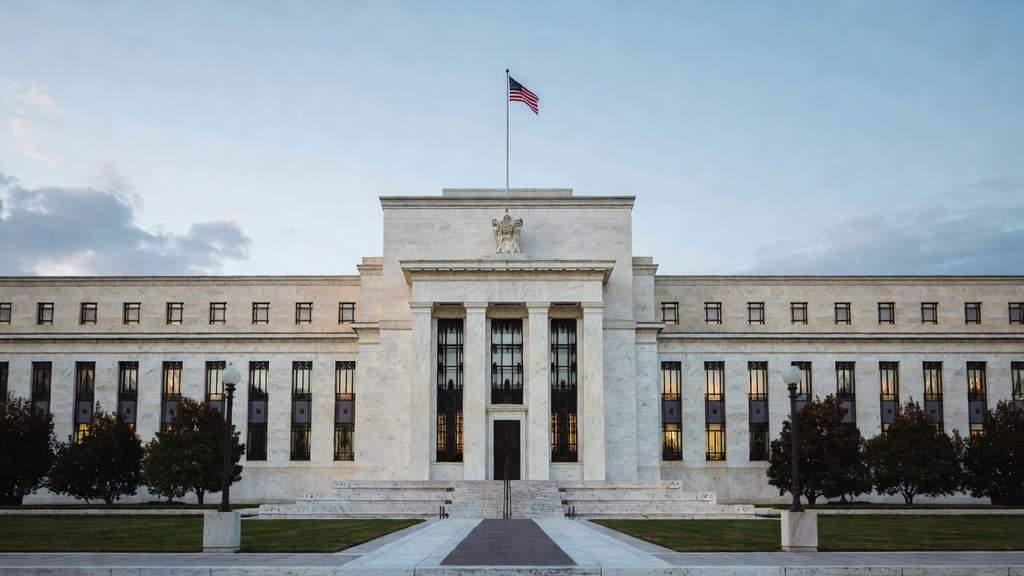
Bond markets nudged in the same direction after the release, with Treasury yields ticking higher as traders trimmed bets on near-term easing. The 10-year Treasury yield sat near 4.47% at the start of June, the 2-year near 4.05%, and the 30-year just under 5.00% at 4.99%, according to Federal Reserve and FRED data. Those longer yields, not the funds rate, set the tone for mortgage pricing, so a Fed that holds keeps borrowing costs sticky across the curve. The next data point is the government’s employment report on June 5, followed by May inflation figures. Investors can track the moves on the Treasury yield curve dashboard and the inflation tracker.
What It Means for Your Money
For borrowers, a resilient labor market that keeps the Fed on hold means relief on rates is not arriving this month. As long as the funds rate stays at 3.50% to 3.75%, the prime rate holds at 6.75%, and the variable products tied to it move only at the margin. Credit card APRs in the low-to-mid 20s do not fall, home equity lines stay expensive, and many personal loans hold their high pricing. The consumer credit and loan rates dashboard shows where those costs sit today. If the labor market later softens enough to pull the Committee toward a cut, the easing would pass through to prime-linked products within a statement cycle or two.
Mortgage shoppers should keep their eyes on the 10-year Treasury rather than the Fed directly, since fixed home loan rates track that benchmark. With the 10-year near 4.47% and yields drifting up after the jobs data, current mortgage rates have little room to fall until the inflation and growth picture clears. Savers sit on the other side of the trade: a higher-for-longer funds rate keeps yields on high-yield savings accounts attractive, and locking a competitive rate now hedges against future cuts. Borrowers carrying expensive variable debt may find that a fixed-rate personal loan offers more certainty than waiting for a policy path that hinges on data still to come.
Do not read the ADP number as a forecast of Friday’s official jobs report. The two series are built differently and often diverge by tens of thousands in a single month. Treat ADP as a directional signal that hiring stayed solid in May, then watch the Bureau of Labor Statistics release on June 5 for the count the Fed actually weighs. If both point the same way, a June hold becomes even more likely, and you can plan around a 6.75% prime rate that holds into summer.
Frequently Asked Questions
What did the May ADP jobs report show?
ADP reported that private-sector employers added 122,000 jobs in May, the strongest monthly gain since January 2025 and ahead of the roughly 110,000 economists expected. The hiring was unusually broad, with eight of the 10 sectors ADP tracks adding workers and gains spread across small, midsize, and large employers. Education and health services led with 57,000, followed by trade, transportation, and utilities at 36,000. Pay growth held at 4.4% for job-stayers.
Does this mean the Fed will hold rates in June?
Most likely yes. Futures markets price the June 16-17 FOMC meeting as a near-certain hold, with the target range expected to stay at 3.50% to 3.75%. A solid jobs report supports that outcome because it removes the urgency a weakening labor market would create and lets the Committee wait for clearer evidence before cutting. New Chair Kevin Warsh has signaled he wants to see inflation cool further first. The combination of steady hiring and above-target inflation points to a hold.
What is the prime rate now, and how is it connected to the jobs data?
The U.S. prime rate is 6.75%. It is not set by the Fed directly, but it tracks the top of the federal funds target range, sitting 3 percentage points above the upper bound. With the funds range at 3.50% to 3.75%, banks post prime at 6.75%. Strong jobs data reinforces the case for the Fed to hold the funds rate steady, which keeps prime at 6.75%. Lenders index credit cards, home equity lines, and many loans to prime, so a hold keeps those variable costs steady rather than cheaper.
How is the ADP report different from the government jobs report?
ADP measures private payrolls using anonymized data from its own client base of more than 25 million workers, and it releases two days before the official figures. The Bureau of Labor Statistics report, due June 5, draws on separate surveys of employers and households, counts government jobs as well as private ones, and produces the unemployment rate. The two often diverge by tens of thousands in a given month. Economists watch ADP for direction but treat the BLS release as the authoritative count the Fed weighs.
What does a strong jobs report mean for my loans?
In the near term, it keeps rates higher for longer. A labor market that keeps adding jobs gives the Fed room to hold, so the prime rate stays at 6.75% and variable borrowing costs do not fall. Credit card APRs, home equity lines, and many personal loans hold their current pricing. Fixed mortgage rates, which follow the 10-year Treasury near 4.47%, also stay elevated while inflation runs hot. If hiring later cools enough to push the Committee toward a cut, prime-linked products would ease within a statement cycle or two.
How does the Fed’s decision affect my mortgage and savings?
They respond to different levers. Fixed mortgage rates track the 10-year Treasury yield, not the funds rate, so they move on the inflation and growth outlook. With the 10-year near 4.47%, mortgage rates have limited room to drop until inflation cools. Savings yields follow short-term rates closely, so a Fed that holds at 3.50% to 3.75% keeps top high-yield savings and certificate yields competitive. If you expect cuts later, locking a fixed savings rate now protects your return.
Watching the Road to June 17
The labor market handed the Fed a reason to stay patient just as it heads into Warsh’s first meeting as Chair. The government’s May payroll report on June 5 will carry more weight than the ADP print, but both point the same way for now: steady hiring, sticky prices, and rates on hold. For ongoing tracking, the current prime rate page, the Fed rate forecast for 2026, and the Federal Reserve meeting schedule are updated as each release lands.
References
- ADP. “ADP National Employment Report: Private Sector Employment Increased by 122,000 Jobs in May,” June 3, 2026. adpemploymentreport.com
- Federal Reserve. “Federal Reserve issues FOMC statement,” April 29, 2026. federalreserve.gov
- Federal Reserve. “H.15 Selected Interest Rates.” federalreserve.gov
- Federal Reserve. “FOMC Meeting Calendars and Information.” federalreserve.gov
- U.S. Bureau of Labor Statistics. “Schedule of Releases for the Employment Situation.” bls.gov
- FRED. “Bank Prime Loan Rate (DPRIME).” fred.stlouisfed.org
- FRED. “10-Year Treasury Constant Maturity (DGS10).” fred.stlouisfed.org
Keep Reading
- Current U.S. Prime Rate Today
- Fed Rate Forecast 2026
- Federal Reserve Meeting Schedule 2026
- How the Fed Affects Your Loans
- Consumer Credit and Loan Rates Dashboard
- Treasury Yield Curve Dashboard
- Warsh Takes Office as Fed Chair: June FOMC Outlook
- Bowman Defends the Fed’s Rate-Cut Path
- Q1 GDP Revised Down to 1.6%