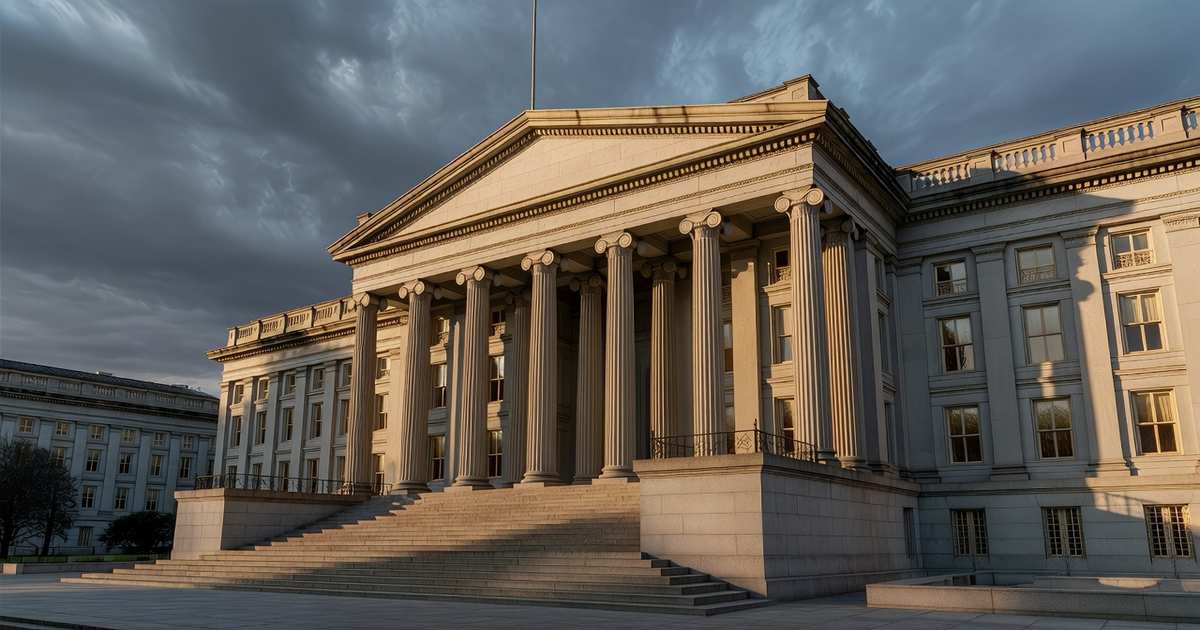
The Federal Reserve’s Beige Book is a qualitative report on regional economic conditions across the United States, compiled from interviews with business contacts in each of the 12 Federal Reserve Districts and published eight times per year — roughly two weeks before each FOMC meeting. The official title is “Summary of Commentary on Current Economic Conditions by Federal Reserve District,” but everyone calls it the Beige Book because of its original beige cover. Unlike most Fed publications, it contains no statistics or forecasts; it summarizes what real businesses are seeing and saying about hiring, pricing, sales, and uncertainty in their own words. Markets read it carefully because it gives the FOMC’s likely tone for the upcoming meeting — the same anecdotes the Committee members are reading. The April 15, 2026 release, prepared by the New York Fed and based on data collected through April 6, reported overall economic activity increased at a slight to modest pace in 8 of 12 Districts, with two flat and two showing slight to modest declines — a calmly mixed picture that is broadly consistent with the Fed’s continued hold at 3.50%–3.75% expected at the April 28–29 meeting.
- Eight releases per year, each roughly two weeks before the corresponding FOMC meeting. Released Wednesdays at 2:00 p.m. Eastern Time.
- Qualitative, not quantitative. No numbers, no forecasts — just summaries of what businesses across 12 Districts are reporting in interviews.
- Each meeting prepared by a different Reserve Bank on a rotating basis. The April 2026 edition was prepared by the New York Fed.
- Reading order matters. Most professionals read the National Summary first, then their own District, then any District showing material divergence from the consensus.
- April 2026 takeaway: 8 of 12 Districts showing slight-to-modest growth; energy cost concerns from the Iran conflict, tariff pass-through pressure, soft labor markets — broadly consistent with continued Fed hold.
- What the Beige Book Is and What It Isn’t
- The Release Schedule and Why Two Weeks Before FOMC
- How a Beige Book Gets Made
- What Markets Actually Read For
- The April 2026 Release: A Worked Reading
- Common Misconceptions About the Beige Book
- How the Beige Book Connects to Your Money
- Frequently Asked Questions
What the Beige Book Is and What It Isn’t
The Beige Book is a single document split into 13 sections: a National Summary plus separate reports from each of the 12 Federal Reserve Districts (Boston, New York, Philadelphia, Cleveland, Richmond, Atlanta, Chicago, St. Louis, Minneapolis, Kansas City, Dallas, San Francisco). Each District section runs roughly 800 to 1,500 words and covers the major sectors of that District’s economy — consumer spending, manufacturing, real estate, banking and finance, agriculture or energy depending on the region, employment, wages, and prices. The National Summary, usually 600 to 1,000 words, synthesizes the 12 District reports into a single high-level read on the U.S. economy.
What it is not: it is not a forecast. It is not a policy statement. It is not a quantitative data release. The Beige Book contains essentially no numbers — instead, it uses standardized qualitative language (“modest,” “moderate,” “robust,” “slight,” “little change,” “flat”) to describe directional movement since the previous report. The Fed publishes a glossary of these terms because the gradations matter: “moderate” growth is faster than “modest,” “robust” is faster still, and “little change” is essentially flat. A reader who treats these as interchangeable misses the signal entirely.
The Beige Book also explicitly disclaims that it represents the views of Federal Reserve officials. It is a summary of what business contacts told the Reserve Banks — not what the Fed itself thinks. That distinction matters for interpretation: when the Beige Book reports widespread business pessimism, it is reporting the temperature of the private sector, not signaling that the Fed shares that view.
The Release Schedule and Why Two Weeks Before FOMC
The Beige Book is published eight times per year, paired one-for-one with the FOMC meeting calendar. Each release lands on a Wednesday roughly two weeks before the corresponding meeting. The 2026 release dates are:
- January 14, 2026 — for the January 27–28 FOMC meeting
- March 4, 2026 — for the March 17–18 FOMC meeting (SEP)
- April 15, 2026 — for the April 28–29 FOMC meeting
- June 3, 2026 — for the June 16–17 FOMC meeting (SEP)
- July 15, 2026 — for the July 28–29 FOMC meeting
- September 2, 2026 — for the September 15–16 FOMC meeting (SEP)
- October 14, 2026 — for the October 27–28 FOMC meeting
- November 25, 2026 — for the December 8–9 FOMC meeting (SEP)
The two-week gap exists for a practical reason: it gives the FOMC time to incorporate the qualitative read into the quantitative work the staff is doing in preparation for the meeting. By the time policymakers sit down to deliberate, they have read both the latest CPI and jobs data and the latest Beige Book. The Beige Book also marks the start of the FOMC blackout period — Fed officials stop giving public speeches about monetary policy from the second Saturday before each meeting until the day after the announcement. For exact blackout dates, see the Fed meeting schedule page.
How a Beige Book Gets Made

Each of the 12 Reserve Banks operates its own outreach program. Throughout the roughly six-week window between Beige Book releases, Reserve Bank staff and economists conduct interviews with what the Fed calls “contacts” — business owners, executives, agricultural cooperatives, community organizations, market specialists, and other observers within the District. Contacts are not selected at random; each Reserve Bank curates a diverse roster meant to represent the major industries and geographies in the District. The Atlanta Fed, for instance, talks regularly to Florida tourism operators and Gulf Coast energy executives; the Minneapolis Fed talks to upper-Midwest farmers and Twin Cities tech employers; the San Francisco Fed talks to West Coast tech firms and California agriculture.
The information flows in through formal interviews, online questionnaires, advisory council meetings, and informal phone calls. Each Reserve Bank’s research staff distills it into a District section over the final two weeks of the cycle. The 12 District sections then go to the designated lead Bank, which writes the National Summary and edits the entire document for consistent terminology before publishing.
Lead-Bank duty rotates through all 12 Reserve Banks. The April 2026 edition was prepared by the Federal Reserve Bank of New York; the June 2026 edition will be prepared by a different Bank, and so on. The rotation matters subtly — different lead Banks have slightly different editorial styles, and the National Summary tone can shift modestly depending on who’s writing it. Career Beige Book readers learn to account for this.
What Markets Actually Read For
Bond traders, equity analysts, and currency desks all read the Beige Book within minutes of the 2:00 p.m. release, but they’re not reading the whole document. They scan for specific signals.
Direction-of-change words. The qualitative gradient runs from “declined” through “little change” through “slight” → “modest” → “moderate” → “robust” → “strong.” A District that reported “modest growth” last cycle and “slight growth” this cycle is decelerating. Markets aggregate these signals across the 12 Districts to gauge whether the U.S. economy as a whole is accelerating or decelerating since the last reading.
Pricing language. “Prices rose modestly” reads very differently from “prices rose at a quickening pace” or “input cost pressures intensified.” Pricing language is the most direct read on whether the Fed’s inflation problem is improving or worsening from the ground level. April 2026 reported “prices grew at a moderate rate” with explicit concern about energy costs from the Iran conflict — a tone that signals continued attention to inflation rather than victory over it.
Labor market language. “Robust hiring” vs. “employers reluctant to add staff” vs. “layoffs in selected sectors” — each carries a different implication for the Fed’s dual-mandate balance. The April 2026 Beige Book described labor demand as soft, with multiple Districts reporting more job applicants per opening than in recent quarters. This is consistent with the rising-unemployment trend and is part of why the Fed is no longer in active hiking mode.
Sector-specific anecdotes. Specialty traders look for District details in their sectors. Real estate analysts focus on Cleveland Fed and Atlanta Fed real estate paragraphs; energy traders read Dallas Fed and Kansas City Fed; tech and global trade analysts read San Francisco Fed and New York Fed. The granularity is the Beige Book’s edge — quantitative releases like CPI tell you what happened; the Beige Book tells you why, in the words of the people it happened to.
The April 2026 Release: A Worked Reading

The April 15, 2026 Beige Book, prepared by the New York Fed, opens with the headline summary that “overall economic activity increased at a slight to modest pace in eight of the twelve Federal Reserve Districts, while two Districts reported little change and two Districts reported slight to modest declines.” Translated into market terms: the U.S. economy is still expanding but at the bottom end of trend growth, with meaningful regional dispersion.
What’s driving the growth. Manufacturing demand “rose modestly” in several Districts. Consumer spending “increased slightly.” Construction and real estate activity, employment, and business spending were “flat on balance.” This is a slow-but-positive read.
What the worry list looks like. Energy costs from the Iran conflict appear repeatedly across multiple Districts. Several Districts noted that input cost pressures from oil price spikes were beginning to feed through to freight and downstream goods. The New York Fed District section described temporary state gas tax caps as a policy response to consumer-level fuel inflation. The Cleveland Fed reported community-level financial strain — more applicants for fewer entry-level jobs, more demand at food pantries, longer stays at homeless shelters. These anecdotes are part of why core PCE inflation matters more to Fed thinking than headline CPI right now: the underlying inflation picture is calmer than the energy-spike-driven headline suggests.
How this maps to the April 28–29 meeting. The Beige Book picture is consistent with the 85% market-priced probability of a hold at 3.50%–3.75%. Activity is slow but positive, inflation is elevated but recognized as partly transitory, labor markets are softening modestly. None of this argues for an immediate cut, none of it argues for a hike. The Fed is in wait-and-see mode, and the Beige Book confirms that the wait-and-see posture matches what businesses on the ground are experiencing. For the broader meeting framework, see how to read the Fed dot plot and the mortgage rate lock timing guide.
Five-minute Beige Book reading framework for non-economists. Step 1: read the National Summary’s first paragraph (50 seconds) — that gives you the headline direction. Step 2: skim the National Summary’s pricing and labor paragraphs (90 seconds) — those tell you whether inflation and employment risks are easing or worsening. Step 3: read the District section for the Fed Bank you live in (90 seconds) — that’s your local economy in your own region’s words. Step 4: scan the section table of contents looking for any District that diverges from the consensus (60 seconds) — outliers carry information. Skip the rest unless you have specific sector exposure. The whole exercise takes five minutes and gets you 80% of what a professional would extract.
Common Misconceptions About the Beige Book
“It’s a forecast.” It’s not. The Beige Book describes the past — what businesses experienced and reported in the weeks leading up to the data cutoff (typically about 10 days before publication). It implies forward direction only insofar as last quarter’s anecdotes inform expectations about next quarter, but the document itself contains no formal projections. The Summary of Economic Projections — the dot plot, released four times a year alongside FOMC statements — is the actual Fed forecast.
“It represents Fed officials’ views.” It does not. The Beige Book’s standard disclaimer language reads: “This document summarizes comments received from contacts outside the Federal Reserve System and is not a commentary on the views of Federal Reserve officials.” When the Beige Book reports widespread business optimism, that’s optimism among the businesses interviewed — not a Fed endorsement.
“The numbers are seasonally adjusted.” There are no numbers to adjust. The Beige Book is qualitative throughout. Statistical releases like CPI and the jobs report carry seasonal adjustments (or sometimes don’t); the Beige Book carries neither. This is also why “modest growth” reported in December and “modest growth” reported in July describe the same directional pace — there’s no seasonal-pattern math to undo.
“It’s named after a former Fed chair.” Common misunderstanding. The Beige Book is named after the color of the cover the document was originally bound in, dating to its early form in the 1970s. There’s also a “Green Book” (forecasts) and a “Blue Book” (policy options), both of which were merged in 2010 into a combined “Tealbook” that is also still published — but the Tealbook is restricted to FOMC participants and not released publicly until five years after the corresponding meeting. The Beige Book remains the publicly-available cousin.
“Markets ignore it.” They do not. Bond yields and the dollar regularly move within minutes of release if the qualitative tone diverges materially from expectations. The reaction is usually small (the Beige Book is one input among many), but it’s measurable.
How the Beige Book Connects to Your Money
Indirectly but consistently. The Beige Book contributes to the FOMC’s tone at each meeting, the FOMC’s tone shapes the dot plot at SEP meetings, the dot plot shapes the bond market’s view of the Fed’s path, and the bond market’s view shapes everything you actually pay or earn — mortgage rates, HYSA yields, credit card APRs, auto loan rates, and on. A Beige Book that sounds notably more dovish than markets expected (e.g., “widespread softening across multiple Districts”) tends to push bond yields lower, which means lower mortgage rates and lower HYSA yields over the following weeks. A Beige Book that sounds more hawkish (“activity accelerated, pricing pressures intensified”) moves things the other direction.
For most household financial decisions, you don’t need to read the Beige Book directly — the bond market does it for you and prices the implications into the rates you see. But if you’re timing a major decision (locking a mortgage rate, opening a CD, refinancing a HELOC) around an upcoming FOMC meeting, glancing at the Beige Book two weeks before gives you the same anecdotal read the Committee is using. Pair it with the CD vs HYSA timing decision framework and the real returns analysis for a complete pre-meeting toolkit. Live benchmark rates that respond to all of this are tracked on the current prime rate page and the U.S. interest rates dashboard.
Frequently Asked Questions
What is the Federal Reserve Beige Book?
The Beige Book is a Federal Reserve System publication that summarizes current economic conditions across the 12 Federal Reserve Districts. It is qualitative rather than quantitative — no numbers, no forecasts — and is based on interviews with business contacts, market experts, and community organizations within each District. The official title is “Summary of Commentary on Current Economic Conditions by Federal Reserve District.” It is published eight times per year, roughly two weeks before each scheduled FOMC meeting, and the Federal Open Market Committee uses it as one of several inputs when setting monetary policy.
How often is the Beige Book published?
Eight times per year. Each release is paired with one of the eight scheduled FOMC meetings and lands on a Wednesday roughly two weeks before the meeting. In 2026, the release dates are January 14, March 4, April 15, June 3, July 15, September 2, October 14, and November 25. Releases are published at 2:00 p.m. Eastern Time on the Federal Reserve Board’s website.
Who writes the Beige Book?
Each of the 12 Federal Reserve Banks writes its own District section based on interviews and surveys conducted by Reserve Bank research staff. One Reserve Bank is designated the “lead” Bank for each release on a rotating basis; that Bank writes the National Summary and edits the entire document for terminology consistency. The April 2026 Beige Book was prepared by the Federal Reserve Bank of New York. The lead-Bank duty cycles through all 12 Reserve Banks over the course of two to three years.
Does the Beige Book affect interest rates?
Indirectly but measurably. The Beige Book is one of several inputs the FOMC considers when setting the federal funds rate at each meeting. If the report’s qualitative tone diverges materially from market expectations — for example, describing widespread softening when traders expected stability — bond yields can move within minutes of release. Those bond yield moves then flow through to mortgage rates, HYSA yields, and other consumer rates over the following days and weeks. The effect is usually modest but consistent.
When is the next Beige Book released?
The next Beige Book release after the April 15, 2026 publication will be on Wednesday, June 3, 2026, at 2:00 p.m. Eastern Time. It will inform the June 16–17 FOMC meeting, which is one of the four 2026 meetings that includes the Summary of Economic Projections (the dot plot). After that, the schedule continues with releases on July 15, September 2, October 14, and November 25, 2026.
What was in the April 2026 Beige Book?
The April 15, 2026 release, prepared by the New York Fed, reported that overall economic activity increased at a slight to modest pace in 8 of 12 Districts, with 2 reporting little change and 2 reporting slight to modest declines. Manufacturing demand rose modestly; consumer spending increased slightly; construction, real estate, employment, and business spending were flat on balance. Prices grew at a moderate rate with explicit concern about energy cost pressures from the Iran conflict. Several Districts reported softening in labor markets — more applicants for fewer entry-level positions. Community organizations reported increased demand for food pantry and housing assistance services as elevated costs strained low- and moderate-income households.
Where can I read the full Beige Book?
The full text of every Beige Book release is freely available on the Federal Reserve Board’s website at federalreserve.gov, under the Monetary Policy section. Each release publishes the National Summary plus all 12 District sections in a single document, typically running 35 to 60 pages. Many individual Reserve Banks also republish their own District section on their websites — for example, the Federal Reserve Bank of Chicago’s site posts the Chicago Fed’s contribution separately, which can be useful if you want to focus on a single regional economy.
Next Steps
Bookmark federalreserve.gov/monetarypolicy/beige-book and check it on the Wednesday two weeks before each FOMC meeting at 2:00 p.m. ET. Use the five-minute reading framework above to extract the high-level signal, focus on your local Reserve District, and pair the read with the FOMC dot plot at SEP meetings for the most complete pre-meeting picture.
For the broader rate context driving why this matters, the Fed rate forecast for 2026 walks through the expected path; the Fed meeting schedule shows the full calendar with blackout windows; and the current prime rate page tracks the consumer-rate benchmark that responds to FOMC decisions.
References
- Board of Governors of the Federal Reserve System. “The Beige Book.” federalreserve.gov
- Board of Governors of the Federal Reserve System. “Beige Book — April 2026.” federalreserve.gov
- Board of Governors of the Federal Reserve System. “FOMC Calendars and Information.” federalreserve.gov
- Federal Reserve Bank of Chicago. “Beige Book Current Release.” chicagofed.org
- Federal Reserve Bank of Kansas City. “Beige Book.” kansascityfed.org
- Fed Communities. “Community perspectives and conditions from the Fed’s Beige Book, April 2026.” fedcommunities.org
Keep Reading
- Current U.S. Prime Rate Today
- Federal Reserve Meeting Schedule 2026
- Fed Rate Forecast 2026
- How to Read the Fed Dot Plot
- Yield Curve Inversion Explained
- What Is SOFR? The Rate That Replaced LIBOR
- Basis Points Explained
- Timing Your Mortgage Rate Lock Around Fed Meetings
- Real Returns: How Inflation Eats Your Savings
- CD vs HYSA: When to Lock vs Stay Liquid