Most credit cards in the United States carry a variable APR tied to the prime rate, which stands at 6.75% today and moves only when the Federal Reserve changes its benchmark. The Fed’s next decision lands on Wednesday, July 29, 2026, and futures markets price about an 87% probability that policymakers hold the target range at 3.50% to 3.75%, which would leave prime, and the card rates linked to it, exactly where they are. That single link explains why the day after a Fed meeting can quietly reset the interest you pay on a balance. When the Federal Open Market Committee lifts its target by a quarter point, banks raise the prime rate by the same amount within a day, and issuers pass that increase to variable card accounts within one or two billing cycles. When the Fed holds, nothing on your statement moves. The average card now charges 20.94% across all accounts and 22.15% on accounts that carry a balance, according to Federal Reserve data, so the margin issuers stack on top of prime does most of the work in that number. This explainer traces the chain from the Fed’s target to your monthly finance charge, shows what a quarter-point move actually costs, and explains why a July hold keeps your rate steady. Track the benchmark on our Fed prime rate and current prime rate pages.
- Most credit card APRs are variable and indexed to the prime rate, now 6.75%.
- Prime equals the Fed’s upper target plus 3 points, so it moves only when the Fed moves.
- A quarter-point Fed hike reaches card statements within one to two billing cycles.
- Index-based rate changes are exempt from the usual 45-day advance notice rule.
- A July 29 hold, the expected outcome, leaves prime and card APRs unchanged.
How the Fed’s Rate Becomes Your Prime Rate
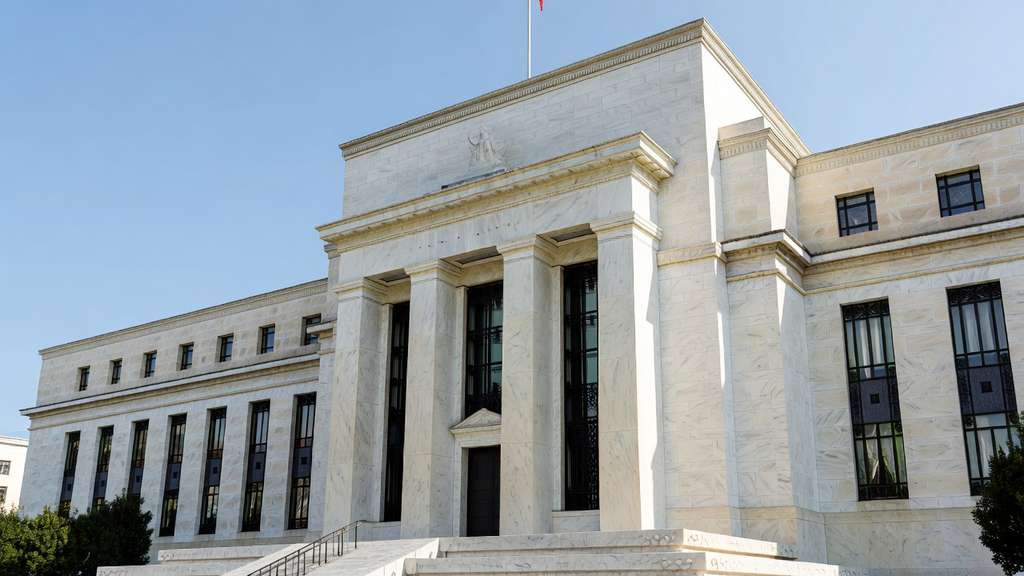
The Federal Reserve does not set your credit card rate. It sets the federal funds rate, the overnight rate banks charge one another, which currently sits in a target range of 3.50% to 3.75%. Banks then post the prime rate using a fixed convention: the top of the Fed’s target range plus 3 percentage points. With the upper bound at 3.75%, prime works out to 6.75%, where it has held since December. That convention is why prime almost never moves on its own. It waits for the Fed, then shifts by the same amount on the same day. The Wall Street Journal publishes the benchmark that most lenders cite, drawn from the rate posted by the largest banks.
Your card agreement then adds a margin on top of prime to set your annual percentage rate. A typical variable card reads something like prime plus 14 percentage points, and that margin depends on your credit profile and the card. Prime supplies the moving part, and the margin stays fixed unless you trigger a penalty rate or the issuer changes your terms with proper notice. Because prime is the only piece that floats with policy, a Fed decision is the event that can reset millions of card rates at once. The same mechanism drives home equity lines of credit and many variable business loans. Our explainer on how the U.S. prime rate is set walks through the full chain from the Fed’s target to your loan.
How a Rate Change Reaches Your Statement
When the Fed raises its target, the pass-through to cards is fast but not instant. Banks lift the posted prime rate within a day of the decision. Your issuer then applies the new index at the start of the next billing cycle, so the higher rate usually shows up on your account within one to two statements. A hike announced on a Wednesday will not change the interest already accrued that month, but it will govern the balance you carry into the following cycle. That timing is why the day after a Fed meeting matters more for card holders than the meeting itself.
One feature of the law surprises many borrowers. Under the Credit CARD Act of 2009 and Regulation Z, an issuer must give 45 days of advance notice before raising your rate in most cases. That notice requirement does not apply when the increase comes from a change in the index your variable rate is tied to. Because prime is that index, a rate move triggered by the Fed can hit both your existing balance and new purchases with no separate warning letter. The change simply appears on your next statement. You can follow the benchmark and the calendar on our consumer credit rates and Fed meeting schedule pages so a move never catches you off guard.
What a Quarter Point Costs on a Real Balance
The average credit card APR reached 20.94% across all accounts in the second quarter of 2026, and 22.15% on accounts that actually carry a balance, according to the Federal Reserve’s G.19 consumer credit release. Subtract the 6.75% prime rate and the issuer margin comes to roughly 14 points on the average account. That margin is where the real cost lives, but the prime portion is the piece that policy can push higher. A single quarter-point Fed hike would lift prime to 7.00% and add 0.25 points to every variable card indexed to it.
Run the numbers and the per-move cost is modest, but it compounds with balance and time. A quarter-point increase adds about $2.08 a month, or roughly $25 a year, for every $10,000 of balance you carry from cycle to cycle. Two hikes in a year would double that to about $50 per $10,000. The bigger burden is the base rate itself. At 20.94%, a $6,000 balance carried for a year costs well over $1,200 in interest before any new charges. That is why the timing of Fed moves matters far less than whether you carry a balance at all. Compare current offers on our best personal loans page if you are weighing a lower fixed rate to consolidate what you owe.
What the July 29 Decision Means for Your Card
A hold on July 29 would keep prime at 6.75% and leave variable card APRs unchanged for another cycle. Markets put the odds of that outcome near 87%, so most card holders should expect no rate change this month. The live question is not a cut but whether the Fed raises rates later in 2026, a debate the June minutes showed split the committee down the middle. If a hike arrives at a later meeting, prime would climb to 7.00% and card rates would follow within a statement or two. Confirm the benchmark on our current prime rate page and see how policy reaches every loan type on our how the Fed affects loans explainer.
Not every borrowing cost tracks prime. Mortgage rates key off the 10-year Treasury yield rather than the Fed’s overnight rate, which is why the 30-year fixed can move on days the Fed sits still. Our guide on how Fed decisions reach your mortgage rate explains that separate channel. Savers feel the same prime story in reverse. If the committee signals a firmer stance, deposit yields on the best accounts may hold longer, so it is worth checking rates on our high yield savings page. For card holders, the practical move is to treat any balance as the problem to solve, because the double-digit APR costs far more than the quarter point a Fed meeting might add.
Do not wait on a Fed meeting to manage a card balance. The prime portion of your APR is a small slice of a rate that already runs above 20%, so paying down principal beats timing any quarter-point move. If you carry a balance, ask your issuer for a lower margin or move the debt to a fixed-rate personal loan, which detaches your cost from prime entirely. That switch protects you from future Fed hikes and usually cuts the rate you pay today.
Frequently Asked Questions
How does a Fed rate decision affect my credit card APR?
Most cards carry a variable APR tied to the prime rate, now 6.75%, which moves only when the Fed changes its benchmark. If the Fed holds on July 29, 2026, your rate stays the same. If it hikes a quarter point, prime rises to 7.00% and issuers pass it through within one to two billing cycles.
What is the prime rate right now and how is it set?
The prime rate is 6.75% and has held there since December 2025. Banks set it by a fixed convention, taking the top of the Federal Reserve’s target range, currently 3.75%, and adding 3 percentage points. Because that formula is mechanical, prime changes only when the Fed changes its target. The Wall Street Journal publishes the benchmark most card agreements cite, based on the rate posted by the largest U.S. banks. Your card APR then equals prime plus a margin set by your issuer.
Will my credit card rate go up at the July 2026 Fed meeting?
Probably not. Futures markets price about an 87% chance the Fed holds its target range at 3.50% to 3.75% on July 29, which would keep prime at 6.75% and leave variable card APRs unchanged. A rate increase is a real possibility at a later meeting in 2026, since the June minutes showed the committee split on whether another hike is needed. If that happens, expect your card rate to rise by the size of the Fed move within a cycle or two.
Does my issuer have to warn me before raising my rate?
Usually yes, but not for index-based moves. The Credit CARD Act of 2009 and Regulation Z require 45 days of advance notice before most rate increases. That rule does not apply when the increase comes from a change in the index your variable rate follows. Because the prime rate is that index, a Fed-driven move can raise the cost on your existing balance and new purchases without a separate notice. The higher rate simply appears on your next statement.
How much does a quarter-point hike add to my balance?
Not much per move, but it compounds. A quarter-point increase adds roughly $2.08 a month, or about $25 a year, for every $10,000 of balance you carry from cycle to cycle. Two hikes would push that toward $50 per $10,000. The larger cost is the base rate itself. With the average APR at 20.94%, a $6,000 balance carried for a year runs more than $1,200 in interest, which dwarfs the effect of any single Fed decision.
Should I get a personal loan instead of carrying a card balance?
It can help if your card APR runs above 20% and you have a plan to pay the loan down. A fixed-rate personal loan detaches your cost from the prime rate, so future Fed hikes cannot raise it, and the rate is often well below a card’s variable APR. Weigh any origination fee and the term against your balance. Compare current offers and rates before you decide, and treat the loan as a payoff tool rather than a way to free up the card for new spending.
Watching Prime Into the July 29 Decision
Watching the July 29 statement is the assignment for anyone carrying a variable balance. The rate itself looks close to settled, but the committee’s tone on inflation will shape whether a hike arrives later in the year and, with it, the next move in prime. Track the odds on our Fed rate forecast for 2026 page, check the calendar on our Fed meeting schedule page, and read the full setup in our Fed blackout preview.
References
- Board of Governors of the Federal Reserve System. “H.15 Selected Interest Rates.” federalreserve.gov
- Board of Governors of the Federal Reserve System. “G.19 Consumer Credit.” federalreserve.gov
- Board of Governors of the Federal Reserve System. “FOMC Statement, June 17, 2026.” federalreserve.gov
- Board of Governors of the Federal Reserve System. “FOMC Meeting Calendars and Information.” federalreserve.gov
- Federal Reserve Bank of St. Louis. “Bank Prime Loan Rate (DPRIME).” fred.stlouisfed.org
- Federal Reserve Bank of St. Louis. “Commercial Bank Interest Rate on Credit Card Plans, All Accounts (TERMCBCCALLNS).” fred.stlouisfed.org
- Consumer Financial Protection Bureau. “When can my credit card company increase my interest rate?” consumerfinance.gov