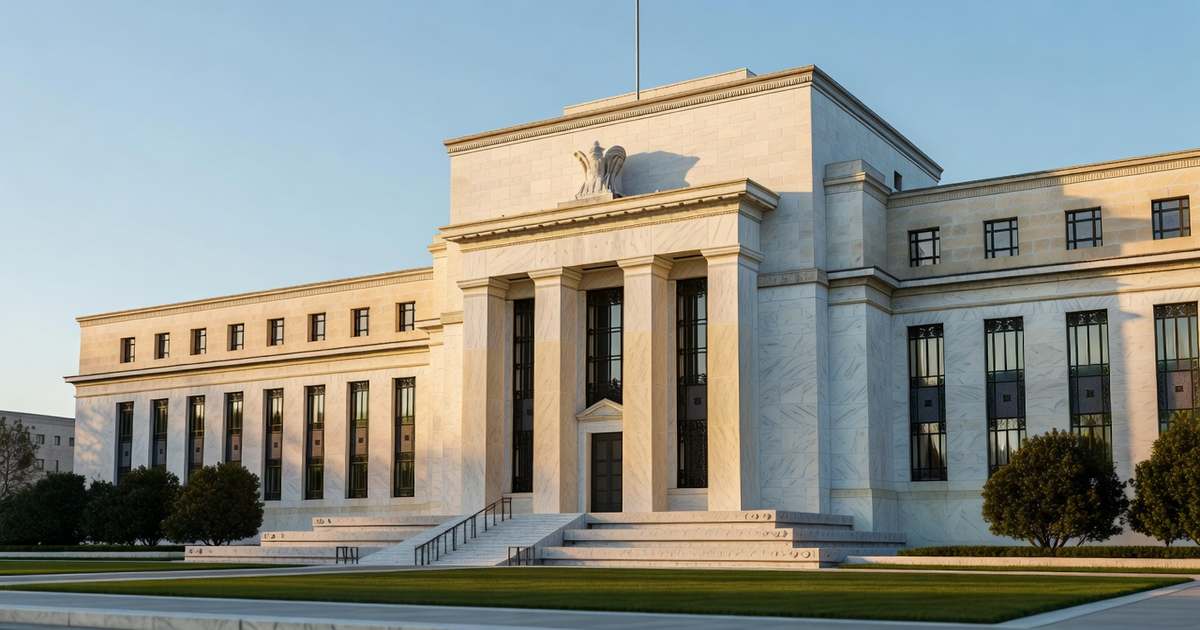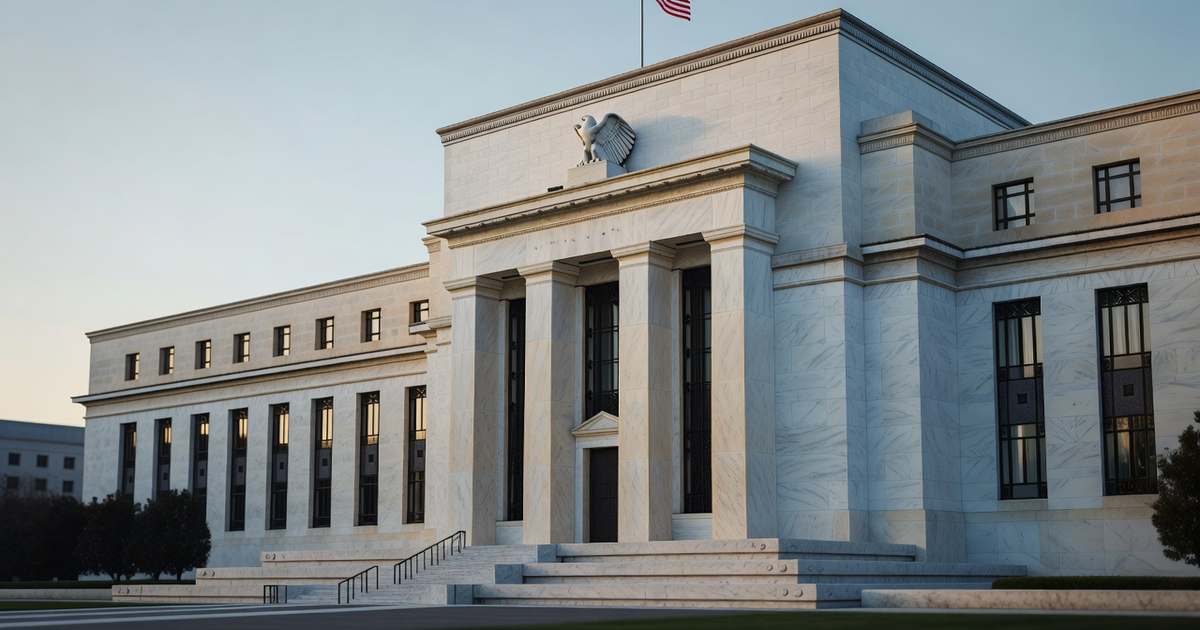
The Federal Reserve delivered its semiannual Monetary Policy Report to Congress on Friday, July 10, 2026, the first prepared under Chair Kevin Warsh, and it carried a blunt promise. The central bank “will deliver price stability” even with inflation still running well above its 2 percent goal. The 77-page document, released at 11 a.m. Eastern, describes an economy growing at a solid pace, powered by heavy investment in artificial intelligence and data centers, while prices stay elevated on higher energy costs and tariffs. It also adds a dedicated section on the money supply, a nod to Warsh’s interest in monetarism. The timing is deliberate: Warsh testifies before the House Financial Services Committee on Tuesday, July 14, and the Senate Banking Committee on Wednesday, July 15, appearances the law requires twice a year. For households, the report matters because it frames how long the Fed intends to hold its policy rate, and by extension the prime rate that prices credit cards, home equity lines, and other variable loans. The Fed left its target range at 3.50 to 3.75 percent in June, and its latest rate forecast points to at least one more hike this year rather than cuts.
Key Takeaways
- The Fed released its semiannual Monetary Policy Report on July 10, the first prepared under Chair Kevin Warsh.
- The report vows the Fed “will deliver price stability” with inflation still above its 2 percent target.
- A new section spotlights the money supply, with the M2 aggregate up 4.7 percent so far in 2026.
- Warsh testifies before the House on July 14 and the Senate on July 15, his first appearances as Chair.
- The federal funds target holds at 3.50 to 3.75 percent, keeping the prime rate at 6.75 percent.
What the Report Told Congress
The report’s core message is that the economy is holding up while inflation has proven stubborn. Policymakers described growth as solid and productivity as strong, and they found little sign of stress in the banking system, calling it well capitalized. Inflation, however, remains above the 2 percent target, reflecting higher energy prices tied to the conflict in the Middle East and tariffs that have pushed up the cost of consumer goods and data-center components. Short-term inflation expectations have risen, lifting market-based interest rates, though the Fed said longer-term expectations remain well anchored, and Treasury yields have climbed, especially at shorter maturities. Consumer spending was tepid, and credit conditions tightened for small businesses and households.
The report also flagged a soft spot in the fast-growing private credit sector, which has seen an uptick in redemption requests this year that officials tied to defaults and concerns about asset quality. On policy, the Fed acknowledged that one of the numerical policy rules it consults called for a higher federal funds rate than the current 3.50 to 3.75 percent range as inflation moved higher. It cautioned that such prescriptions “should be interpreted with care,” because the economy would have evolved differently on a different path. That caveat echoes the June meeting minutes, which showed officials split between holding, cutting, or hiking. The Fed’s preferred gauge, the core PCE price index, rose 3.4 percent over the 12 months through May, and our inflation tracker and Treasury yield curve monitor follow the same series in real time.
The Money Supply Makes a Comeback
The most distinctive feature of this year’s edition is a section on the money supply, a measure that has been largely absent from the report for decades. The Fed noted that the M2 monetary aggregate, which includes cash, savings deposits, small time deposits, and retail money market funds, was on average 4.7 percent higher in the first five months of 2026 than during the same period last year. The report described that pace as a return to the growth typically seen in the 2010s, in sharp contrast to the high double-digit expansion of the early pandemic years and the negative readings that followed. It added that the velocity of money, a ratio comparing economic output to the average stock of M2, sat around its late-2019 level, and that “the sizable increase in the public’s holdings of real money balances that took place during the pandemic has largely been unwound.”
The inclusion reflects Warsh’s intellectual roots. Before joining the Fed, he frequently channeled monetarists like Milton Friedman and argued that “inflation is a choice” made by the central bank, while criticizing the quantitative easing programs that swelled its balance sheet. “I think money, strangely enough, has something to do with monetary policy. It has been absent from the discussion,” Warsh said at a Hoover Institution event last year. The measure was once central to how policymakers such as Paul Volcker approached inflation before it fell out of favor. Bringing M2 back signals that Warsh intends to widen the lens the Fed uses to judge price pressures, even if the aggregate is not yet steering rate decisions on its own.
What Warsh Faces on Capitol Hill
The report sets the stage for two days of questioning. Warsh testifies before the House Financial Services Committee on Tuesday and the Senate Banking Committee on Wednesday, appearances the law requires of every Fed chair twice a year. The House hearing could be especially charged because the June Consumer Price Index is scheduled for release roughly 90 minutes before he takes his seat. Economists expect headline inflation to ease to about 3.8 percent from May’s 4.2 percent pace, with core inflation ticking down to 2.8 percent from 2.9 percent, helped by lower oil prices. Warsh is likely to be pressed on those numbers, though he has made clear he prefers to say little. “I said I’m not going to give forward guidance because we’re meeting in six weeks, but I have an update for you, we’re meeting in four weeks,” he told a panel in Portugal on July 2, adding that he wanted “a good family fight” behind closed doors.
Lawmakers are also likely to probe the Fed’s independence, a subject Warsh addressed directly last week. “We’ve been an independent central bank for a very long time. We’re going to be an independent central bank at this moment, and you’re going to see no changes on that,” he said. Expect questions on whether he views artificial intelligence as inflationary, a point he has declined to settle, and on the five task forces he has created to review the Fed’s communications, its balance sheet policy, its data sources, how it examines inflation, and how AI could reshape productivity and jobs. Cryptocurrency and bank supervision may come up as well. Our guide to how the Fed affects loans explains why those choices reach borrowers.
What It Means for Your Rates
None of this changes borrowing costs overnight, but it sets the direction. The prime rate has held at 6.75 percent since December, three percentage points above the top of the federal funds target range, and it will not move until the Fed moves the funds rate. As long as the report’s “price stability” stance keeps the Fed on hold or nudges it toward a hike, the annual percentage rates on variable products stay put or drift higher. That covers most credit cards, home equity lines, and other loans tied to prime, which you can track on our consumer credit rates dashboard.
Fixed-rate borrowing follows a different track. The 10-year Treasury yield ended the week near 4.54 percent, and the average 30-year fixed mortgage sat around 6.49 percent, so shoppers watching current mortgage rates should focus on long-term yields rather than prime. Savers remain the clear winners of a higher-for-longer stance. Top high-yield savings accounts and certificates of deposit still pay yields not seen in years, and locking in a competitive CD before any eventual easing can preserve that income. Borrowers comparing personal loan offers should shop carefully while credit stays costly.
If you carry a balance on a variable-rate card, treat the Fed’s “price stability” message as a signal to act now rather than wait for relief. Prime is unlikely to fall soon, so paying down high-interest debt or moving it to a fixed-rate personal loan can lock in today’s cost. On the savings side, laddering CDs lets you capture current yields while keeping some cash flexible.
Frequently Asked Questions
What is the Fed’s Monetary Policy Report?
The Monetary Policy Report is a document the Federal Reserve sends to Congress twice a year, alongside testimony from the Fed chair, to explain how it sees the economy and how it is conducting policy. It reviews inflation, the labor market, financial conditions, and the balance sheet. The July 2026 edition, the first under Chair Kevin Warsh, runs 77 pages, reaffirmed the Fed’s commitment to bring inflation back to 2 percent, and, for the first time in years, devoted a section to the money supply.
Why does the report mention the money supply now?
The money supply returned because Chair Warsh has long argued it belongs in the conversation. He is sympathetic to monetarism, the school associated with Milton Friedman that treats the quantity of money as a key driver of inflation. The report noted that M2 grew 4.7 percent in the first five months of 2026, a return to pre-pandemic norms, with velocity near late-2019 levels. The Fed is not steering rates by M2 alone, but its reappearance signals that Warsh wants a broader set of indicators informing policy.
When does Warsh testify and what will he be asked?
Warsh testifies before the House Financial Services Committee on Tuesday, July 14, and the Senate Banking Committee on Wednesday, July 15, both at 10 a.m. Eastern. Lawmakers are expected to press him on inflation, the path for interest rates, and the Fed’s independence, and the timing is pointed because the June inflation report arrives just before the House hearing. He is also likely to face questions on artificial intelligence, cryptocurrency, and bank supervision. Based on recent appearances, Warsh will probably avoid committing to any specific move before the July 28 to 29 meeting.
Does the report signal a rate cut or a hike?
The report leans hawkish without promising a specific outcome. It stresses that the Fed “will deliver price stability” while inflation runs above target, and it notes that one numerical policy rule called for a higher funds rate than the current 3.50 to 3.75 percent range. Combined with a June projection that pencils in one more increase this year, that points away from cuts in the near term. Whether the Fed actually hikes depends on incoming inflation and jobs data, and the June minutes showed officials genuinely divided.
How does this affect my credit card or loan?
Most credit cards and home equity lines carry variable rates tied to the prime rate, which sits at 6.75 percent and moves only when the Fed changes the federal funds rate. Because the report supports holding or raising rates, those costs are unlikely to fall soon and could rise if the Fed hikes later this year. Fixed-rate loans, including most mortgages, track longer-term Treasury yields instead. If you carry variable debt, the practical takeaway is to pay it down or refinance to a fixed rate rather than wait for relief.
What should I watch next?
Three events dominate the week ahead. The June Consumer Price Index arrives Tuesday morning and will color the House hearing; a cooler reading near 3.8 percent would ease pressure, while a hotter print would sharpen the case for a hike. Warsh’s two days of testimony may reveal how firmly the committee is leaning. And the Federal Open Market Committee meets July 28 and 29, its next decision point. Watching those together will tell you more than any single headline.
Watching the Week Ahead
Warsh’s first Monetary Policy Report reads as a statement of intent: hold the line on inflation, widen the toolkit, and say little about timing. The coming week tests that posture against fresh inflation data and pointed questions from Congress. For households the message is steady rather than dramatic, with the prime rate anchored at 6.75 percent and the next decision at the July 28 to 29 meeting. Keep an eye on where rates settle.
References
- Board of Governors of the Federal Reserve System, Monetary Policy Report, July 2026.
- Board of Governors of the Federal Reserve System, FOMC statement, June 17, 2026.
- Board of Governors of the Federal Reserve System, Chair Warsh press conference transcript, June 17, 2026.
- U.S. Senate Committee on Banking, Housing, and Urban Affairs, Semiannual Monetary Policy Report hearing, July 15, 2026.
- U.S. House Committee on Financial Services, July 2026 hearings notice.
- Federal Reserve Bank of St. Louis, FRED, Bank Prime Loan Rate (DPRIME).