A personal loan affects your credit score at three distinct stages: the application (hard inquiry, typically –5 to –10 FICO points), the new account opening (new debt increases your total balances, potentially –15 to –20 points short-term), and the repayment period (on-time payments build positive history, often +20 to +40 points over 12 months). The net effect is almost always positive if you make every payment on time — and dramatically positive if you’re using the loan to consolidate credit card debt, because converting revolving balances to installment debt drops your credit utilization ratio, which accounts for 30% of your FICO score.
- Hard inquiry at application: –5 to –10 FICO points, temporary (affects score for ~12 months, stays on report for 2 years).
- New account impact: –15 to –20 points initially due to lower average account age and new debt — recovers within 3–6 months with on-time payments.
- On-time payment history: +20 to +40 FICO points over the first 12 months. Payment history is 35% of your FICO score — the single largest factor.
- Debt consolidation bonus: paying off credit card balances with a personal loan can boost your score 20–50 points by slashing your credit utilization ratio.
- Prequalification (soft inquiry) has zero credit score impact — only the formal application triggers a hard pull.
- The Three Stages of Credit Score Impact
- Stage 1: The Hard Inquiry (Application)
- Stage 2: New Account Opens (Funding)
- Stage 3: Repayment History (Monthly Payments)
- The Debt Consolidation Credit Score Boost
- Mistakes That Hurt Your Score
- Frequently Asked Questions
- Next Steps: Protect Your Score While Borrowing
The Three Stages of Personal Loan Credit Score Impact
Your credit score doesn’t just go up or down when you take out a personal loan — it goes through a predictable three-phase cycle. Understanding this cycle lets you plan ahead and avoid surprises. Most borrowers who manage the loan responsibly end up with a higher credit score 12 months after taking the loan than they had before applying.
Here’s the timeline in brief: a small dip at application (hard inquiry), a larger temporary dip when the loan funds (new debt hits your report), then a steady climb as you make on-time payments month after month. The entire arc takes about 6–12 months to play out, and the end result is almost always positive — with one major exception we’ll cover in the “Mistakes” section. For a comprehensive overview of personal loan options, see our personal loans comparison guide.
Stage 1: The Hard Inquiry When You Apply
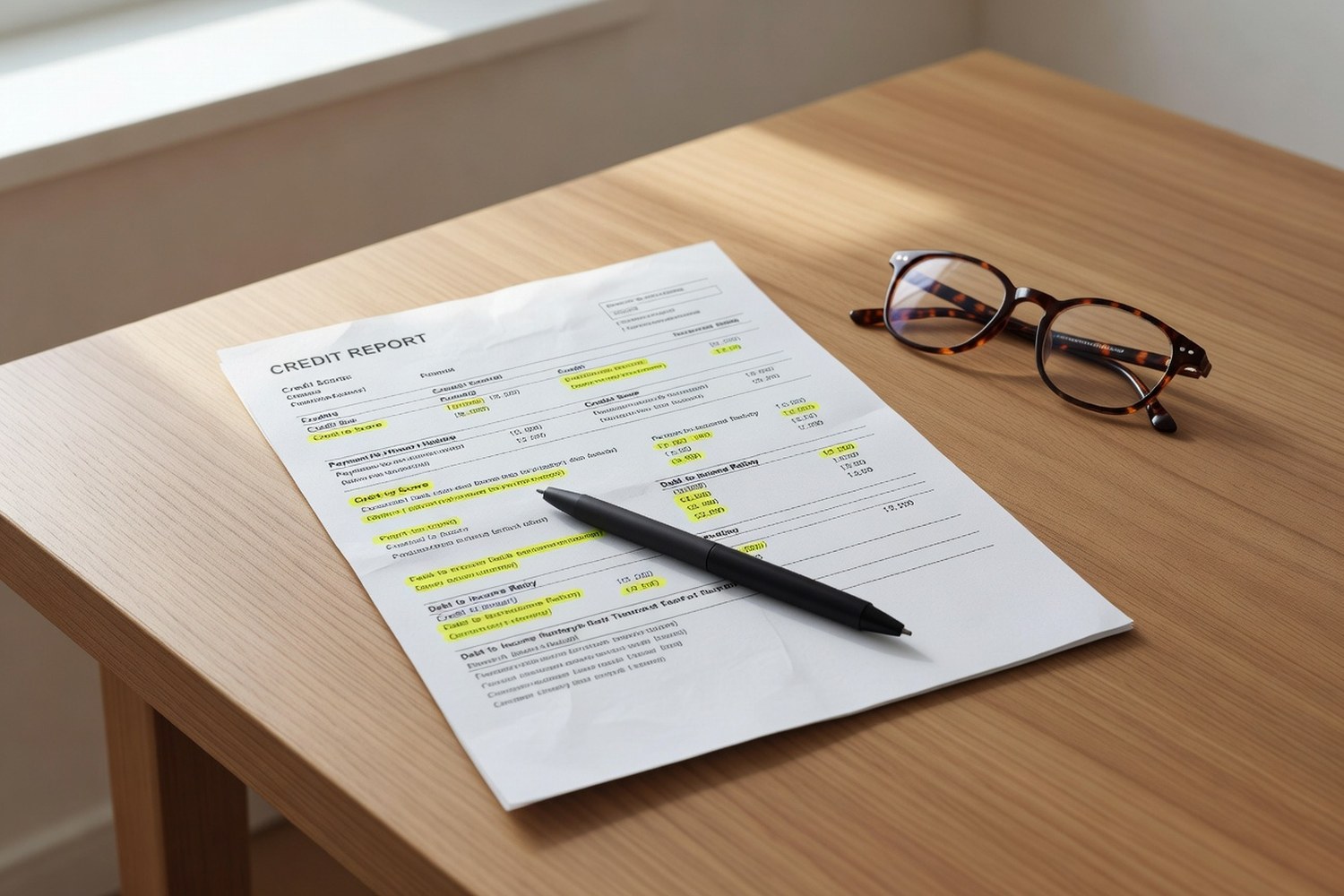
When you submit a formal personal loan application, the lender pulls your full credit report — that’s called a hard inquiry (or “hard pull”). Hard inquiries typically reduce your FICO score by 5–10 points. The drop is temporary: the inquiry affects your score calculation for about 12 months and falls off your report entirely after 2 years.
Here’s what makes this manageable: prequalification uses a soft inquiry, which has zero impact on your score. You can prequalify at SoFi, Upstart, Prosper, Best Egg, Upgrade, and most other online lenders without triggering a hard pull. The hard inquiry only happens when you formally apply with the lender you’ve chosen. This is why we recommend prequalifying with 3–5 lenders first — you compare real offers with no score impact, then submit one formal application.
A common concern: does rate shopping across multiple lenders count as multiple hard inquiries? For personal loans, each application typically counts as a separate inquiry — unlike mortgages and auto loans, where FICO groups multiple inquiries within a 14–45 day window into a single scoring event. This is another reason to prequalify (soft pull) widely and formally apply (hard pull) with only your top 1–2 choices.
Stage 2: The New Account Impact When Your Loan Funds
Once approved and funded, your new personal loan appears on your credit report as a new installment account. This triggers two scoring adjustments that temporarily lower your score.
New debt increases your total balances. FICO tracks how much you owe across all accounts. A new $10,000 personal loan increases your total debt by $10,000, which can ding the “amounts owed” factor (30% of your FICO score). The impact depends on your overall debt picture — if you already have $200,000 in mortgage debt, adding $10,000 barely registers. If your total existing debt was $5,000, it’s more significant.
Average account age drops. FICO values older accounts. If your average account age was 8 years and you open a brand-new loan, that average drops — and “length of credit history” accounts for 15% of your score. This effect is unavoidable but diminishes each month the account ages. Borrowers with many existing accounts (credit cards, mortgage, auto loan) see less impact than someone with only 2–3 accounts.
Combined, expect a dip of roughly 15–20 points in the first 1–2 months after funding. For most borrowers, this is fully recovered within 3–6 months of on-time payments — and then the score continues climbing higher than the pre-loan baseline.
Timing matters if you’re planning a major credit application soon. If you’re applying for a mortgage within the next 3–6 months, the temporary score dip from a new personal loan could cost you. A 20-point drop might push you from a 740 to a 720, which could mean a 0.125%–0.25% higher mortgage rate — costing thousands over 30 years. Consider delaying the personal loan until after your mortgage closes, or taking it out at least 6 months before you apply for the mortgage so your score has time to recover.
Stage 3: The Long-Term Benefit of On-Time Payments
This is where personal loans become a credit-building tool. Payment history is the single largest factor in FICO scoring at 35% of your total score. Every on-time personal loan payment adds a positive data point to your credit report, strengthening your payment history month after month.
The numbers are meaningful. A borrower who starts at 680 FICO and makes 12 consecutive on-time payments on a personal loan can realistically see a 20–40 point improvement — pushing them into the 700–720 range where significantly better rates become available on future borrowing. By month 24, the hard inquiry’s impact has fully faded, the account age is building, and the payment history is strong. The net score is almost always higher than where it started.
Credit mix also plays a role. FICO rewards having a variety of account types — credit cards (revolving), personal loans (installment), mortgage, auto loan. If you’ve only had credit cards, adding a personal loan diversifies your credit mix, which accounts for 10% of your FICO score. This small but real boost compounds with the payment history gains.
All major online lenders — SoFi, Upstart, Prosper, LightStream, Upgrade, Avant, Best Egg, LendingClub, and Marcus — report to all three credit bureaus (Equifax, Experian, TransUnion). This means your positive payment history is reflected across all three reports, maximizing the credit-building benefit.

The Debt Consolidation Credit Score Boost
This is the scenario where a personal loan can produce a dramatic, near-immediate credit score improvement. When you use a personal loan to pay off credit card balances, you convert revolving debt into installment debt — and your credit utilization ratio drops, sometimes to zero.
Here’s a real example. Say you have $8,000 across three credit cards with a combined limit of $12,000. Your utilization is 67% — well above the 30% threshold that FICO considers “good” and far above the under-10% level that produces the best scores. You take out a $8,000 personal loan to pay off all three cards. Your credit card utilization instantly drops to 0%. The personal loan balance doesn’t count toward utilization because it’s installment debt, not revolving. That single change can boost your score by 30–50 points within one billing cycle.
The critical rule: don’t run the card balances back up. If you consolidate $8,000 in credit card debt and then charge another $5,000 over the next six months, you end up with both the personal loan payment and new credit card balances — worse than where you started. The loan only helps your score (and your finances) if you change the spending behavior that created the debt. For more on whether consolidation is right for your situation, check our best debt consolidation loans guide.
Some lenders make this easier by paying your creditors directly. SoFi’s direct-pay feature sends loan funds straight to your credit card companies — you never see the cash in your bank account, which removes the temptation to spend it. LendingClub offers a similar direct creditor payment option. SoFi even gives a 0.25% APR discount for using direct pay, so you save money and protect your score simultaneously. For a full cost comparison of loan-vs-card approaches, see our personal loan vs. credit card guide.
After consolidating credit card debt with a personal loan, keep those old cards open — don’t close them. Closing a card reduces your total available credit, which raises your utilization ratio on any remaining balances. It also shortens your average account age. A card with a zero balance and no annual fee costs nothing to keep open and actively helps your credit score by maintaining a high available-credit-to-debt ratio. If the card has an annual fee, call the issuer and ask to downgrade to a no-fee version instead of closing.
Mistakes That Hurt Your Score When You Have a Personal Loan
Personal loans build credit when managed well, but a few common mistakes can turn them into a liability.
Missing a payment by 30+ days. This is the most damaging event. A single 30-day late payment can drop your FICO score by 50–100 points and stays on your credit report for 7 years. Most lenders offer a 10–15 day grace period before charging a late fee, but reporting to credit bureaus typically happens at the 30-day mark. Set up autopay the day your loan funds — it’s the simplest way to ensure you never miss. For details on late fees by lender, see our personal loan fees guide.
Applying with too many lenders via hard pulls. Each hard inquiry dings your score 5–10 points, and unlike mortgage shopping, personal loan inquiries aren’t grouped into a single scoring event. If you formally apply with 5 lenders, that’s 5 hard pulls and potentially a 25–50 point drop. The fix is simple: prequalify (soft pull) with many lenders, then formally apply (hard pull) with only 1–2.
Running up credit card balances after consolidation. As mentioned above, if you consolidate $8,000 in credit card debt and then accumulate $6,000 in new card charges, you’ve increased your total debt from $8,000 to $14,000 (the loan plus the new charges). Your utilization jumps back up, your DTI ratio worsens, and future lenders see an alarming pattern. Check your DTI ratio regularly to stay on track.
Defaulting on the loan. If you stop paying entirely, the lender will eventually charge off the account (typically after 120–180 days of non-payment) and may sell the debt to a collections agency. A charge-off devastates your credit — expect a 100–150 point drop that takes 7 years to fully recover from. If you’re struggling to make payments, contact your lender immediately. SoFi offers up to 12 months of forbearance through their unemployment protection program. Most other lenders have hardship programs that can temporarily reduce or defer payments.
Frequently Asked Questions
Does applying for a personal loan hurt your credit score?
Yes, but minimally. A formal application triggers a hard inquiry that typically lowers your FICO score by 5–10 points. The effect fades over 12 months and the inquiry drops off your report after 2 years. Prequalifying with a soft inquiry has zero impact — you can prequalify with as many lenders as you want without affecting your score.
How many points does a personal loan drop your credit score?
Expect a combined 15–25 point temporary drop from the hard inquiry and new account opening. This typically recovers within 3–6 months of on-time payments. After 12 months of consistent payments, most borrowers see a net score improvement of 20–40 points above their pre-loan baseline — meaning the loan ends up helping, not hurting.
Can a personal loan improve your credit score?
Yes, in two ways. First, every on-time payment adds positive history to the largest FICO factor (35% of your score). Second, if you use the loan to pay off credit card debt, your credit utilization ratio drops — sometimes dramatically — which directly boosts the second-largest FICO factor (30%). Consolidating $8,000 in credit card debt can produce a 30–50 point score increase within one billing cycle.
Does prequalifying for a personal loan affect your credit?
No. Prequalification uses a soft credit inquiry that is invisible to other lenders and has zero impact on your FICO score. You can prequalify with SoFi, Upstart, Prosper, Best Egg, Upgrade, and other online lenders without any negative effect. Only the formal application triggers a hard inquiry.
Do personal loans count toward credit utilization?
No. Credit utilization is calculated only on revolving credit accounts like credit cards and lines of credit. Personal loans are installment debt and are excluded from the utilization calculation. This is why consolidating credit card debt with a personal loan can dramatically improve your utilization ratio — and your score — even though your total debt amount stays the same.
How long does a personal loan stay on your credit report?
A personal loan in good standing stays on your credit report for 10 years after it’s paid off. This is beneficial — closed accounts with positive payment history continue helping your score for a decade. If you default, the negative mark (late payments, charge-off) remains for 7 years from the date of the first missed payment.
Should I take out a personal loan to build credit?
Only if you have a legitimate use for the money. Taking on debt solely to build credit is generally not recommended — the interest costs outweigh the credit score benefit. However, if you already need to borrow (for consolidation, home improvement, medical bills), choosing a personal loan over a credit card and making on-time payments is an effective credit-building strategy. The installment diversity plus payment history provides meaningful score improvement over 12–24 months.
Next Steps: Protect Your Score While Borrowing
A personal loan is one of the few forms of debt that can actually leave your credit score better than it found it — as long as you manage the process correctly. Start by prequalifying with soft pulls to avoid unnecessary hard inquiries. Compare offers based on APR and fees using our fee comparison guide. Once funded, set up autopay immediately to guarantee on-time payments. And if you’re consolidating credit card debt, use the lender’s direct-pay option and keep those old cards open to maintain your available credit.
The borrowers who see the biggest credit score gains are the ones who treat the loan as a structured plan: borrow what you need, pay on time every month, and don’t replace the debt you just paid off. Twelve months from now, your score will reflect that discipline.
References
- Consumer Financial Protection Bureau. “What Is the Difference Between a Soft Inquiry and a Hard Inquiry?” consumerfinance.gov
- Federal Trade Commission. “Understanding Your Credit.” ftc.gov
- Consumer Financial Protection Bureau. “How Do I Get a Copy of My Credit Reports?” consumerfinance.gov
- AnnualCreditReport.com. “Free Credit Reports.” annualcreditreport.com