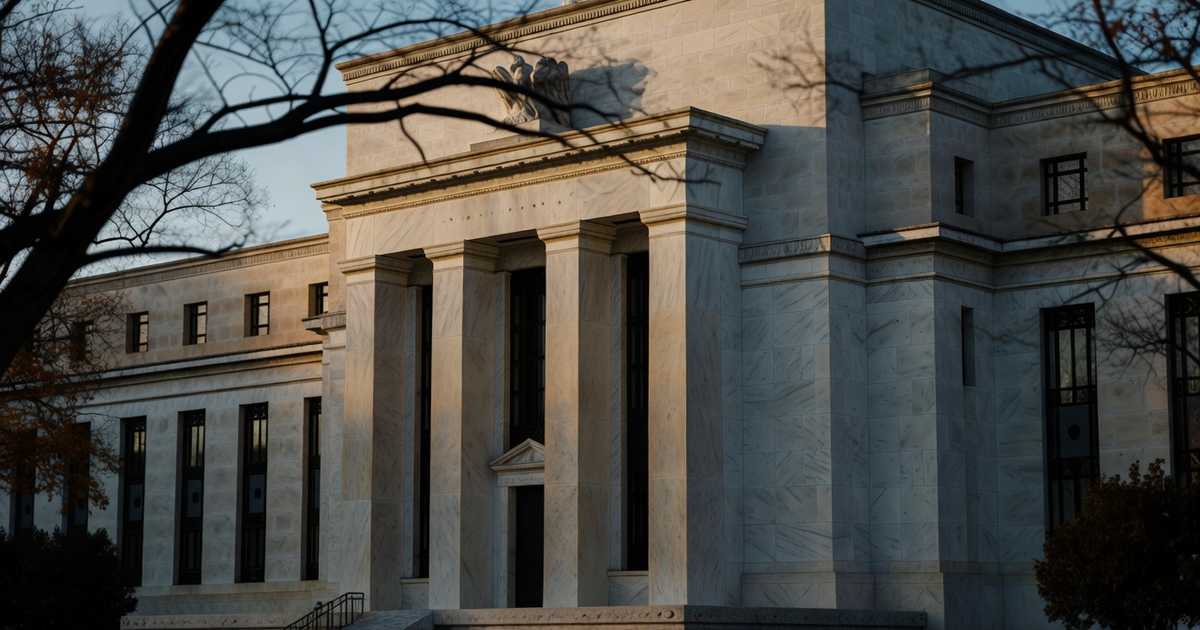
The U.S. Treasury said on August 5 that it will auction $125 billion of notes and bonds next week, holding every nominal coupon auction size unchanged even as its borrowing estimate for the July to September quarter climbed $68 billion to $739 billion. The refunding package refinances roughly $96.3 billion of privately held Treasury notes and bonds maturing on August 15 and raises about $28.7 billion in fresh cash from private investors. It breaks into a $58 billion 3-year note on Tuesday, August 11, a $42 billion 10-year note on Wednesday, August 12, and a $25 billion 30-year bond on Thursday, August 13. All three auctions settle on Monday, August 17.
The decision matters because Treasury is financing a materially larger funding gap without asking the long end of the curve to absorb any part of it. Deputy Assistant Secretary for Federal Finance Brian Smith said Treasury anticipates maintaining nominal coupon and floating rate note auction sizes for at least the next several quarters. That leaves Treasury bills to carry the incremental load, and the July Monthly Statement of the Public Debt already shows bills at 22.2 percent of $31.45 trillion in marketable debt. With total public debt at $39.83 trillion and its average interest rate at 3.447 percent, the mix Treasury sells now sets the interest bill for years. Track the running total on our live U.S. debt tracker and the curve on our Treasury yield curve dashboard.
- Treasury will auction $125 billion in the August refunding: $58 billion 3-year, $42 billion 10-year, $25 billion 30-year.
- The July to September borrowing estimate rose $68 billion to $739 billion, driven by lower projected net cash flows.
- Nominal coupon and floating rate note auction sizes stay flat for at least the next several quarters.
- Bills reached 22.2 percent of $31.45 trillion in marketable debt at July 31, up from 21.5 percent.
- Federal interest expense hit $1.17 trillion in the first ten months of fiscal 2026, up 15 percent.
What Treasury Announced on August 5
The quarterly refunding statement is the document that tells the bond market how the federal government intends to pay its bills for the next three months. This one arrived at 8:30 a.m. Eastern on Wednesday, August 5, two days after Treasury published the borrowing estimates that frame it. The headline is the $125 billion offering, but the operative detail sits in the auction size table. Treasury listed the same 2-year, 3-year, 5-year, 7-year and floating rate note sizes for August through October that it ran last quarter. The 10-year, 20-year and 30-year sizes follow the usual pattern, stepping back to $39 billion, $13 billion and $22 billion for the September and October reopenings.

Treasury also left inflation protected securities alone, keeping the August 30-year TIPS reopening at $8 billion, the September 10-year TIPS reopening at $19 billion and the October 5-year TIPS new issue at $26 billion. It published a tentative buyback schedule covering up to $38 billion of off-the-run purchases for liquidity support and up to $25 billion in the one-month to two-year bucket. On the cash side, Treasury is assuming a $950 billion balance at the end of September and warned that the Treasury General Account could peak near $1.05 trillion, give or take $50 billion, in late October.
Why the Borrowing Estimate Jumped $68 Billion
Treasury announced on August 3 that it expects to borrow $739 billion in privately held net marketable debt during the July to September quarter, assuming that $950 billion end-of-September cash balance. That is $68 billion above what it told the market in May. Treasury attributed the increase primarily to lower projected net cash flows, partially offset by a higher-than-assumed opening cash balance. Strip out that cash effect and the estimate runs $87 billion above May. The spring quarter was far lighter: Treasury borrowed only $190 billion during April through June and finished with $919 billion in cash.
The forward look is not much softer. For October through December, Treasury estimates $628 billion in privately held net marketable borrowing against an $850 billion end-of-December cash target. Together, that is roughly $1.37 trillion of net new borrowing across the back half of calendar 2026, arriving while the interest bill compounds. Federal interest expense reached $1.17 trillion in the first ten months of fiscal 2026 through July 31, up $152.7 billion, or 15 percent, from the same span a year earlier. Our interest on the national debt tracker follows that line.
Sizes Held Steady, So Bills Carry the Load
If coupon auction sizes are frozen and the funding need is rising, the difference has to come from somewhere. It is coming from Treasury bills. The Monthly Statement of the Public Debt for July 31 shows $6.99 trillion of bills outstanding against $31.45 trillion of total marketable debt, or 22.2 percent. At June 30 the same measure was 21.5 percent. Bills grew by roughly $298 billion in a single month while notes rose about $111 billion and bonds about $29 billion. Treasury expects to maintain current benchmark bill sizes near term, may issue a short-dated cash management bill around the end of August, plans September reductions to shorter-dated auctions around the corporate tax date, and anticipates October increases across the bill curve.

Leaning on bills keeps long yields from clearing extra supply, but it shortens the average maturity of the debt and ties more of the interest bill to the front end, where the Federal Reserve sets the tone. The Treasury Borrowing Advisory Committee told Secretary Scott Bessent in its August 5 report that 10-year yields have risen to roughly 4.6 percent and 2-year yields to around 4.2 percent, well above the 3.50 to 3.75 percent federal funds target range, as investors moved from pricing rate cuts to assigning substantial probability to one or more increases. Bills reprice against that front end within weeks.
What This Means for Your Money
Nothing in a refunding statement changes a consumer rate directly. The transmission runs through Treasury yields. Because Treasury declined to add long-dated supply, the announcement removed one upward pressure on the 30-year part of the curve, though yields still drifted higher into the auctions. The Daily Treasury Par Yield Curve put the 10-year at 4.63 percent on August 5 and 4.69 percent on August 6, with the 30-year moving from 5.17 percent to 5.22 percent over the same day. The 10-year is the anchor for fixed mortgage pricing, so watch it on our current mortgage rates page rather than the borrowing headline.
Variable-rate borrowing works differently. Credit card APRs, home equity lines and many small business loans index to the prime rate, which sits at 6.75 percent and moves only when the Federal Reserve changes its target range. The Fed held at 3.50 to 3.75 percent on July 29 for a fifth straight meeting, with three officials dissenting in favor of a hike, and does not meet again until September 15 and 16. Savers get the cleaner read: heavier bill issuance keeps short Treasury yields firm, which supports the payouts on high-yield savings accounts and certificates of deposit. The 6-month bill yielded 3.99 percent on August 6.
Refunding weeks are volatile weeks for long yields. If you are close to locking a fixed mortgage or a longer personal loan, watch the 10-year yield around the 1:00 p.m. Eastern auctions on August 11, 12 and 13, because a weak sale can push quotes higher within hours. For anything tied to prime, the September 15 to 16 Fed meeting is the trigger, not next week’s supply.
Frequently Asked Questions
What is the Treasury quarterly refunding?
The quarterly refunding is Treasury’s scheduled announcement, made four times a year, of how it will refinance maturing government debt and raise new cash over the following three months. The August 5, 2026 statement set a $125 billion package of 3-year notes, 10-year notes and 30-year bonds to replace roughly $96.3 billion of privately held securities maturing on August 15, raising about $28.7 billion in new money. It also publishes forward guidance on future auction sizes, TIPS plans, bill issuance intentions, buyback schedules and the assumed cash balance.
When are the August 2026 Treasury auctions?
Three refunding auctions run next week, all at 1:00 p.m. Eastern. The $58 billion 3-year note is sold on Tuesday, August 11 and matures August 15, 2029. The $42 billion 10-year note is sold on Wednesday, August 12 and matures August 15, 2036. The $25 billion 30-year bond is sold on Thursday, August 13 and matures August 15, 2056. All three are auctioned on a yield basis and settle together on Monday, August 17. Results post within minutes of each 1:00 p.m. close.
Why did Treasury raise its borrowing estimate?
Treasury raised the July to September estimate to $739 billion, $68 billion above its May projection, and pointed to lower projected net cash flows as the primary cause. Receipts are coming in softer than assumed relative to outlays. A higher-than-assumed opening cash balance offset part of the gap, which is why the underlying deterioration is $87 billion rather than $68 billion once you strip that out. The estimate covers privately held net marketable borrowing only, so it excludes rollovers of securities held in the Federal Reserve’s portfolio.
Does the refunding affect my mortgage rate?
Indirectly, and only through the 10-year Treasury yield. Fixed mortgage pricing tracks that yield plus a spread, so anything that moves it moves mortgage quotes within a day or two. By holding coupon auction sizes flat, Treasury avoided adding supply pressure at the long end, which is mildly supportive for mortgage borrowers. Yields still rose into the auctions, with the 10-year at 4.69 percent on August 6 against 4.63 percent the day before. Weak demand at next week’s 10-year and 30-year sales would push quotes higher.
Will my credit card APR change because of this?
No. Credit card APRs are indexed to the prime rate, which banks set at 300 basis points above the upper bound of the federal funds target range. Prime has been 6.75 percent since the Fed’s target settled at 3.50 to 3.75 percent, and it changes only when the Federal Open Market Committee moves. Treasury debt issuance has no mechanical link to prime. The next scheduled opportunity for a change is the September 15 to 16 Fed meeting. Until then, variable APRs tied to prime should hold where they are.
Is more Treasury bill issuance good or bad for savers?
Generally supportive in the near term. Heavier bill supply keeps yields on short government paper firm, and money market funds, banks and brokerages price deposit and certificate products against that front-end benchmark. The 6-month bill yielded 3.99 percent and the 1-year 4.06 percent on August 6. The tradeoff sits at the federal level rather than the household level, because a larger bill share reprices faster if the Fed changes course. Savers who want to lock a rate can favor terms that extend past the September Fed meeting.
Watching the August 11 to 13 Auctions
The refunding statement set the supply. The auctions decide the price. Bid-to-cover ratios and indirect bidder shares Tuesday through Thursday will show whether investors absorb $125 billion at current yields without demanding a concession, and that answer feeds straight into fixed borrowing costs. Treasury returns with its next announcement on November 4. Between now and then, follow the totals on our current national debt page, the policy path on our Fed rate forecast, and the benchmark itself on our current prime rate page.
References
- U.S. Department of the Treasury, Quarterly Refunding Statement of Deputy Assistant Secretary for Federal Finance Brian Smith, August 5, 2026.
- U.S. Department of the Treasury, Treasury Announces Marketable Borrowing Estimates, August 3, 2026.
- U.S. Department of the Treasury, Report to the Secretary of the Treasury from the Treasury Borrowing Advisory Committee, August 5, 2026.
- Bureau of the Fiscal Service, Monthly Statement of the Public Debt, July 31, 2026.
- Bureau of the Fiscal Service, Debt to the Penny, August 4, 2026.
- Bureau of the Fiscal Service, Average Interest Rates on U.S. Treasury Securities, July 31, 2026.
- U.S. Department of the Treasury, Daily Treasury Par Yield Curve Rates, August 6, 2026.
- Board of Governors of the Federal Reserve System, H.15 Selected Interest Rates, August 5, 2026.
- Federal Reserve Bank of St. Louis, Bank Prime Loan Rate (DPRIME), accessed August 6, 2026.