The Federal Reserve’s preferred inflation gauge ran hotter in May, handing the new Warsh-led central bank fresh evidence that price pressures have not faded. The Bureau of Economic Analysis reported on June 25 that the personal consumption expenditures price index rose 4.1 percent over the 12 months through May, up from 3.8 percent in April and the highest annual reading since 2023. Core PCE, which strips out volatile food and energy costs and which policymakers watch most closely, climbed to 3.4 percent from 3.3 percent, also the highest in years and a touch above the 3.3 percent that economists had forecast. On a monthly basis the headline index rose 0.4 percent and the core measure rose 0.3 percent. The report lands less than two weeks after the Fed held its benchmark rate steady and signaled a possible increase later this year, a hawkish turn that the latest numbers only reinforce. For households, the takeaway is that the current prime rate of 6.75 percent is unlikely to fall soon, keeping borrowing costs elevated on credit cards and other variable loans. The PCE release is one of the most important inputs the Fed weighs, and it now points in the same direction as last week’s projections, a path our inflation tracker follows month to month.
Key Takeaways
- Headline PCE inflation rose to 4.1 percent over the year through May, the highest since 2023, the BEA reported.
- Core PCE, the Fed’s favored gauge, climbed to 3.4 percent, above the 3.3 percent economists expected.
- The monthly gains were 0.4 percent for the headline index and 0.3 percent for the core measure.
- Consumer spending rose 0.7 percent and personal income rose 0.7 percent, both ahead of forecasts.
- The prime rate holds at 6.75 percent, keeping credit card and variable loan costs high as the Fed leans hawkish.
What the May PCE Report Showed
The Personal Income and Outlays report is the monthly snapshot the Commerce Department uses to track what Americans earn, spend, and pay for goods and services. For May, the headline PCE price index rose 0.4 percent from April and 4.1 percent from a year earlier, the fastest annual pace since 2023. The core index, excluding food and energy, advanced 0.3 percent on the month and 3.4 percent over the year. Both yearly figures moved up from April, when headline PCE ran at 3.8 percent and core at 3.3 percent. The acceleration matters because it confirms a trend that other data had hinted at: after easing through much of 2024, inflation has turned higher again in 2026. The core reading is the number Fed officials cite most, and at 3.4 percent it sits well above the central bank’s 2 percent objective.

Energy did much of the work. The conflict between the United States and Iran that began in late February pushed crude oil and gasoline prices sharply higher, and drivers paid the steepest fuel costs in three years during the spring. That fed straight into the headline index, which captures food and energy that the core measure leaves out. Even so, spending held up. Personal consumption expenditures rose 0.7 percent in May, ahead of forecasts, while personal income also climbed 0.7 percent, well above the 0.4 percent that economists had penciled in. The personal saving rate slipped to 3.0 percent as households kept spending despite higher prices. The Dallas Fed’s trimmed mean PCE, which filters out the largest price swings, ran at 2.4 percent over the same period, still above target.
Why the Fed Leans on PCE Over CPI
Most headlines track the Consumer Price Index, which the Bureau of Labor Statistics releases earlier each month. The Federal Reserve, however, sets its 2 percent target against the PCE price index. The two gauges weight spending differently. CPI gives far more weight to shelter, while PCE assigns a larger share to health care and adjusts as consumers substitute between goods when prices change. PCE also draws on a broader set of data, including spending paid on consumers’ behalf, such as employer-provided insurance. Those design choices usually leave PCE inflation running a few tenths below CPI.
That gap looked unusual in May. Headline CPI rose 4.2 percent over the year, close to the 4.1 percent PCE figure, but core CPI came in at 2.9 percent against core PCE at 3.4 percent, with the Fed’s preferred measure running hotter than the more widely cited one. Cooling rent growth has held down core CPI, while services that carry more weight in PCE have stayed firm. For policymakers, the message is that the gauge they target is showing more persistent price pressure than the popular CPI headline implies, a nuance our interest rate dashboard and inflation tracker lay out side by side.
What It Means for the Warsh Fed
The PCE numbers reinforce the stance the Federal Open Market Committee took on June 17, when it held the federal funds rate at 3.50 to 3.75 percent in a unanimous 12 to 0 vote, the first meeting chaired by Kevin Warsh. The committee’s updated projections delivered the surprise. The median estimate for the funds rate at the end of 2026 rose to 3.8 percent from 3.4 percent in March, a path that implies one quarter-point increase to a range of 3.75 to 4.00 percent rather than the cuts markets had expected earlier in the year. Officials also lifted their core PCE forecast for 2026 to 3.3 percent from 2.7 percent, and 17 of 18 participants judged the risks to inflation to be tilted to the upside. May’s 3.4 percent core print sits right on top of that revised forecast.
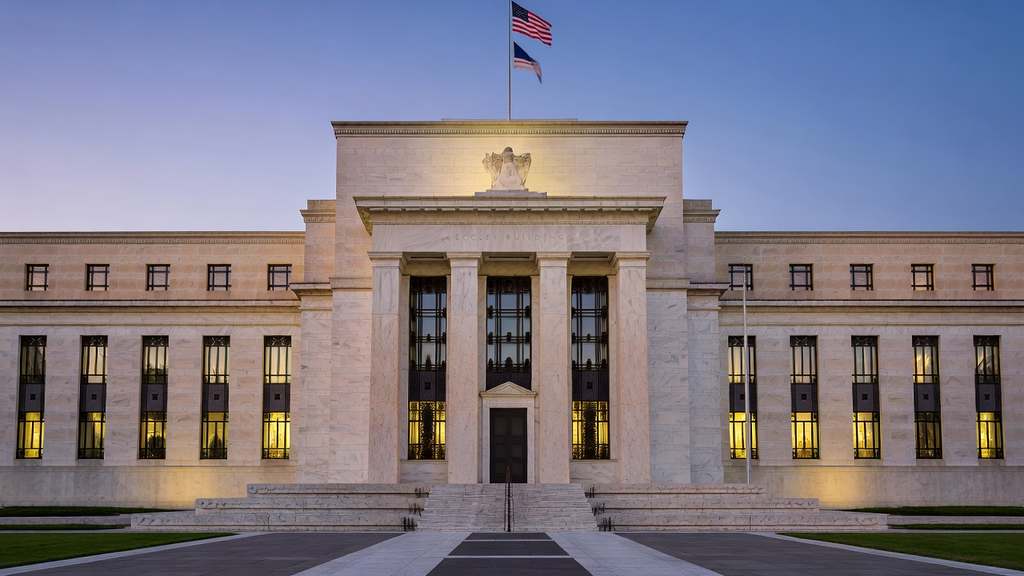
Warsh used his first press conference to stress price stability and trimmed the policy statement to roughly 130 words, down from 341 in April, dropping language that had hinted at easing. He pledged that the Fed “will deliver price stability” and called the commitment unanimous. The May PCE data give that message a factual anchor: with the gauge the Fed targets above 4 percent on the headline and above 3 percent at the core, the case for cutting has weakened. Treasury yields have drifted lower even so, with the 10-year note near 4.4 percent. The next policy meeting is July 28 and 29 and will not include fresh projections, and most observers expect another hold while the committee waits to see whether the projected 2026 hike draws closer. OurFed rate forecast and Treasury yield curve pages track how those expectations are shifting.
What It Means for Your Wallet
For borrowers, hotter inflation means the relief many hoped for is not arriving soon. The prime rate, the benchmark banks use to price most variable consumer credit, has held at 6.75 percent since December 2025 and moves with the top of the Fed’s target range. Because the June projections point toward a possible hike rather than a cut, the floor under credit card annual percentage rates, home equity lines of credit, and other variable products is unlikely to fall in the months ahead. Balances carried month to month will keep accruing interest at rates near record highs, a dynamic detailed on our consumer credit rates page and in our guide to how the Fed affects loans.
Fixed borrowing costs follow a different signal. Thirty-year mortgage rates track the 10-year Treasury yield rather than the prime rate, so the recent slide in yields toward 4.4 percent matters more for home buyers than the PCE report itself. Savers, meanwhile, gain from a higher-for-longer stance. Top high-yield savings accounts and certificates of deposit still pay yields that outpace the Fed’s 2 percent inflation goal, and a delayed rate cut keeps those payouts elevated. The report does not move these rates on its own, but it strengthens the case that the Fed will hold policy tight into the second half of the year.
Treat 6.75 percent prime as the working assumption for the rest of 2026 rather than a number about to drop. If you carry a variable-rate balance, prioritize paying down high-rate revolving debt now, since a Fed cut is no longer the base case. If you are shopping for a fixed-rate mortgage or loan, watch the 10-year Treasury yield, near 4.4 percent, more closely than the monthly inflation headlines.
Frequently Asked Questions
What is the PCE price index and who publishes it?
The personal consumption expenditures price index measures the change in prices of goods and services bought by households. The Bureau of Economic Analysis, part of the Commerce Department, releases it each month inside the Personal Income and Outlays report. It is the inflation gauge the Federal Reserve uses to define its 2 percent target, which is why a single PCE reading can shape expectations for interest rates.
Why is core PCE higher than core CPI right now?
Core PCE ran at 3.4 percent in May while core CPI registered 2.9 percent, an unusual gap because PCE often runs slightly below CPI. CPI puts heavy weight on shelter, where rent growth has cooled, pulling that index lower. PCE gives more weight to services such as health care, where prices have stayed firm. The result is that the Fed’s preferred measure shows more persistent inflation than the more widely quoted CPI headline.
Does hotter PCE mean the Fed will raise rates?
It raises the odds but does not guarantee a hike. At the June 17 meeting, the committee projected a year-end federal funds rate of 3.8 percent, a path that points toward one quarter-point increase in 2026 rather than a cut. The May PCE reading of 3.4 percent core inflation matches that projection and removes a reason to ease. The Fed will weigh upcoming jobs and inflation data before its July 28 and 29 meeting, where most observers expect another hold. A sustained move higher in core prices would sharpen the case for the projected hike.
How does PCE inflation affect the prime rate?
The link runs through the Federal Reserve. PCE inflation helps determine whether the Fed raises, holds, or cuts the federal funds rate, and the prime rate sits 3 percentage points above the top of that target range by long-standing convention. With the funds rate at 3.50 to 3.75 percent, prime has held at 6.75 percent since December 2025. If firm PCE readings push the Fed toward a hike, prime would rise in step, lifting the cost of credit cards and other variable-rate loans. If inflation falls enough to allow a cut, prime would decline in step.
What drove the May increase in inflation?
Energy was the main driver of the headline gain. The conflict between the United States and Iran that began in late February lifted crude oil and gasoline prices, and fuel costs reached their highest level in three years during the spring. That flowed into the headline PCE index, which includes food and energy. Core inflation, which excludes those categories, also rose, signaling that price pressure extended beyond fuel into services. Strong consumer spending, up 0.7 percent in May, gave businesses room to keep raising prices.
When is the next inflation data release?
The next major reading is the June Consumer Price Index from the Bureau of Labor Statistics, due in mid-July, followed by the June PCE report later that month. Both arrive before the Fed’s September meeting, the next gathering to include updated projections. Markets will watch whether energy prices keep climbing and whether core inflation holds near 3.4 percent.
Watching the Road Ahead
One inflation report rarely settles a policy debate, but May’s PCE numbers move the picture in the direction the Fed has been warning about. With the gauge it targets running above 4 percent on the headline and at 3.4 percent at the core, the committee has little reason to soften its hawkish lean before the July 28 and 29 meeting. Until inflation turns lower in a convincing way, the message for households holds: the prime rate is likely to stay at 6.75 percent. Follow the data on our Fed and prime rate page and inflation tracker as the next readings arrive.
References
- U.S. Bureau of Economic Analysis, Personal Income and Outlays, May 2026: https://www.bea.gov/news/2026/personal-income-and-outlays-may-2026
- U.S. Bureau of Economic Analysis, Personal Consumption Expenditures Price Index: https://www.bea.gov/data/personal-consumption-expenditures-price-index
- Board of Governors of the Federal Reserve System, FOMC statement, June 17, 2026: https://www.federalreserve.gov/newsevents/pressreleases/monetary20260617a.htm
- Board of Governors of the Federal Reserve System, FOMC Summary of Economic Projections, June 17, 2026: https://www.federalreserve.gov/monetarypolicy/fomcprojtabl20260617.htm
- Board of Governors of the Federal Reserve System, H.15 Selected Interest Rates: https://www.federalreserve.gov/releases/h15/
- Federal Reserve Bank of St. Louis, FRED, Core PCE Price Index (PCEPILFE): https://fred.stlouisfed.org/series/PCEPILFE
- Federal Reserve Bank of Dallas, Trimmed Mean PCE Inflation Rate: https://www.dallasfed.org/research/pce