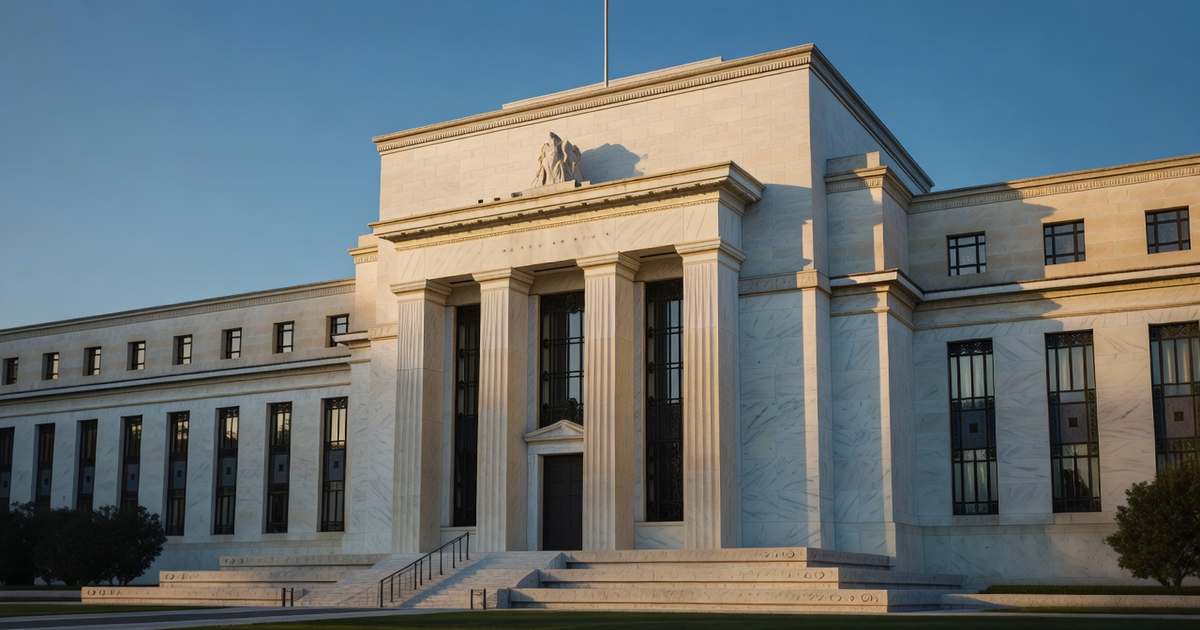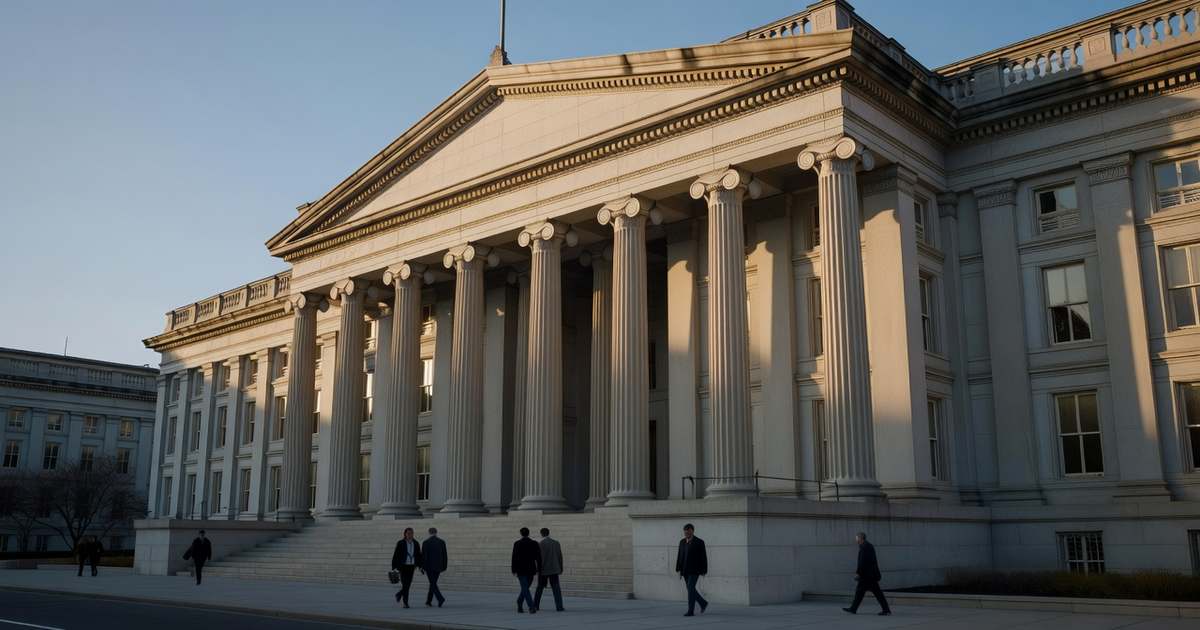
The Treasury Department sold $44 billion of seven-year notes on Thursday, August 27, at a high yield of 4.512%, the steepest rate the government has paid on that maturity since December 2024. The auction drew $115.876 billion in total tenders for a bid-to-cover ratio of 2.50, a shade above the 2.49 recorded four weeks earlier. The notes carry a 4.500% coupon, settle on August 31 and mature August 31, 2033. The sale closed a compressed three-day run of coupon supply that began with two-year notes on Tuesday and five-year notes on Wednesday, $183 billion in all. It also landed one day before Federal Reserve Chairman Kevin Warsh used his Jackson Hole address to say inflation remains above the 2% goal and that policy may need to tighten further. Seven-year notes sit in the part of the curve that prices intermediate business term loans and longer auto paper, so the result carries past the auction room. At 4.512%, Treasury is paying 88 basis points more than the 3.63% effective federal funds rate, and every basis point compounds across a debt stock above $40 trillion. The prime rate has held at 6.75% since the July meeting. The next decision arrives September 16.
Key Takeaways
- Treasury sold $44 billion of 7-year notes on August 27 at 4.512%, the highest stop since December 2024.
- Bid-to-cover came in at 2.50, a shade above the 2.49 recorded at the July seven-year sale.
- Indirect bidders took 60.8% of competitive awards, down from 70.1% one month earlier.
- The three-day run of two, five and seven-year notes raised $183 billion, all settling August 31.
- Prime holds at 6.75%. The next FOMC decision lands September 16 with a fresh dot plot.
Table of Contents
What the August 27 Auction Delivered
Treasury’s seven-year note auction stopped at 4.512%, according to the results TreasuryDirect posted Thursday afternoon. That is 3.9 basis points above the 4.473% stop recorded on July 28 and the highest yield the maturity has fetched at auction since December 26, 2024, when it cleared at 4.532%. Twenty monthly seven-year sales sit between those two prints and none of them topped 4.5%. The mechanics were ordinary. Treasury offered $44 billion, received $115.876 billion in tenders and accepted $49.657 billion once noncompetitive and add-on awards were counted. Bidders at the high yield were allotted 97.63% of what they asked for, which points to a book that cleared without a scramble at the margin. The coupon was set at 4.500%, up from 4.375% in July.

Set the auction stop against the secondary market and the picture stays calm. The Federal Reserve H.15 release put the seven-year constant maturity yield at 4.52% at Thursday’s close, within a basis point of where the auction cleared. The rest of the curve that day read 3.84% at three months, 4.20% at two years, 4.38% at five, 4.67% at ten and 5.19% at thirty. The extra coupon is not free. At 4.500% on $44 billion, the new note obligates roughly $1.98 billion in annual interest, about $55 million more each year than July’s 4.375% coupon would have cost on the same size. Across the full seven-year life that gap runs near $385 million on this one auction.
Where the Demand Came From
The steady headline ratio hid a rotation underneath it. Indirect bidders, the class that captures most foreign central bank and overseas institutional buying, were awarded $26.677 billion. Direct bidders, largely domestic funds, pensions and insurers buying in their own name, took $11.833 billion. Primary dealers, the banks obligated to bid at every auction, absorbed $5.383 billion. Measured against the $43.894 billion awarded across those three classes, indirect participation came to 60.8%. At the July 28 seven-year sale the same figure was 70.1%, on $30.802 billion of indirect awards.
Foreign and international accounts took $4.125 billion less paper this month while direct bidders stepped up, lifting their share from 16.9% to 27.0%. Dealers barely moved, easing from 13.0% to 12.3%. One auction does not make a trend, and the seven-year note carries a thinner, more volatile sponsorship base than the two-year or the ten-year. The direction still matches what Treasury’s own custody data has been showing, with foreign holdings of Treasury securities falling in the June report. When domestic money replaces overseas money at the same clearing yield the auction still funds, but the buyer base grows more sensitive to the Federal Reserve’s next move. That sensitivity is why the timing mattered: competitive bids closed at 1 p.m. Eastern on Thursday, roughly twenty hours before Warsh spoke in Wyoming.
The $183 Billion Week in Context
The seven-year sale finished a compressed calendar. On Tuesday, August 25, Treasury sold $69 billion of two-year notes at 4.204% on a 2.60 bid-to-cover. On Wednesday, August 26, it sold $70 billion of five-year notes at 4.393% on a 2.37 ratio, the softest cover of the three. Thursday’s $44 billion of seven-year paper closed the set at 4.512%. Together the government raised $183 billion of nominal coupon supply in three business days, all of it settling August 31. Every one of those stops printed above the effective federal funds rate: the two-year by 57 basis points, the five-year by 76 and the seven-year by 88.

The supply arrives against a debt stock that keeps setting records. Treasury’s Debt to the Penny series put total public debt outstanding at $40.078 trillion on August 27, with $32.314 trillion of that held by the public. The $40 trillion line was crossed for the first time on August 18 and the balance has closed above it on every business day since. Each auction that clears above the maturing paper it replaces nudges the weighted average rate on the debt higher. That average reached 3.447% in the July statement, the highest reading since 2009. Rising stops on seven-year notes feed the arithmetic slowly, because the coupon sticks for seven years.
What a 4.512% Yield Means for Your Money
No Treasury auction reaches a consumer account directly. The transmission runs through benchmarks. The seven-year point anchors pricing on intermediate business term loans, equipment finance and longer auto contracts, so a higher stop there tends to surface in quoted business and vehicle rates over weeks rather than days. Deposits move first. While intermediate Treasury yields hold above 4.3%, banks funding themselves with certificates can pay competitively on two, three and five-year terms without squeezing margin, so savers shopping CD rates get the clearest benefit from a curve that stays elevated in the belly.
Mortgages take their cue from the ten-year note and mortgage-backed spreads rather than the seven-year, which is why current mortgage rates have tracked the 4.67% ten-year close more closely than Thursday’s auction. Credit cards and home equity lines answer to a different lever. Those reset off the prime rate, which is pinned at 6.75% and moves only when the FOMC moves the federal funds target. For anyone with a fixed-rate application pending, the practical read is that offers are being priced off a curve that has drifted higher for four straight weeks. Comparing personal loan rates ahead of the September meeting costs nothing and pins a quote to today’s benchmark. If the committee tightens on September 16, the variable side reprices first.
Pro Tip
Watch the indirect bidder share, not just the bid-to-cover ratio. TreasuryDirect posts both within minutes of every auction close, and the ratio can hold steady while the buyer mix shifts underneath it, which is exactly what happened Thursday. A falling indirect share with a stable ratio means domestic accounts are filling the gap. That works until they stop. If you are timing a CD ladder, a run of weak indirect readings is an early argument for locking a longer term.
Frequently Asked Questions
What is the current yield on a 7-year US Treasury note?
The 7-year Treasury constant maturity yield closed at 4.52% on August 27, 2026, according to the Federal Reserve H.15 release. Treasury sold new 7-year notes that same day at a high yield of 4.512% with a 4.500% coupon, so the auction cleared within one basis point of the secondary market.
What happened at the last Treasury auction?
Treasury sold $44 billion of 7-year notes on August 27, 2026. The sale stopped at 4.512%, the highest yield that maturity has drawn at auction since December 2024, on a bid-to-cover ratio of 2.50. Indirect bidders, the usual proxy for foreign demand, took 60.8% of competitive awards, down from 70.1% at the July sale, while direct bidders lifted their share to 27.0%. The auction closed a three-day run of two, five and seven-year notes that raised $183 billion in all.
Who is buying US Treasuries now?
Three groups bid at every Treasury auction. Indirect bidders, a category that captures foreign central banks and overseas institutions, were awarded $26.677 billion of the August 27 seven-year sale. Direct bidders, mostly domestic funds, pensions and insurers buying in their own name, took $11.833 billion. Primary dealers, the banks obligated to bid at every auction, absorbed $5.383 billion. The domestic share has been climbing this summer while the foreign share slips, a pattern that also appears in Treasury international capital data for June.
How much does a $10,000 Treasury bill cost?
Bills sell at a discount and pay face value at maturity, so a $10,000 bill costs less than $10,000 up front. At the August 27, 2026 auctions, 4-week bills cleared at a 3.650% discount rate and 8-week bills at 3.670%. On a 4-week bill at that rate the purchase price works out near $9,972, and Treasury pays the full $10,000 four weeks later, leaving roughly $28 of interest. Notes and bonds work differently, paying semiannual coupons on the full face amount.
Does a Treasury auction change my credit card APR?
Not directly. Credit card APRs are quoted as the prime rate plus a margin, and prime tracks the federal funds target rather than any auction result. Prime has held at 6.75% since the Federal Reserve left its target range at 3.50% to 3.75% on July 29, 2026. An auction stop of 4.512% tells you what the market charges the government for seven-year money, not what your issuer charges you. Your card resets only after the FOMC moves the funds target, and the next chance falls on September 16.
Will the prime rate go up in September 2026?
No one can promise a direction, and the Federal Reserve has not committed to one. What is known is that the FOMC meets September 15 and 16, 2026, and announces its decision at 2 p.m. Eastern on the sixteenth alongside a new Summary of Economic Projections. Chairman Kevin Warsh told the Jackson Hole symposium on August 28 that inflation remains above the 2% goal and that rates may need to rise. If the committee lifts the funds target, prime moves by the same amount, normally the next business day.
Watching the September 16 Decision
The next test comes on September 16, when the FOMC announces its decision and publishes a new dot plot. If the target range moves, the prime rate moves with it and every variable consumer product reprices inside a billing cycle. Until then the curve is doing the talking. Seven-year money now costs the government 4.512%, and the national debt it funds crossed $40 trillion twelve days ago. Our Fed rate forecast page tracks the odds as they shift.
References
- TreasuryDirect. Auction Announcements, Data and Results, 7-Year Note, CUSIP 91282CRJ2, auctioned August 27, 2026.
- U.S. Treasury Fiscal Data. Debt to the Penny, record date August 27, 2026.
- Federal Reserve Board. H.15 Selected Interest Rates, August 27, 2026.
- FRED. 7-Year Treasury Constant Maturity Rate (DGS7).
- FRED. 10-Year Treasury Constant Maturity Minus 2-Year (T10Y2Y).
- Federal Reserve Board. Chairman Kevin Warsh, “In Our Time,” August 28, 2026.
- Federal Reserve Board. FOMC Meeting Calendars, September 15 and 16, 2026.