The Federal Reserve is chasing two goals at once, and right now they are pulling in opposite directions. Congress handed the central bank a dual mandate in 1977: maximum employment and stable prices. In July 2026 those objectives sit in open tension. Inflation, measured by the Fed’s preferred core personal consumption expenditures index, ran 3.4 percent over the 12 months through May, well above the 2 percent target the Fed adopted in 2012. The unemployment rate held at 4.2 percent in June, still low but drifting higher as hiring cools. One half of the mandate argues for keeping rates high to force inflation down. The other argues for cutting them to protect jobs. That conflict explains why the Fed left its policy rate at 3.50 to 3.75 percent in June and why officials are openly divided. It also explains why the prime rate that prices most variable consumer debt has been frozen at 6.75 percent since December. This guide covers where the two goals came from, how the Fed measures each, why they clash, and what the standoff means for the rates you pay. Track the live figures on our inflation tracker.
Key Takeaways
- Congress gave the Fed a dual mandate in 1977: maximum employment and stable prices, plus moderate long-term interest rates.
- The Fed defines stable prices as 2 percent inflation, measured by the core PCE index, a target it set in 2012.
- Core PCE inflation ran 3.4 percent in May, while the unemployment rate held at 4.2 percent in June.
- High inflation argues for holding or raising rates, while a cooling job market argues for cutting them.
- The Fed held its rate at 3.50 to 3.75 percent in June, keeping the prime rate at 6.75 percent.
The Two Goals Congress Gave the Fed
The Federal Reserve Reform Act of 1977 amended the Federal Reserve Act and instructed the central bank to “promote effectively the goals of maximum employment, stable prices, and moderate long-term interest rates.” Because moderate long-term rates tend to follow from stable prices, economists shortened the three goals to a “dual mandate.” Before 1977 the Fed’s objectives were far less explicit. Congress wrote the mandate during the stagflation of the 1970s, when high inflation and rising joblessness broke both halves of the economy at once. The law made the Fed answerable to Congress for employment and prices together, and it required the chair to report to lawmakers twice a year. That reporting duty is exactly why Chair Kevin Warsh appears on Capitol Hill this week.
For decades the Fed pursued stable prices without saying what “stable” meant in numbers. That changed in January 2012, when the Fed under Chair Ben Bernanke announced an explicit target of 2 percent annual inflation, measured by the personal consumption expenditures price index. The Fed restates that goal every year in its Statement on Longer-Run Goals and Monetary Policy Strategy, most recently reviewed in 2025. Maximum employment is deliberately left without a fixed number, because the level of employment the economy can sustain shifts with demographics and productivity, and because it is set by forces beyond monetary policy. The Fed instead judges maximum employment against a broad range of labor market data. That asymmetry, a hard number for inflation and a moving judgment for jobs, shapes how the Fed weighs the two goals when they conflict. Our guide to how the Fed affects loans traces the chain from these goals to your rates.
How the Fed Measures Each Goal
On the price side, the Fed watches the PCE price index published by the Bureau of Economic Analysis, and especially the core measure that strips out food and energy. Core PCE rose 3.4 percent over the year through May 2026, and the headline figure rose 4.1 percent, both well above the 2 percent goal. The Fed prefers PCE to the better-known Consumer Price Index because it covers a wider basket and adjusts for how households substitute between goods. The Consumer Price Index still matters as a timely signal, and the June reading is due the same morning Warsh testifies to the House Financial Services Committee.
On the employment side, the Fed reads the monthly jobs report from the Bureau of Labor Statistics, which showed the unemployment rate at 4.2 percent in June. Payroll growth has slowed sharply, with employers adding just 57,000 jobs that month and prior figures revised lower. The Fed also tracks wage growth, labor force participation, job openings, and quits to gauge whether the labor market is tight or loosening. Right now the two dashboards send different signals: inflation is running too hot, while the job market is cooling from a strong position rather than collapsing. Follow both series on our inflation tracker and Treasury yield curve monitor.
When the Two Goals Collide
The Fed has one main tool, the federal funds rate, and only one dial to turn. When inflation and employment both miss in the same direction, the choice is easy. In 2022, prices were surging and jobs were plentiful, so the Fed raised rates aggressively with little internal debate. The hard case is the one the Fed faces now, when the two goals point opposite ways. Raising rates to push inflation toward 2 percent risks slowing hiring and lifting unemployment. Cutting rates to support jobs risks letting inflation settle above target. No single setting satisfies both goals at once, so the committee has to decide which risk is more dangerous at the moment.
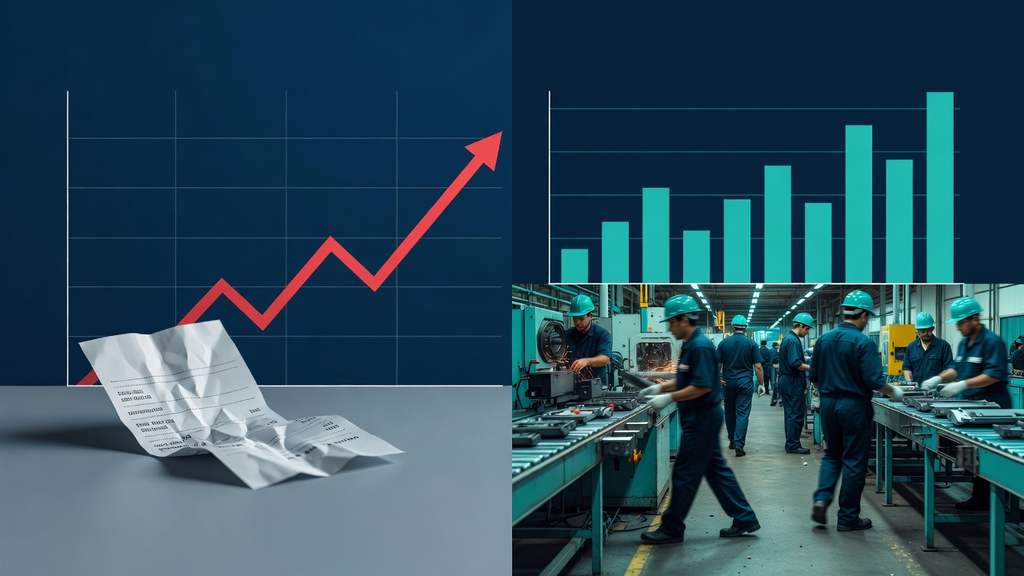
That argument is playing out inside the Fed today. At the June meeting the committee held the funds rate at 3.50 to 3.75 percent, and its projections penciled in at least one more increase this year, a hawkish tilt that put price stability first. The minutes released on July 8 showed officials genuinely split, with some ready to cut if inflation eases and others prepared to hike if it does not. Warsh described the internal disagreement as a “good family fight.” How the Fed resolves that fight will decide whether borrowing costs rise, hold, or fall through the rest of 2026. Our Fed rate forecast page tracks where officials and markets think the funds rate is heading.
What the Mandate Means for Your Rates
The dual mandate is not an abstraction; it sets the price of your debt. The prime rate, the benchmark most banks use for variable consumer loans, sits at 6.75 percent, exactly 3 percentage points above the top of the federal funds target range. It has not moved since December because the funds rate has not moved. As long as the price-stability half of the mandate keeps the Fed on hold or leaning toward a hike, the rates on most credit cards, home equity lines, and other prime-linked loans stay put or edge higher. You can watch those costs on our consumer credit rates dashboard.
Fixed-rate borrowing answers to a different master. Mortgages and other long-term loans track the 10-year Treasury yield, which reflects the market’s view of growth and inflation rather than the current funds rate, so shoppers watching current mortgage rates should follow long-term yields more than the prime rate. Savers, meanwhile, are the clear winners while the Fed holds rates high to fight inflation. Top high-yield savings accounts and certificates of deposit still pay yields not seen in years. If the employment half of the mandate eventually wins and the Fed cuts, those deposit rates will fall first, which is why locking in a competitive CD now can preserve income. Borrowers comparing personal loan offers should shop while the mandate keeps credit costly.
Do not wait for the Fed to resolve its dual-mandate standoff before acting on your own finances. If you carry variable-rate debt, prime is unlikely to fall soon, so paying it down or moving it to a fixed-rate loan locks in today’s cost. On the savings side, building a CD ladder now lets you capture current yields before any eventual rate cut. With the next move genuinely uncertain, hedge rather than guess.
Frequently Asked Questions
What is the Fed’s dual mandate?
The dual mandate is the Federal Reserve’s legal obligation, set by Congress in the Federal Reserve Reform Act of 1977, to pursue maximum employment and stable prices. The law actually lists three goals, adding moderate long-term interest rates, but because moderate long rates tend to follow from stable prices, most people describe it as a dual mandate. It means the Fed must weigh both jobs and inflation when it sets interest rates, rather than focusing on one goal alone, and it answers to Congress for both.
How does the Fed define stable prices?
The Fed defines stable prices as inflation of 2 percent per year over the longer run, measured by the personal consumption expenditures price index from the Bureau of Economic Analysis. It adopted that explicit target in January 2012 and restates it each year in its Statement on Longer-Run Goals and Monetary Policy Strategy. In May 2026, core PCE inflation ran 3.4 percent, well above the goal. The Fed leans on the core measure, which excludes food and energy, because it gives a cleaner read on underlying price trends than the volatile headline number.
Why does the Fed not set a target for employment?
The Fed leaves maximum employment without a fixed number because the sustainable level of employment shifts over time with demographics, technology, and productivity, and because it is determined mainly by forces outside monetary policy. Setting a rigid target could lock the Fed into a figure that no longer fits the economy. Instead, policymakers judge maximum employment against a wide range of indicators, including the unemployment rate, payroll growth, wages, and job openings. In June 2026 the unemployment rate stood at 4.2 percent as hiring slowed to just 57,000 jobs.
Why are the two goals in conflict right now?
The two goals conflict because inflation and the job market are sending opposite signals. Core inflation at 3.4 percent sits well above the 2 percent target, which argues for keeping rates high or raising them. At the same time, hiring has cooled, with only 57,000 jobs added in June, which argues for cutting rates to support employment. The Fed has one main tool, the federal funds rate, so it cannot fix both problems at once. It has to decide which risk, higher inflation or a weaker labor market, is the more pressing threat today.
How does the dual mandate affect my interest rates?
The dual mandate drives the interest rates you pay because it shapes the federal funds rate, which anchors the prime rate at 6.75 percent. Most credit cards and home equity lines carry variable rates tied to prime, so they move only when the Fed moves. While inflation keeps the Fed on hold or leaning toward a hike, those costs stay put or rise. Fixed-rate loans such as mortgages follow long-term Treasury yields instead. If the employment side of the mandate eventually leads the Fed to cut, variable rates would begin to ease.
When will the Fed’s next rate decision come?
The Federal Open Market Committee meets next on July 28 and 29, 2026, its next scheduled decision point. Before then, the Fed will weigh the June inflation report, the pace of hiring, and Chair Warsh’s read of the balance of risks from his testimony this week. At the June meeting the Fed held its rate at 3.50 to 3.75 percent and projected at least one more increase this year. Whether it follows through depends on whether inflation or the labor market becomes the committee’s bigger worry in the weeks ahead.
Watching the Fed’s Balancing Act
The dual mandate is the lens for everything the Fed does this year. With core inflation at 3.4 percent and unemployment at 4.2 percent, the two goals are pulling against each other, and the committee’s choice will set the direction for borrowing costs. For households the practical signal is steady rather than dramatic, with the prime rate anchored at 6.75 percent and the next decision at the July 28 to 29 meeting. Watch the inflation data, the jobs numbers, and where rates settle.
References
- Board of Governors of the Federal Reserve System, Statement on Longer-Run Goals and Monetary Policy Strategy, 2025 framework review.
- Board of Governors of the Federal Reserve System, What economic goals does the Federal Reserve seek to achieve through monetary policy?
- Board of Governors of the Federal Reserve System, FOMC statement, June 17, 2026.
- Federal Reserve History, Federal Reserve Reform Act of 1977.
- Federal Reserve Bank of Chicago, The Federal Reserve’s Dual Mandate.
- Federal Reserve Bank of St. Louis, FRED, Unemployment Rate (UNRATE) and Bank Prime Loan Rate (DPRIME).