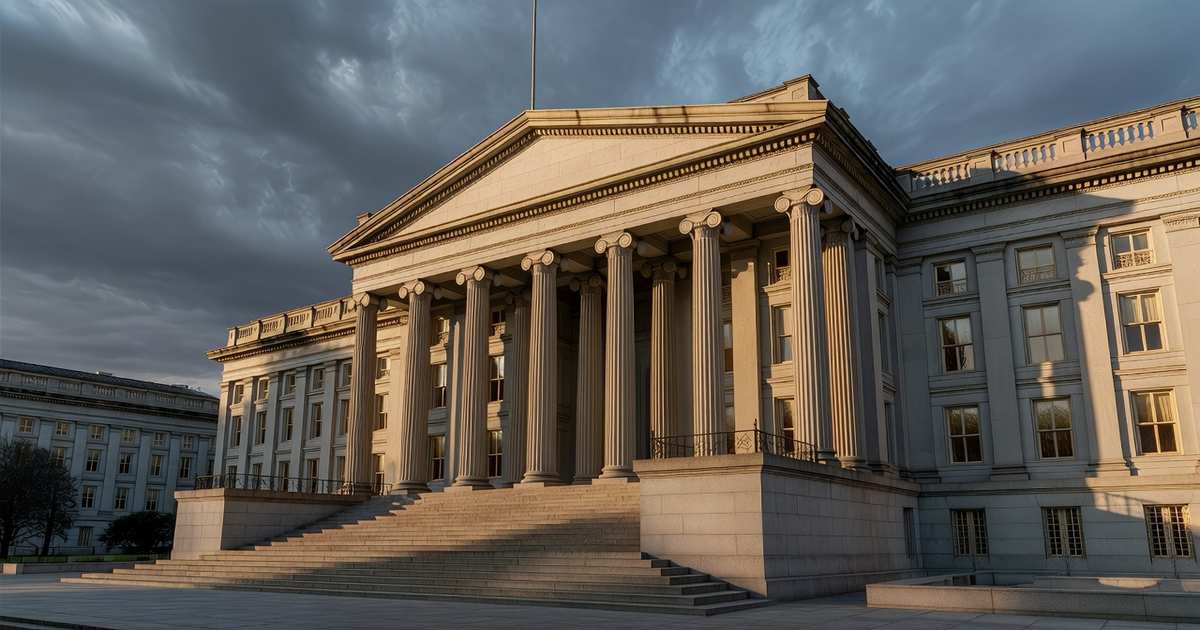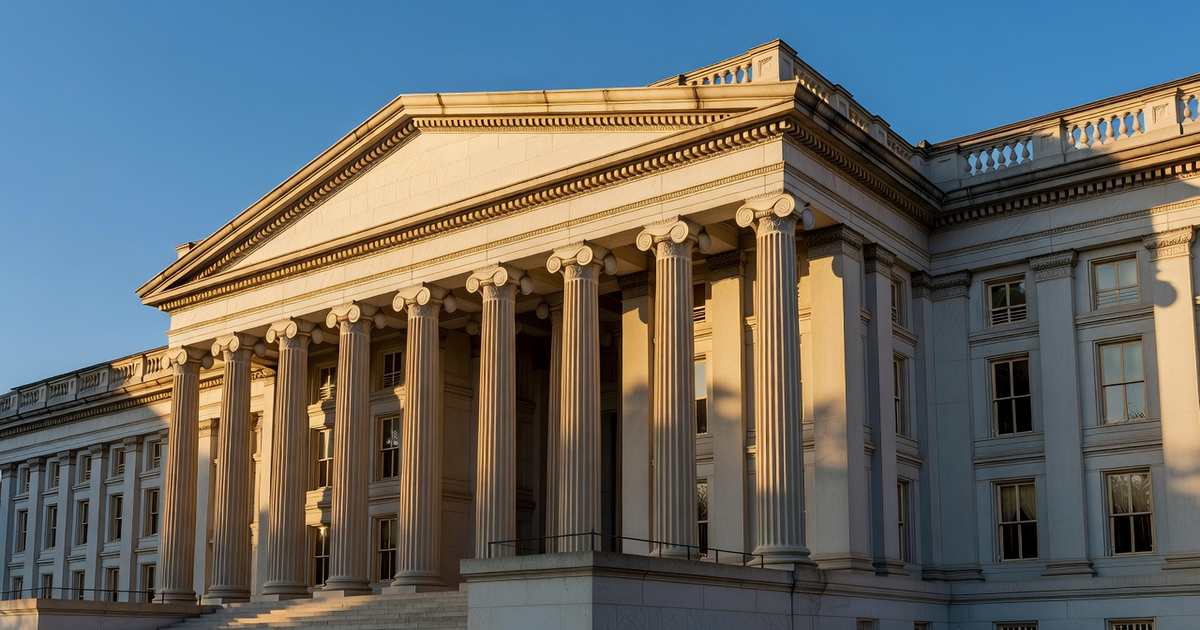
The Federal Open Market Committee meets Tuesday and Wednesday, April 28–29, 2026, with the policy decision released at 2:00 p.m. Eastern Time on the second day and Chair Jerome Powell’s press conference following at 2:30 p.m. Markets price a 99.4% probability of a hold at the current 3.50%–3.75% target range, according to CME FedWatch — meaning the news won’t be the rate decision itself but the signals embedded in the statement language and the press conference. Five things will move markets: subtle changes to statement language about inflation and the labor market, Powell’s tone on the timing of the next cut (markets price roughly 36% odds for June 17), the dissent count (Stephen Miran and Christopher Waller dissented in January and Waller again in March in favor of cuts), any update to balance-sheet language now that QT has ended, and references to the Iran ceasefire’s effect on inflation expectations. This is also potentially Powell’s final FOMC meeting as Chair, though Kevin Warsh’s Senate confirmation remains uncertain following the April 21 Banking Committee hearing — Sen. Thom Tillis (R-NC) has vowed to block the nomination from leaving committee until an investigation into Federal Reserve headquarters renovations is resolved. Powell has pledged to stay on as Chair until a successor is confirmed.
- FOMC meets April 28–29, 2026; policy statement releases Wednesday at 2:00 p.m. ET; Powell press conference at 2:30 p.m. ET.
- Markets price 99.4% probability of a hold at 3.50%–3.75% (CME FedWatch). The news will be the signal, not the decision.
- No SEP at this meeting — no dot plot release. Next SEP comes June 17, 2026.
- Potentially Powell’s final FOMC meeting as Chair — though Warsh’s Senate confirmation is currently held up in committee. Powell has pledged to stay until a successor is confirmed.
- Five things to watch: statement language shifts, Powell’s June-cut tone, dissent count, balance-sheet language, Iran-ceasefire references.
The Basics: When, Where, and What’s at Stake
The April 2026 meeting is the third of eight FOMC meetings scheduled this year. The Committee met January 27–28 (held rates steady) and March 17–18 (also held, with an SEP that projected one cut later in 2026). The April meeting is a non-SEP meeting, meaning no dot plot, no quarterly economic projections, and no fresh formal forecast — just the post-meeting statement and the Chair’s press conference. The next SEP arrives at the June 16–17 meeting.
The meeting takes place at the Marriner S. Eccles Federal Reserve Board Building in Washington, D.C. The Committee deliberates Tuesday afternoon and Wednesday morning. The post-meeting statement publishes on the Federal Reserve Board website at 2:00 p.m. Eastern Time on Wednesday. Powell’s press conference begins at 2:30 p.m. Eastern Time and runs roughly 45 minutes, during which he reads opening remarks and takes questions from the financial press. The full FOMC voting roster for 2026 is the seven-member Board of Governors plus the New York Fed President plus four rotating regional Bank presidents. For the complete schedule and any related Beige Book release dates, see our Fed meeting schedule page and the Beige Book explainer.
What Markets Are Pricing In

The expectations baked into futures markets going into Wednesday:
- April 29 decision: 99.4% probability of hold at 3.50%–3.75% (CME FedWatch via 30-day fed funds futures)
- June 17 decision: approximately 36% probability of a 25 basis point cut, 64% probability of another hold
- End-of-2026 federal funds rate: consensus pricing implies 3.25%–3.50%, equivalent to one 25 basis point cut over the remaining seven months
- End-of-2026 SOFR: trading roughly in line with the federal funds expectations, around 3.30% by year-end
- 10-year Treasury yield: approximately 4.10%, broadly stable through the meeting window
The pricing reflects two competing forces. On the dovish side: labor market data shows gradual softening, the unemployment rate has drifted to 4.3%, and core CPI at 2.6% year-over-year is close to the Fed’s 2% target on the underlying-inflation read. On the hawkish side: headline CPI jumped to 3.3% in March on the Iran-conflict energy spike, the March payrolls report rebounded to +178,000, and the Fed’s communicated patience has held firm. The result is a hold at this meeting with optionality opening for June if the data softens further.
Crucially, the next two months bring the April CPI release (scheduled May 13), the April jobs report (scheduled May 2), the May CPI release (scheduled June 11), and the May jobs report (scheduled June 5) — all between the April 29 meeting and the June 17 meeting. Powell’s tone on Wednesday will set the bar for what those data prints would need to show to trigger a June cut. For the broader rate-cycle context driving these expectations, see the Fed rate forecast for 2026 and the dot plot guide.
The Five Things to Watch on Wednesday Afternoon
With the rate decision essentially decided in advance, market reaction will be driven by signal-reading across five specific dimensions.
1. Statement language shifts versus the March statement. The Committee’s standard practice is to make small, deliberate edits to the post-meeting statement language. Pros run side-by-side comparisons of the March 18 and April 29 statements within seconds of release. Watch for changes to phrases like “uncertainty around the economic outlook has diminished,” “inflation remains somewhat elevated,” and “the Committee judges that the risks to achieving its employment and inflation goals have moved into better balance.” Each phrase is a vote tally of competing views; a small swap signals which camp is gaining ground.
2. Powell’s tone on the June meeting. The press conference is where Powell can either open or close the door on a June cut. Markets will parse his answers to direct questions about June for words like “data-dependent,” “well-positioned,” “patient,” “appropriate to wait,” or — most notably — any acknowledgment that the Committee discussed cutting at this meeting. A response that the Committee “did not seriously consider” cutting closes the June door significantly; a response that the Committee “considered the case for a cut and judged it appropriate to wait” opens it.
3. Dissent count. Stephen Miran and Christopher Waller dissented at the January 28 meeting in favor of a 25 basis point cut. Waller dissented again at the March 18 meeting. If the dissent count grows on April 29 — say, to three or four governors — that signals a genuine internal shift toward easing and would be read as dovish even though the headline decision is a hold. If dissents shrink (say, only Waller this time), that’s mildly hawkish.
4. Balance-sheet language. Quantitative tightening ended December 1, 2025. The Fed has been running modest reserve management purchases since then. Watch the statement language about the balance sheet for any indication of an accelerated reinvestment pace, an explicit policy target for reserves as a share of GDP, or — least likely but most consequential — any hint at resuming actual QT. Most expectations are for status-quo language, but balance-sheet phrasing is a low-volume / high-impact signal. Our QT explainer walks through the current balance-sheet operations.
5. Iran-ceasefire references. The two-week U.S.-Iran ceasefire announced April 8 has eased oil price pressures from the March headline CPI spike. Brent crude has retreated from $118 to around $96. If the statement explicitly references the easing of energy-price uncertainty, that’s a marginally dovish signal — Powell would be flagging that the recent inflation acceleration was supply-driven rather than demand-driven, which doesn’t typically warrant a Fed response. Silence on Iran is the more hawkish read.
Why This Meeting Matters Beyond the Numbers
This may be Jerome Powell’s final FOMC meeting as Chair, though that remains genuinely uncertain. Powell’s four-year term as Chair ends May 15, 2026. President Trump’s nominee Kevin Warsh testified before the Senate Banking Committee on April 21, 2026, but his nomination is currently held up by Sen. Thom Tillis (R-NC), who has vowed to block the nomination from leaving committee until an investigation into Federal Reserve headquarters renovations concludes. Republicans hold a 12–10 advantage on the committee, meaning a single dissent is enough to stall the nomination. Powell has publicly pledged to stay on as Chair beyond May 15 if no successor is confirmed by then. He may also remain on the Board of Governors as a regular member through January 2028 if he chooses (his Governor term doesn’t expire until then).
Warsh is widely considered more hawkish on inflation than Powell and more skeptical of unconventional balance-sheet tools. At his April 21 confirmation hearing he stated explicitly that he does not believe in forward guidance (“I don’t believe that I should be previewing for you what a future decision might be”), prefers the interest-rate tool over the balance-sheet tool, wants to rethink how inflation is measured, and would consider reducing the frequency of FOMC press conferences from every meeting back toward the quarterly cadence used before Powell. His arrival, whenever it comes, is unlikely to immediately shift the Fed’s near-term rate trajectory — the Committee operates by consensus — but would meaningfully reshape Fed communication. The April 29 press conference may be the last opportunity for Powell to set the framing under which his eventual successor inherits the policy stance.
Watch for two things in Powell’s farewell remarks: any reflective comments about the inflation cycle of 2022–2025, and any forward-looking statements that Warsh will inherit. Past departing Chairs (Bernanke, Yellen) used their final press conferences to subtly shape the institutional posture they were leaving behind. Powell’s last meeting carries similar weight — even if the rate decision itself is uneventful.
What Could Surprise Markets

Three low-probability scenarios that would meaningfully move markets if they occurred.
An actual rate cut. Probability roughly 0.6% per CME FedWatch, but not zero. A surprise cut would be a major dovish shock — bond yields would fall sharply, equity markets would rally, the dollar would weaken, and mortgage rates would drop within days. The most plausible trigger would be a labor market data point between now and Wednesday that the public hasn’t yet seen. Watch for any Reuters or Bloomberg leaks of internal Fed deliberation language in the 24 hours before the meeting.
Explicit forward guidance for June. The Fed has long preferred to keep its options open. If the April 29 statement explicitly says something like “the Committee anticipates that it will be appropriate to lower the target range at its June meeting,” that would be unusual, hawkish-on-precedent (Powell rarely pre-commits) but dovish-on-substance (markets would price June cut at near 100%). Most likely the statement remains data-dependent rather than pre-committing.
A balance-sheet pivot. If the statement announces an explicit acceleration of reserve management purchases or — a more extreme scenario — explicitly resumes QT, that would be a meaningful shock. The Fed has been quiet on balance-sheet operations since the December 2025 announcement; an unexpected pivot would be the single most consequential surprise. Most pros put this at well under 5% probability, but it’s the lowest-priced surprise that would have the biggest impact.
Reading the FOMC statement in 60 seconds: open the post-meeting statement at federalreserve.gov at 2:00 p.m. ET. Skip directly to the second paragraph (the policy actions paragraph) — that’s where any rate change appears. Then scan paragraph 1 (current conditions) for word swaps versus the March statement; specifically look at the inflation sentence and the labor market sentence. Skip the boilerplate paragraphs about long-term goals. Last paragraph lists the voting members and dissents. Total reading time: under 60 seconds. Then turn on the press conference at 2:30 p.m. The first three reporter questions in the press conference typically extract the most market-relevant signal — Powell tends to give his clearest forward guidance in the first 10 minutes before he settles into more cautious answers.
What This Means for Your Money This Week
For most household financial decisions, the most likely outcome (a hold) is essentially neutral — your mortgage rate, HYSA APY, credit card APR, and CD rates will look the same on Thursday as they do today. But three timing windows are worth watching.
If you’re locking a mortgage rate in the next 60 days, the Wednesday afternoon press conference matters. A meaningfully dovish Powell tone could push the 10-year Treasury yield down 5–10 basis points by Friday, which translates into a slightly lower mortgage rate offer. A hawkish tone (pushing back on June cut) could lift it the same amount. Whether to lock before or after Wednesday is a personal-risk-tolerance decision; our rate lock timing guide covers the framework.
If you’re considering opening a CD, the question is whether to lock today’s 4.10%–4.20% rate or wait to see if Powell signals June easing (which would compress CD rates by the time you opened one). The conservative play: open now and lock the current rate. Our CD vs HYSA timing guide walks through the math.
If you carry credit card or HELOC debt, Wednesday’s outcome is essentially neutral. Your APR is set by prime + a margin, and prime won’t change unless the Fed cuts. The relevant question is the path through year-end. The current prime rate page tracks any post-meeting changes; the U.S. interest rates dashboard shows the broader picture.
Frequently Asked Questions
When is the April 2026 FOMC meeting?
The Federal Open Market Committee meets Tuesday and Wednesday, April 28–29, 2026. The Committee deliberates Tuesday afternoon and Wednesday morning, with the post-meeting policy statement released Wednesday at 2:00 p.m. Eastern Time. Chair Jerome Powell’s press conference begins at 2:30 p.m. ET and runs approximately 45 minutes. The meeting is held at the Marriner S. Eccles Federal Reserve Board Building in Washington, D.C.
What time does the Fed announce the decision on April 29?
The post-meeting statement releases at 2:00 p.m. Eastern Time on Wednesday, April 29, 2026, on the Federal Reserve Board’s website at federalreserve.gov. The Chair’s press conference begins 30 minutes later, at 2:30 p.m. ET, and is livestreamed on the same site as well as on major financial news networks. The statement contains the rate decision plus a brief paragraph on current economic conditions; the press conference adds Powell’s interpretation and answers to roughly 10 to 15 reporter questions.
Will the Fed cut rates at the April 2026 meeting?
Almost certainly not. CME FedWatch shows a 99.4% probability of a hold at the current 3.50%–3.75% target range, based on 30-day federal funds futures pricing. The market expectation is for the Committee to maintain rates and signal data-dependence on the path forward. The next plausible cut window is the June 16–17 meeting, where markets currently price approximately 36% odds of a 25 basis point cut. The Committee will receive two CPI releases and two jobs reports between the April and June meetings, all of which could shift those probabilities.
Is there a dot plot at the April 2026 FOMC meeting?
No. The April meeting is not one of the four meetings each year that includes the Summary of Economic Projections (SEP). SEP releases — which include the dot plot — are scheduled at the March, June, September, and December meetings. The next SEP arrives at the June 16–17 meeting. The April meeting will produce only the post-meeting policy statement and the Chair’s press conference; there will be no fresh formal projections of the federal funds rate, GDP, unemployment, or inflation.
Who is dissenting on the FOMC in 2026?
At the January 28 FOMC meeting, Governors Stephen Miran and Christopher Waller dissented in favor of a 25 basis point rate cut. At the March 18 meeting, Waller dissented again on the same grounds. The remaining FOMC voters — Powell, Williams, Barr, Bowman, Cook, Hammack, Jefferson, Kashkari, Logan, and Paulson — voted with the majority for a hold at both meetings. The April dissent count, if any, will be a meaningful signal: dissents growing to three or four governors would suggest the Committee is moving toward a cut at the next meeting.
Is this Powell’s last FOMC meeting?
Possibly, but this is now genuinely uncertain. Jerome Powell’s four-year term as Chair expires May 15, 2026. President Trump’s nominee Kevin Warsh testified before the Senate Banking Committee on April 21, 2026, but Sen. Thom Tillis (R-NC) has vowed to block the nomination in committee until an investigation into Federal Reserve headquarters renovations is resolved. Republicans hold a 12–10 advantage on the committee, so a single Republican dissent is enough to stall the nomination. Powell has publicly pledged to stay on as Chair beyond May 15 if no successor is confirmed by then, meaning the June 16–17 FOMC meeting could still be a Powell-chaired meeting. The April 29 press conference is therefore historically significant — it may be his last as Chair, or it may not.
What’s the next Fed meeting after April 29?
The next FOMC meeting is scheduled for June 16–17, 2026. This is an SEP meeting — meaning a fresh dot plot, updated economic projections, and a new policy statement. Whether Powell or Warsh chairs the meeting depends on whether Warsh’s confirmation clears the Senate Banking Committee in time. Powell has pledged to stay as Chair until a successor is confirmed, so a continued committee blockade would mean another Powell-chaired meeting. Markets currently price approximately 36% probability of a 25 basis point cut at the June meeting. The corresponding Beige Book release will be Wednesday, June 3, 2026, two weeks before the meeting. After June, the FOMC meets July 28–29, September 15–16 (SEP), October 27–28, and December 8–9 (SEP).
What to Do Wednesday Afternoon
If you have a financial decision contingent on this meeting (a mortgage rate lock, a CD purchase, a HELOC drawdown), wait until at least 3:00 p.m. ET Wednesday — after Powell has finished his opening remarks — to act. The 30-minute window between the 2:00 p.m. statement and the 2:30 p.m. press conference often produces an initial market reaction that is then revised once Powell speaks. The cleaner read is the post-press-conference picture by Thursday morning.
For ongoing tracking, the current prime rate page, U.S. interest rates dashboard, and Fed rate forecast for 2026 will be updated within hours of the announcement to reflect any changes. The companion basis points explainer is helpful context if Powell uses unfamiliar terminology in the press conference.
References
- Board of Governors of the Federal Reserve System. “FOMC Calendars and Information.” federalreserve.gov
- Board of Governors of the Federal Reserve System. “FOMC Statement, January 28, 2026.” federalreserve.gov
- CME Group. “FedWatch Tool.” cmegroup.com
- Board of Governors of the Federal Reserve System. “Summary of Economic Projections, March 18, 2026.” federalreserve.gov
- Board of Governors of the Federal Reserve System. “Beige Book — April 2026.” federalreserve.gov
- Board of Governors of the Federal Reserve System. “Federal Reserve Board Press Releases.” federalreserve.gov
Keep Reading
- Current U.S. Prime Rate Today
- Federal Reserve Meeting Schedule 2026
- Fed Rate Forecast 2026
- U.S. Interest Rates Dashboard
- How to Read the Fed Dot Plot
- Basis Points Explained
- Timing Your Mortgage Rate Lock Around Fed Meetings
- Fed Beige Book Explained
- Quantitative Tightening Explained
- CD vs HYSA: When to Lock vs Stay Liquid