The DOJ closed its investigation into the Federal Reserve’s Eccles Building renovations last week, removing the procedural obstacle Sen. Tillis had cited. Warsh’s confirmation is now expected to advance in early May, with a Senate floor vote likely the week of May 11–15. The April 28–29 FOMC meeting concluding Wednesday is now most likely Powell’s last as Chair. Full coverage in our DOJ closure analysis.
Kevin Warsh, President Trump’s nominee to succeed Jerome Powell as Federal Reserve Chair, testified before the Senate Banking Committee on April 21, 2026. Powell’s term as Chair expires May 15. Whether Warsh actually takes over on that date is now genuinely uncertain — Sen. Thom Tillis (R-NC) has publicly vowed to block the nomination from leaving committee until an investigation into Federal Reserve headquarters renovations concludes. Republicans hold a 12–10 majority on the committee, so a single Republican defection is enough to stall the confirmation. Powell has publicly pledged to stay on as Chair until a successor is confirmed, meaning the June 16–17 FOMC meeting could still be a Powell-chaired meeting. Warsh’s stated views from the hearing are notably distinct from Powell’s: he doesn’t believe in forward guidance, prefers the interest-rate tool over balance-sheet tools, wants to rethink how inflation is measured, and would consider reducing the frequency of FOMC press conferences from every meeting back toward Bernanke’s quarterly cadence. For consumers, the relevant question isn’t whether Warsh’s policy preferences are right or wrong — it’s how a leadership transition (or extended Powell tenure) reshapes the rate path through 2026 and 2027.
- Warsh’s confirmation hearing happened April 21, 2026. Vote in committee not yet scheduled.
- Sen. Thom Tillis (R-NC) is blocking the nomination in committee until investigation into Fed HQ renovations concludes. Republican majority is 12–10 — one defection stalls.
- Powell pledged to stay on as Chair until a successor is confirmed. May 15 transition is not assured.
- Warsh’s stated policy preferences would shift Fed communication: no forward guidance, fewer press conferences, rethink inflation measurement, prefers rate tool over balance-sheet tool.
- Three scenarios for May 15: Warsh confirmed in time, confirmation delayed (Powell continues), Powell stays as Chair indefinitely beyond May 15.
- Who Is Kevin Warsh? Background and Policy Profile
- The April 21 Confirmation Hearing: What Warsh Actually Said
- The Tillis Blockade and the Renovation Investigation
- The Three Scenarios for May 15
- What Changes with Warsh: Communication, Forward Guidance, Press Conferences
- What Stays the Same: Why the Chair Doesn’t Single-Handedly Move Rates
- What This Means for Mortgages, Savings, and Credit Cards
- Frequently Asked Questions
Who Is Kevin Warsh? Background and Policy Profile
Kevin M. Warsh, 56, is not a new face at the Federal Reserve. He served as a Federal Reserve Governor from 2006 through 2011 — appointed by President George W. Bush at age 35, the youngest Fed governor in history at the time of his appointment. He served through the 2007–2008 financial crisis as a key liaison to financial markets, and he was a primary architect of the Fed’s emergency lending facilities during that period. He resigned from the Board in 2011, citing personal reasons, and joined the Hoover Institution at Stanford as a Distinguished Visiting Fellow, where he has remained since. He was previously a special assistant to President Bush for economic policy, and before government service worked at Morgan Stanley as a vice president in the mergers and acquisitions group.
His policy profile is distinct in several specific ways. He has been publicly skeptical of unconventional monetary policy tools since leaving the Fed, particularly quantitative easing — he has written and spoken extensively about what he sees as the costs of QE, including financial-stability risks and the erosion of central-bank credibility. He has also been a sustained critic of the Fed’s expanded mandate scope, arguing that the central bank has drifted into fiscal and social policy areas where it lacks both authority and expertise. On inflation specifically, he has historically argued that the Fed under-weighted price stability during the 2010s, and that the inflation measurement framework should be reconsidered.
His 2006 confirmation as a Fed Governor was unanimous — including support from senators like Chuck Schumer (then a New York Democrat, now Senate Democratic leader) who introduced him to the committee. The bipartisan goodwill from 2006 has not entirely evaporated, but the political environment in 2026 is meaningfully different. The April 21 hearing made clear that Democratic and even some Republican concerns are now in play.
The April 21 Confirmation Hearing: What Warsh Actually Said
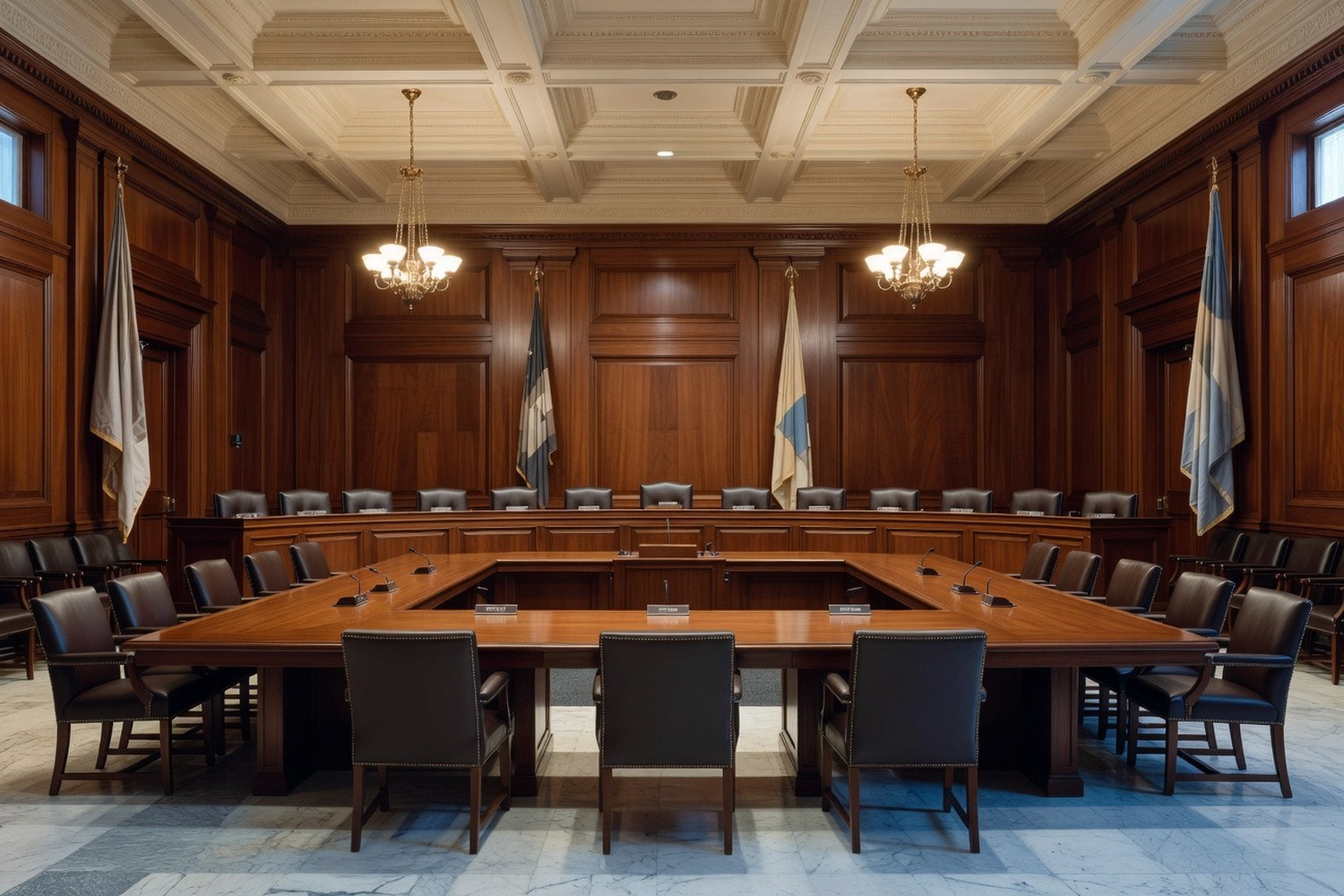
Warsh’s testimony before the Senate Banking, Housing, and Urban Affairs Committee on April 21 produced several specific statements that markets and Fed-watchers parsed carefully.
On forward guidance. When asked whether he would preview future rate decisions in the manner Powell has, Warsh said: “Unlike many of my colleagues past and present, I don’t believe in forward guidance. I don’t believe that I should be previewing for you what a future decision might be.” This is a direct break with the post-2012 Fed practice of communicating expected rate paths. Markets that have been trained to read the dot plot, the post-meeting statement, and the Chair’s press conference for forward signals would face a meaningfully different communication environment under a Warsh-led Fed.
On press conferences. Warsh did not commit to maintaining the current practice of holding a press conference after every FOMC meeting — eight per year. He suggested he might prefer a less frequent cadence: “Right now, press conferences are held periodically. If you ask me my true personal opinion right now, Fed chairs and other central bankers around the FOMC, they speak quite frequently. There is no lack of transparency. But I would say this, I think truth-seeking is more important than repetition.” Ben Bernanke held quarterly press conferences (four per year). Powell expanded that to every meeting. Warsh’s framing suggests he could revert to the Bernanke quarterly cadence or somewhere in between.
On inflation measurement. Warsh said he wants to “rethink how inflation is measured” and stated he wants to know “what inflation really is,” adding that “there’s some work to do” on how it’s calculated. This is potentially significant — current Fed practice anchors policy on the Personal Consumption Expenditures (PCE) price index with a 2% target. Any meaningful reframing of the measurement target could shift policy thresholds. Warsh did not specify what alternative measure he favors.
On tariffs and inflation. Asked whether he agreed with several Fed officials who have said higher tariffs are driving prices higher, Warsh said simply: “I don’t.” This puts him at odds with the prevailing FOMC view, including Powell’s repeated public statements that tariff effects have been a meaningful contributor to recent inflation prints.
On Fed independence. Warsh affirmed monetary-policy independence as essential, but offered qualifiers. “I do not believe the operational independence of monetary policy is particularly threatened when elected officials — presidents, senators, or members of the House — state their views on interest rates,” he said. He also distinguished between the Fed’s monetary-policy independence (which he firmly supports) and what he called the “stewardship of public monies” — directly relevant to the ongoing investigation into Fed headquarters renovations.
On the policy tools. Warsh said: “The Fed has an interest rate tool and a balance sheet tool. My view is, the interest rate tool gets in the cracks, it’s fairer.” This is consistent with his long-standing preference for conventional rate policy over QE-style balance sheet operations. With QT having ended December 1, 2025 (covered in our QT explainer), the question of how aggressively the Fed uses balance-sheet tools going forward is genuinely live.
The Tillis Blockade and the Renovation Investigation
The procedural obstacle to Warsh’s confirmation is concentrated in the Senate Banking Committee. The committee has 22 members — 12 Republicans and 10 Democrats. A nomination must clear committee on a majority vote before it can move to the full Senate floor. Sen. Thom Tillis (R-NC) said during the hearing: “Let’s get rid of this investigation, so I can support your confirmation.” That’s a public commitment to vote against advancing the nomination — and a single Republican “no” is enough to deadlock the committee at 11–11, which would not be a positive recommendation. Without committee approval, the nomination doesn’t advance.
The investigation Tillis is referring to is being conducted by the U.S. attorney’s office for the District of Columbia. It concerns the Federal Reserve’s multi-billion-dollar renovation of its Eccles Building headquarters complex in Washington. Jeanine Pirro, the U.S. attorney for D.C., has attempted to subpoena Powell directly in connection with the investigation but had the effort squashed in court. She has vowed to appeal. Until the investigation concludes — or until Tillis explicitly drops his hold — the nomination is stalled.
There are several pathways through the impasse. Tillis could change his position if the investigation moves toward resolution. The investigation could be settled or dropped. Republican leadership could pressure Tillis. The committee could schedule a vote anyway and let the deadlock force a different procedural path (a discharge petition is theoretically possible but rarely used). Or Trump could withdraw Warsh’s nomination and propose an alternative. None of these are imminent. The most likely near-term outcome is that the May 15 deadline arrives without a confirmed Chair.
The Three Scenarios for May 15

Three plausible scenarios cover most of the probability space.
Scenario 1: Warsh confirmed by mid-May. The Tillis blockade resolves quickly — either because the investigation moves toward conclusion, or because Republican leadership pressures Tillis to release the hold. Committee votes Warsh out, the full Senate confirms (which is a much lower bar — simple majority of voting senators, with the Republican majority sufficient), and Warsh chairs his first FOMC meeting June 16–17. This is currently the lowest-probability outcome given the blockade is fresh.
Scenario 2: Confirmation delayed; Powell stays as Chair past May 15. Powell has explicitly pledged to remain Chair until a successor is confirmed. He continues to chair FOMC meetings, hold press conferences, and represent the institution. The June 16–17 meeting (with SEP/dot plot) is a Powell-chaired meeting. Warsh’s nomination remains pending, possibly for months. This is currently the most likely scenario.
Scenario 3: Powell stays indefinitely; Warsh withdrawn or replaced. The blockade persists for months, the Trump administration grows frustrated, and either Warsh is withdrawn in favor of an alternative nominee, or Powell continues as Chair indefinitely while a new nominee goes through the process. Powell could remain Chair for the remainder of his Governor term (through January 2028) if the executive branch never produces a confirmable successor. This is a lower-probability scenario but not negligible.
For the rate path, the practical implications differ less than headlines might suggest. The current dot plot already reflects what the Powell-led FOMC would do absent any leadership change; if Powell stays past May 15, that path continues. A Warsh-led Fed might shift the path at the margins over time, but the FOMC operates by consensus — the Chair sets the tone but doesn’t unilaterally decide votes. For the immediate FOMC meeting on April 28–29, see our FOMC meeting preview; for the broader rate trajectory, see the Fed rate forecast for 2026.
What Changes with Warsh: Communication, Forward Guidance, Press Conferences
Three areas would meaningfully shift under Warsh, even if the underlying rate trajectory stayed similar.
Forward guidance would diminish. Powell’s Fed has used forward guidance — implicit or explicit communication about the expected future path of rates — as a primary tool. The dot plot itself is a form of forward guidance. Warsh’s stated rejection of forward guidance (“I don’t believe that I should be previewing for you what a future decision might be”) suggests he would lean against the practice, although he can’t unilaterally end the dot plot, which is a Committee product rather than a Chair preference. Markets would have to do more of their own work and might price in more meeting-by-meeting volatility around FOMC announcements.
Press conferences could become less frequent. Warsh’s openness to reverting to Bernanke’s quarterly press conference cadence (rather than Powell’s per-meeting cadence) would be a real reduction in real-time communication. The four meetings without press conferences would still produce statements, and the Chair could continue speaking via prepared speeches between meetings, but the high-frequency Q&A platform that Powell has used for nearly a decade would shrink substantially.
The framing of the Fed’s role could narrow. Warsh’s “stay in your lane” critique of the Fed’s expanded scope could mean less Fed communication about climate-related financial risks, banking-supervision priorities, and the labor market beyond the dual mandate’s strict employment objective. The substance of what the Fed actually does might not change much, but the tone of how it talks about its work likely would.
For the user-facing experience, less forward guidance and fewer press conferences mean rate decisions feel more like surprises and less like scheduled announcements that simply ratify what markets already knew. That’s not necessarily bad for borrowers — surprise-driven moves can go in either direction — but it’s a meaningfully different regime to navigate. The mortgage rate lock timing guide covers how to think about timing borrowing decisions around Fed meetings under the current framework.
What Stays the Same: Why the Chair Doesn’t Single-Handedly Move Rates
The FOMC has 12 voting members at any given time: the seven Board of Governors (when fully staffed), the New York Fed President permanently, and four regional Reserve Bank presidents on a rotating basis. Rate decisions require a majority vote. The Chair has substantial agenda-setting power, deep institutional staff support, and the public face of the institution — but cannot vote a different policy than the Committee will support.
This matters because a leadership transition (or extended Powell tenure) does not, by itself, change the underlying economic conditions or the views of the other 11 voting members. The current dot plot reflects a median view of one rate cut in 2026 and continued holding pattern through 2027 — that median doesn’t change because the Chair changes. A Warsh Chair could push for faster cuts or slower cuts (his historical writings suggest a more hawkish stance, but his April 21 testimony was deliberately non-committal), but he would need to bring colleagues along.
For the existing FOMC dissent pattern — Stephen Miran and Christopher Waller dissenting in favor of cuts at the January meeting, Waller again dissenting at March — a Warsh chairmanship doesn’t change the dissent dynamics either. Those governors were appointed by Trump and have their own views; they’ll vote those views regardless of who’s running the meeting. The dissent count at the April 28–29 meeting will be one signal, regardless of which Chair eventually takes over.
If you want to track the confirmation timeline, three signals are the early-warning system. First: any procedural action by the Senate Banking Committee — specifically, Chair Tim Scott (R-SC) scheduling a markup or vote on the nomination. The committee schedule is published at banking.senate.gov. Second: statements from Sen. Thom Tillis indicating either a softening of his position or a hardening of it. Tillis releases statements through his official Senate website and through media interviews. Third: any movement on the U.S. attorney’s investigation into Fed headquarters renovations — court filings or settlements would be the most likely trigger for Tillis to release his hold. If none of these signals shift in the next four weeks, Powell continuing as Chair past May 15 becomes the consensus expectation.
What This Means for Mortgages, Savings, and Credit Cards
For most household financial decisions, the confirmation drama is largely background noise — the substantive impact on consumer rates over the next few months is small.
Mortgages. The 30-year fixed mortgage rate (currently around 6.00% per Freddie Mac) tracks the 10-year Treasury yield plus a spread. Neither the leadership transition nor the confirmation uncertainty meaningfully shifts the 10-year, which is driven by inflation expectations and the FOMC’s medium-term rate path. Mortgage rate moves around the April 28–29 meeting will be driven by Powell’s press conference signals, not by Warsh-related news. The yield curve guide covers the underlying mechanics; for current consumer rate context see the current prime rate page.
Savings. HYSA and CD rates respond primarily to the federal funds rate. With markets pricing only about 36% odds of a June cut and the dot plot showing one cut over the rest of 2026, top HYSA rates at 4.00–4.20% and short-term CDs at 4.10–4.20% are likely to drift down modestly through year-end regardless of who’s chairing the Fed. The CD vs HYSA timing guide walks through the decision framework; the longer-term real-return picture is in the real returns explainer.
Credit cards and HELOCs. Variable-rate consumer products price off prime, which moves only when the Fed cuts or hikes the federal funds rate. The April 29 hold means prime stays at 6.75%; credit card APRs at 21–24% remain unchanged. A new Chair doesn’t move these rates by themselves — only Committee policy changes do. The U.S. interest rates dashboard and the April FOMC meeting preview together cover what to expect this week.
Frequently Asked Questions
Who is Kevin Warsh?
Kevin M. Warsh, 56, is President Donald Trump’s nominee to succeed Jerome Powell as Federal Reserve Chair. He served as a Federal Reserve Governor from 2006 to 2011, appointed by President George W. Bush at age 35 (the youngest Fed governor in history at the time). He was a key architect of the Fed’s emergency lending facilities during the 2007–2008 financial crisis. After leaving the Board he joined the Hoover Institution at Stanford as a Distinguished Visiting Fellow. His policy profile is more hawkish on inflation than Powell, more skeptical of unconventional balance-sheet tools, and notably opposed to forward guidance as a Fed communication practice.
Has Kevin Warsh been confirmed as Fed Chair?
No. As of April 22, 2026, Warsh has been nominated and has completed his Senate Banking Committee confirmation hearing (held April 21), but the committee has not yet voted on the nomination. Sen. Thom Tillis (R-NC) has publicly vowed to block the nomination from leaving committee until an investigation into Federal Reserve headquarters renovations is resolved. Republicans hold a 12–10 advantage on the committee, so a single Republican defection is enough to stall the confirmation. Until committee approval is secured, the nomination cannot advance to the full Senate floor.
When does Powell’s term end?
Jerome Powell’s four-year term as Federal Reserve Chair expires May 15, 2026. His separate term as a member of the Board of Governors does not expire until January 2028, meaning he could remain a regular Governor on the Board for nearly two more years even after his Chair term ends. Powell has publicly pledged to stay on as Chair until a successor is confirmed by the Senate, regardless of when his nominal Chair term expires.
Will Powell stay as Chair if Warsh isn’t confirmed?
Yes — Powell has explicitly stated he will stay on as Chair until a successor is confirmed by the Senate. The Federal Reserve Act provides that a Chair continues to serve until a successor takes office, and Powell has made clear he intends to use that provision if the May 15 nominal end of his term arrives without a confirmed replacement. This means the June 16–17 FOMC meeting (which includes the dot plot SEP) could still be a Powell-chaired meeting, and Powell could potentially chair Fed meetings indefinitely if the confirmation process remains stalled.
What does Warsh believe about forward guidance?
Warsh stated explicitly at his April 21 confirmation hearing that he does not believe in forward guidance: “Unlike many of my colleagues past and present, I don’t believe in forward guidance. I don’t believe that I should be previewing for you what a future decision might be.” This is a meaningful break with post-2012 Fed practice, in which the Chair and the Committee have used statements, press conferences, and the dot plot to communicate the expected future path of rates. A Warsh-led Fed would likely scale back this practice, although the dot plot itself is a Committee product (each Governor and Bank President submits projections) and cannot be unilaterally ended by the Chair.
How would Warsh change Fed press conferences?
Warsh did not commit at his confirmation hearing to maintaining the current practice of holding a press conference after every FOMC meeting (eight per year, established by Powell in 2018). He suggested he might prefer less frequent press conferences, saying “truth-seeking is more important than repetition.” Ben Bernanke, who introduced the practice in 2011, held quarterly press conferences (four per year). A Warsh-led Fed could potentially revert to the Bernanke quarterly cadence or land somewhere in between. The four meetings without press conferences would still produce post-meeting statements, but the Chair’s Q&A platform would shrink substantially.
Would a Warsh-led Fed cut rates faster than Powell?
Not necessarily. Warsh’s historical writings and policy profile lean somewhat more hawkish than Powell — meaning he might prefer to keep rates higher longer, not cut faster. President Trump has publicly pushed for faster rate cuts and has criticized Powell for not lowering rates quickly enough, but Warsh’s testimony at the confirmation hearing was carefully non-committal on the rate path itself. The FOMC operates by consensus, not by the Chair’s individual preference, so the actual rate trajectory under Warsh would depend on the views of the other voting members as much as on his own. The current dot plot — a Powell-era product — projects one rate cut over the rest of 2026, and that’s the baseline that any Chair would be navigating.
Watching the Confirmation Timeline
For practical tracking, set notifications on the Senate Banking Committee schedule at banking.senate.gov, monitor major financial news for procedural updates from Sen. Tim Scott’s office (the Banking Committee Chair) and Sen. Tillis’s office, and watch for any movement in the U.S. attorney’s investigation into Fed renovations. The Federal Reserve’s own communications — particularly any statements from Powell about his post–May 15 plans — will also be informative.
For the most current picture of where consumer rates sit, the current prime rate page, U.S. interest rates dashboard, and Fed rate forecast for 2026 are updated continuously. The companion FOMC meeting preview, Beige Book explainer, and quantitative tightening explainer together cover the policy machinery a new Chair would inherit.
References
- Board of Governors of the Federal Reserve System. “Federal Reserve Board Press Releases.” federalreserve.gov
- U.S. Senate Committee on Banking, Housing, and Urban Affairs. “Hearings.” banking.senate.gov
- CNBC. “Kevin Warsh Fed chair confirmation hearing: Live updates.” April 21, 2026. cnbc.com
- Board of Governors of the Federal Reserve System. “FOMC Calendars and Information.” federalreserve.gov
- The White House. “Presidential Nominations Sent to the Senate.” whitehouse.gov
- Hoover Institution, Stanford University. “Kevin Warsh — Distinguished Visiting Fellow.” hoover.org
Keep Reading
- Current U.S. Prime Rate Today
- Federal Reserve Meeting Schedule 2026
- Fed Rate Forecast 2026
- U.S. Interest Rates Dashboard
- April 2026 FOMC Meeting Preview
- How to Read the Fed Dot Plot
- Timing Your Mortgage Rate Lock Around Fed Meetings
- Quantitative Tightening Explained
- Fed Beige Book Explained
- CD vs HYSA: When to Lock vs Stay Liquid