If you have a credit card, a mortgage, a personal loan, or any kind of variable-rate debt, the prime rate is quietly shaping how much you pay every single month. It is the benchmark interest rate that banks use to price everything from business loans to home equity lines of credit — and it moves every time the Federal Reserve adjusts its own rate. Right now, in March 2026, the prime rate sits at 6.75 percent after the Fed cut rates three times in late 2025. More cuts may be coming. Understanding what the prime rate actually is, how it works, and what drives it up or down gives you a real edge when borrowing, refinancing, or just making sense of the financial headlines.
What Is the Prime Rate?
The prime rate is the interest rate that commercial banks charge their most creditworthy customers — typically large corporations with strong financials and minimal default risk. Think of it as the baseline from which banks build the rates they offer to everyone else. If you are not a Fortune 500 company, your loan rate will be the prime rate plus some margin based on your credit risk.
The Wall Street Journal publishes the most widely referenced prime rate, which it defines as the base rate on corporate loans posted by at least 70 percent of the 10 largest U.S. banks. You can track the official daily rate through the Federal Reserve’s H.15 statistical release, which reports the prime rate posted by the nation’s 25 largest banks. As of March 2026, that rate is 6.75 percent. When financial products reference “the prime rate” without further qualification, they almost always mean the WSJ prime rate.
Here is the important part: virtually every bank in the country sets its prime rate using the same simple formula.
Prime Rate = Federal Funds Rate + 3 percentage points
With the current federal funds rate at 3.50 to 3.75 percent (set at the Fed’s January 2026 meeting), the prime rate lands at 6.75 percent. This relationship has held remarkably consistently for decades. Every time the Fed raises or lowers the federal funds rate, the prime rate moves by the same amount within a day or two.
How the Federal Reserve Controls the Prime Rate
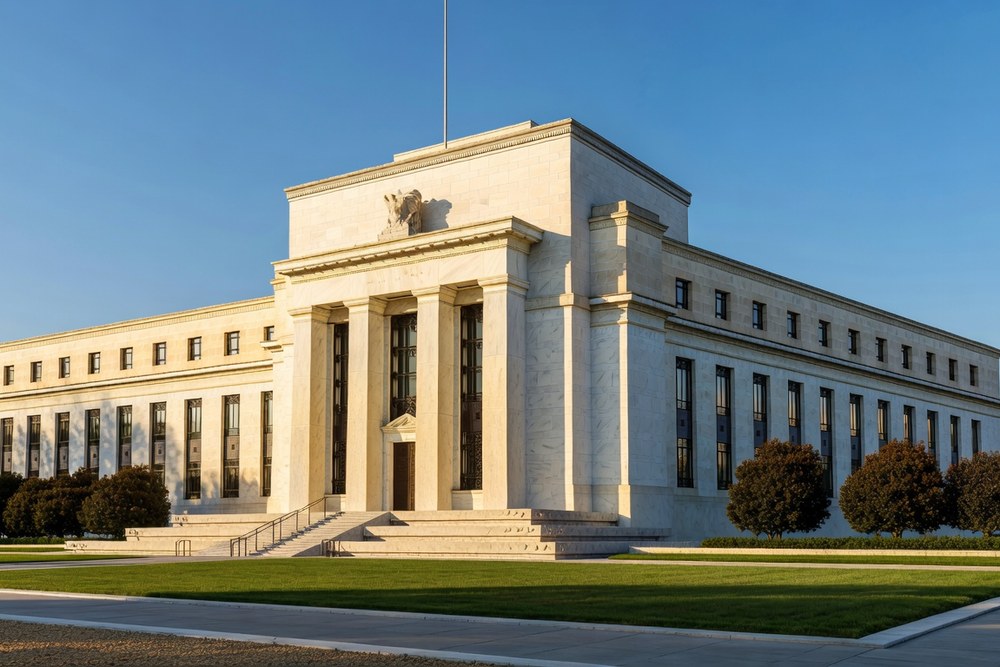
The Federal Reserve does not directly set the prime rate — that is technically each bank’s own decision. But in practice, the Fed controls it completely through the federal funds rate, which is the rate banks charge each other for overnight lending.
The Federal Open Market Committee meets roughly eight times per year to evaluate the economy and decide whether to raise, lower, or hold the federal funds rate. Their decisions are based on two primary mandates: keeping inflation near 2 percent and maintaining maximum employment. When inflation runs hot, the Fed raises rates to cool borrowing and spending. When the job market weakens, they cut rates to stimulate economic activity.
Here is what that has looked like recently. After an aggressive rate-hiking campaign in 2022 and 2023 that pushed the federal funds rate to its highest level in over two decades, the Fed reversed course in late 2025 with three consecutive quarter-point cuts. Those cuts dropped the federal funds rate from 4.50 to 4.75 percent down to 3.50 to 3.75 percent — and the prime rate followed it down from 7.75 percent to the current 6.75 percent.
Looking ahead, most economists expect 2 to 3 additional rate cuts in 2026, which would push the prime rate down toward 6.00 to 6.25 percent by year-end. But that outlook is unusually uncertain this year because Fed Chair Jerome Powell’s term expires in May 2026, and the incoming chair could shift the committee’s approach. Markets are watching closely.
Where the Prime Rate Stands in 2026: Historical Context
At 6.75 percent, the current prime rate is still elevated by recent historical standards — but it has come down meaningfully from its 2023 peak. Here is how it compares across the last several decades:
All-time high: 21.50 percent in December 1980, during the Volcker-era inflation fight. Mortgage rates topped 18 percent that year.
Post-financial-crisis low: 3.25 percent from December 2008 through December 2015 — a full seven years at the floor, the longest stretch of stability in the prime rate’s history.
Pandemic low: 3.25 percent again from March 2020 through March 2022, as the Fed slashed rates to near-zero to support the economy during COVID-19.
2023 peak: 8.50 percent from July 2023 through September 2025, the highest level since January 2001.
Current rate: 6.75 percent as of December 11, 2025, following the Fed’s third consecutive cut.
The pattern reveals something worth understanding: the prime rate tends to move in long cycles. It stayed at 3.25 percent for years, then climbed rapidly, and is now on its way back down. If you are timing a major borrowing decision — a personal loan, a business loan, or a home equity line — knowing where you are in the cycle matters.
How the Prime Rate Affects Your Loans and Credit Cards
The prime rate is not just a number for banks and economists. It directly determines what millions of Americans pay on their debt every month. Here is exactly how it flows through to the products you actually use.
Credit cards. According to the Consumer Financial Protection Bureau, most credit cards carry variable interest rates expressed as “prime rate plus X percent.” If your card agreement says prime + 14.99 percent, your current APR is 6.75 + 14.99 = 21.74 percent. When the Fed cuts rates by 0.25 percent, your credit card rate drops by the same amount — automatically, usually within one to two billing cycles. The average credit card APR in early 2026 is around 20 percent, down from a peak above 22 percent in mid-2024. With additional Fed cuts expected, card rates could drift toward 19 percent by year-end.
Home equity lines of credit (HELOCs). These are almost always priced as prime plus a margin, typically 0 to 2 percent. A HELOC at prime + 0.50 percent currently costs you 7.25 percent. HELOCs are among the most sensitive products to prime rate changes — your payment adjusts almost immediately when the rate moves.
Adjustable-rate mortgages (ARMs). After the initial fixed-rate period expires (usually 5 or 7 years), ARMs reset based on a benchmark rate. Some ARMs are tied to the prime rate; others use SOFR or Treasury yields. If yours is prime-based, every Fed rate change directly impacts your mortgage payment going forward.
Personal loans. Personal loan rates vary widely — from around 6 percent for excellent credit to 36 percent for subprime borrowers — but lenders use the prime rate as their internal benchmark for pricing. When the prime rate drops, the floor and ceiling of personal loan rates both tend to shift lower, though the effect is less immediate than with credit cards.
Business loans. SBA 7(a) loans explicitly use the prime rate (or an approved alternative) as their base, with lender spreads of 3.0 to 6.5 percent depending on loan size. A business borrowing $500,000 at prime + 3.0 percent pays 9.75 percent today — and that rate drops automatically every time the Fed cuts. Conventional business loans from online lenders are less directly tied to prime but still influenced by it as a market benchmark.
Auto loans. Most auto loans are fixed-rate, so the prime rate does not change your payment after you sign. However, the prime rate at the time you apply heavily influences what rate you are offered. Borrowers shopping for auto loans during a rate-cutting cycle often get meaningfully better terms than those who borrowed a year earlier.
Savings accounts and CDs. Here is the flip side: when the prime rate drops, so do the returns on savings accounts, money market accounts, and certificates of deposit. If you have been earning 4.5 to 5 percent on a high-yield savings account, expect those rates to decline as the Fed continues cutting.

Prime Rate vs. Federal Funds Rate vs. SOFR: What Is the Difference?
These three rates get mentioned interchangeably in financial news, but they serve different functions and affect you in different ways.
The federal funds rate is the overnight lending rate between banks. The Fed sets a target range (currently 3.50 to 3.75 percent) and uses open market operations to keep the actual rate within that band. You never borrow at this rate directly — it is a wholesale rate that cascades through the system to influence everything else.
The prime rate (currently 6.75 percent) is derived from the federal funds rate by adding 3 percentage points. It is the rate banks charge their best customers and the benchmark for most variable-rate consumer products like credit cards, HELOCs, and many business loans.
SOFR (Secured Overnight Financing Rate) is the newer benchmark that replaced LIBOR in 2023. It measures the cost of borrowing cash overnight using Treasury securities as collateral. SOFR is used primarily for institutional and commercial lending, certain adjustable-rate mortgages, and — as of March 2026 — it is now an approved base rate for SBA 7(a) loans. The 30-day average SOFR currently sits around 3.55 percent.
For most consumers, the prime rate is the one that matters most. It directly sets the price on the financial products you are most likely to use. SOFR matters more if you are dealing with commercial real estate, large business lending, or certain newer mortgage products.
What to Do When the Prime Rate Changes
Rate changes are not just news to read and forget. They create real opportunities — and real risks — depending on your financial situation. Here is a practical framework.
When the prime rate is falling (like now):
If you have variable-rate debt, you are getting automatic relief. Your credit card payments and HELOC costs are dropping without any action on your part. But this is also a good time to be strategic. Consider accelerating payments on high-rate debt while rates are falling — more of each payment goes to principal when the interest charge shrinks. If you have been putting off a refinance on your mortgage or business loan, falling rates create a window. Do not wait for the absolute bottom — nobody can time that perfectly. If the rate available to you today is meaningfully better than what you are paying, it is worth acting.
When the prime rate is rising:
Lock in fixed rates wherever possible. If you are carrying a variable-rate HELOC, consider converting it to a fixed-rate home equity loan. If you are shopping for a business loan, a fixed-rate SBA loan protects you from future increases. Pay down variable-rate credit card debt aggressively — every rate hike increases your cost of carrying balances. And build your savings, because rising rates mean higher returns on savings accounts and CDs.
Regardless of direction:
Review your credit card agreements to understand exactly how your rate is calculated. Most specify “prime + X percent” — knowing your margin lets you predict your rate after each Fed meeting. Check your credit score before making any major borrowing decisions, since the spread above prime that a lender charges you is heavily influenced by your creditworthiness. And compare offers from multiple lenders, because the margin above prime varies significantly from lender to lender even for the same borrower profile.
Frequently Asked Questions
What is the current prime rate in 2026?
The current U.S. prime rate is 6.75 percent as of March 2026. It was last changed on December 11, 2025, following the Federal Reserve’s third consecutive quarter-point rate cut. The rate is published daily by the Wall Street Journal based on the rates posted by the nation’s largest banks.
How often does the prime rate change?
The prime rate changes whenever the Federal Reserve adjusts the federal funds rate, which happens at FOMC meetings roughly eight times per year. However, the Fed does not always change rates at every meeting. The prime rate can remain unchanged for months or even years (it held steady at 3.25 percent for seven years from 2008 to 2015), or it can change multiple times in a single year.
Is the prime rate the lowest rate I can get?
No. The prime rate is a benchmark, not a floor. Some borrowers — particularly those with excellent credit, strong collateral, or existing banking relationships — can negotiate rates below prime for certain products like secured business lines of credit. However, for most consumer products like credit cards and personal loans, the rate you pay will be prime plus a margin that reflects your credit risk.
Will the prime rate go down in 2026?
Most forecasters expect 2 to 3 additional Federal Reserve rate cuts in 2026, which would lower the prime rate to approximately 6.00 to 6.25 percent by year-end. However, uncertainty is higher than usual due to the transition to a new Fed chair in May 2026 and mixed signals on inflation and employment. Rate decisions depend on incoming economic data.
How does the prime rate affect my credit card?
Most credit cards have variable APRs calculated as prime rate plus a fixed margin. When the Fed cuts rates and the prime rate drops, your credit card APR decreases by the same amount, usually within one to two billing cycles. For example, if your card charges prime + 15 percent and the prime rate drops from 6.75 to 6.50 percent, your APR would fall from 21.75 to 21.50 percent.
The Bottom Line
The prime rate is one of those financial fundamentals that touches almost everyone who borrows or saves money. At 6.75 percent in March 2026, it sits well below its 2023 peak but above the historically low levels that defined the previous decade. With the Fed signaling further cuts ahead — and a change in Fed leadership on the horizon — the prime rate is likely to keep moving this year.
For borrowers, the direction is favorable. Variable-rate credit card holders, HELOC borrowers, and businesses with prime-based loans are all benefiting from lower costs. For savers, the trade-off is real: the same cuts that reduce borrowing costs are also eroding returns on savings accounts and CDs.
The smartest thing you can do is understand how the prime rate affects your specific financial products — and use that knowledge to time your borrowing, refinancing, and saving decisions accordingly. Whether you are looking for a personal loan, comparing business loan options, or shopping for a new credit card, knowing where the prime rate stands and where it is headed gives you a meaningful advantage.
Rates and economic forecasts referenced in this article are current as of March 2026 and are subject to change. This content is for informational purposes only and does not constitute financial advice.
References
Board of Governors of the Federal Reserve System — H.15 Selected Interest Rates
Federal Reserve Bank of St. Louis (FRED) — Bank Prime Loan Rate
U.S. Small Business Administration — 7(a) Loan Terms, Conditions, and Eligibility
Consumer Financial Protection Bureau — Credit Card Consumer Tools