
How Personal Loans Affect Your Credit Score
A personal loan affects your credit score at three distinct stages: the application (hard inquiry, typically –5 to –10 FICO points), the new account opening


Estimates only. Your actual rate depends on credit profile, lender, and loan terms.
Not all personal loans are created equal — and the best lender for your neighbor isn’t necessarily the best lender for you. Your credit score, the amount you need, how fast you need it, and what you’re using it for all determine which lender gives you the best deal. Here’s the quick version before we dive into the details.
LightStream — best overall rate. Starting at 6.49% APR with autopay, no origination fee, same-day funding, and terms up to 20 years for certain loan purposes. The Rate Beat Program guarantees they’ll match any qualified competitor’s offer minus 0.10%. The catch: you need roughly 695+ credit with strong income and a solid credit history. If you qualify, there’s rarely a reason to look elsewhere for rate alone.
SoFi — best for zero fees. No origination fee, no late fee, no prepayment penalty — period. Rates from 8.74% with autopay, up to $100K, same-day funding. Plus unemployment protection (they’ll pause your payments and help you find a new job if you lose yours) and a joint loan option. The $5,000 minimum is higher than some competitors, so SoFi isn’t ideal for very small loans.
Upgrade — best for fair credit. Accepts 580+ credit scores, which opens the door for millions of borrowers who can’t qualify at LightStream or SoFi. Rates from 8.49%, up to $50K, and you can choose your payment date. Multiple rate discounts available (autopay, credit union membership). Origination fee of 1.85-9.99% is deducted from proceeds — factor this into your comparison.
Upstart — best for thin or no credit history. Uses AI underwriting that considers education and employment alongside credit data — no minimum credit score required. Perfect for recent graduates, young professionals, and anyone without a long credit history. Rates from 7.80%, up to $50K, funding in 1-2 business days.
LendingClub — best for debt consolidation. Offers direct payment to creditors on consolidation loans (the money goes straight to your credit card companies, not to you — reducing temptation to spend it). Joint applications available. Rates from 9.57%, up to $40K. Origination fee of 3-8%.
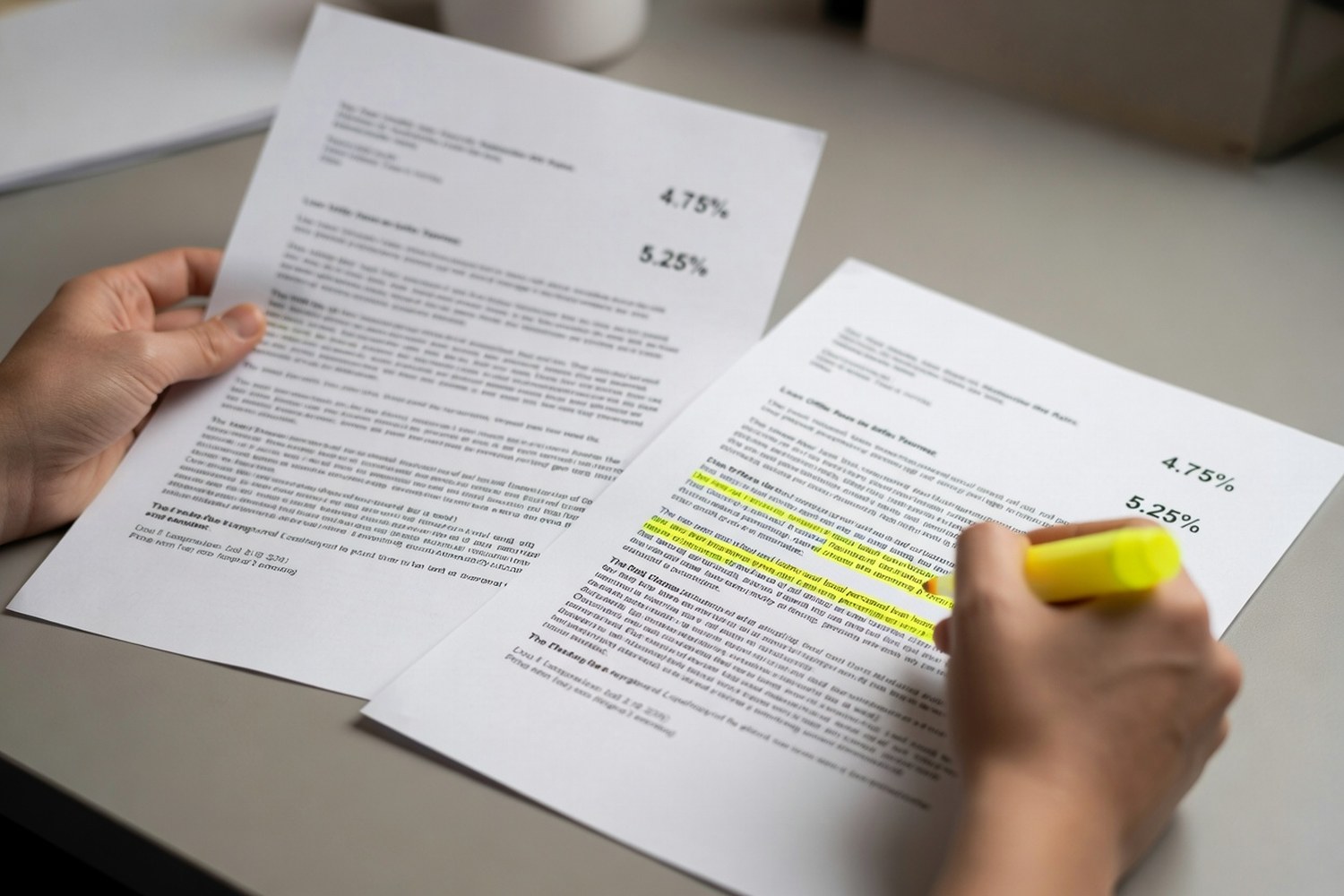
Pre-qualifying at multiple lenders reveals rate differences of 2-5% — on a $15,000 loan, that’s $1,000-$5,000 in interest savings over the life of the loan.
| Lender | APR | Amount | Term | Fees | Min Credit | Funding |
| LightStream | 3.50%–3.75% | $5K-$100K | 2-20 yrs | None | ~695 | Same day |
| SoFi | 3.50%–3.75% | $5K-$100K | 2-7 yrs | None | 680 | Same day |
| Upgrade | 3.50%–3.75% | $1K-$50K | 2-7 yrs | 1.85-9.99% | 580 | 1-3 days |
| Upstart | 3.50%–3.75% | $1K-$50K | 3 or 5 yrs | 0-12% | None | 1-2 days |
| LendingClub | 3.50%–3.75% | $1K-$40K | 2-5 yrs | 3-8% | 600 | 1-3 days |
| Discover | 7.74%-24.99% | $2.5K-$40K | 3-7 yrs | None | 660 | Next day |
| Best Egg | 5.99%-35.99% | $2K-$50K | 3-5 yrs | 0.99-9.99% | 600 | 1-3 days |
| PenFed Credit Union | 7.74%-17.99% | $600-$50K | 1-5 yrs | None | ~650 | 1-3 days |
Rates as of early 2026 for qualified borrowers. Autopay discounts included where noted. Pre-qualify to see your personalized offer.
Comparing personal loans isn’t just about finding the lowest APR number — although that’s a good start. Here are the five things that actually determine which loan costs you the least.
Total cost of the loan. This is the only number that matters in the end: (monthly payment × number of months) + origination fee – loan amount. A $15,000 loan at 9% over 60 months with no origination fee: $311/month, total cost $18,678, total interest $3,678. That same loan at 8% with a 5% origination fee ($750): $304/month, total cost $18,990, total interest $3,240 plus $750 fee = $3,990. The “lower rate” loan actually costs $312 more because of the fee. Always compare total cost.
APR (not just interest rate). APR includes the interest rate plus origination fees, expressed as an annual percentage. Lenders are required by the Truth in Lending Act to display APR, making it a better comparison tool than interest rate alone. When comparing two lenders, compare their APRs — that’s the apples-to-apples number.
Origination fees. These range from 0% (LightStream, SoFi, Discover) to 3-10% (LendingClub, Upgrade, Upstart). The fee is deducted from your loan proceeds — so if you borrow $10,000 with a 5% origination fee, you receive $9,500 but owe $10,000. If you need exactly $10,000, you’d need to borrow $10,526 to receive $10,000 after the fee.
Funding speed. If you need money this week, a lender that funds in 7-10 business days doesn’t help. LightStream and SoFi fund same-day. Discover funds next-day. Upgrade and Upstart fund in 1-3 business days. Factor speed into your decision if timing matters.
Repayment flexibility. Can you change your payment date? Is there a prepayment penalty? What happens if you hit financial difficulty — does the lender offer hardship programs? SoFi’s unemployment protection and Upgrade’s adjustable payment dates are real differentiators that don’t show up in the rate comparison.
740+ (excellent): LightStream is your first stop — 6.49% starting rate with autopay is the lowest available anywhere. Also check SoFi (8.74%+) and your local credit union. At this tier, the rate spread between lenders is narrow (1-2%), so convenience features (funding speed, repayment flexibility, no fees) become the tiebreaker. PenFed Credit Union caps rates at 17.99% — irrelevant for excellent credit, but the starting rates can be competitive.
670-739 (good): The competitive middle where pre-qualifying at multiple lenders matters most. SoFi, Discover, LendingClub, and Best Egg all compete for this tier. Rate spread: 8-15%, meaning the difference between lenders can be $2,000-$4,000 on a $15,000 loan. Pre-qualify at a minimum of 4 lenders. Don’t assume the lender with the best advertised rate will give you the best offer — advertised rates are for the best-qualified borrowers.
580-669 (fair): Upgrade (580+), LendingClub (600+), Best Egg (600+), and Upstart (no minimum) are your primary options. Expect 15-30% APR. The origination fee matters more at higher rates — a 6% origination fee on top of 20% APR significantly increases total cost. Prioritize lenders with low or no origination fees in this tier. Upgrade offers multiple rate discounts that can reduce your APR by 1-2%.
Below 580: Upstart is your strongest option — no minimum credit score, AI underwriting that considers factors beyond FICO. Some credit unions work with members below 580. Avoid payday lenders, title lenders, and any lender charging above 36% APR — these are predatory and will cost more than the problem you’re trying to solve.

Pre-qualifying at multiple lenders uses soft credit pulls — no impact on your score — and reveals the full range of rates available to you.
Debt consolidation: LendingClub (direct payment to creditors), SoFi (no fees, hardship protection), Upgrade (fair credit accepted). Direct creditor payment is a major advantage — it ensures the money actually goes to paying off your debt rather than sitting in your bank account where it might get spent elsewhere.
Home improvement: LightStream (terms up to 20 years, lowest rate), SoFi (same-day funding for urgent repairs), HFS Financial (specialist in outbuildings and barns). LightStream’s 20-year term keeps monthly payments manageable on $40,000-$80,000 remodeling projects. The interest may not be tax-deductible like a HELOC, but the speed and simplicity often outweigh the tax benefit.
Medical expenses: SoFi (hardship programs for health-related income loss), Discover (next-day funding, no fees), Upstart (thin credit accepted). Always negotiate your medical bill and ask for a provider payment plan before taking a loan — hospitals routinely offer 0% interest payment plans that beat any personal loan rate.
Major purchase (vehicle, appliance, wedding): LightStream (lowest rate, purpose-specific rates for vehicles), SoFi (no fees), Best Egg (secured loan option with lower rates). LightStream offers different rates by loan purpose — their vehicle rate may be lower than their general-purpose rate for the same borrower.
Emergency/fast funding: LightStream (same-day), SoFi (same-day), Discover (next-day). When speed matters, eliminate any lender that takes more than 2 business days. Apply in the morning for the best chance of same-day funding.
Origination fees that inflate your borrowing. A 6% origination fee on a $10,000 loan means you receive $9,400 but owe $10,000. If you need exactly $10,000, you’re actually borrowing $10,638 — and paying interest on $10,638, not $10,000. Always calculate what you’ll receive after fees, not what you’re borrowing on paper.
Prepayment penalties. Most major online lenders don’t charge prepayment penalties — but always verify. If you plan to pay off your loan early (bonus at work, tax refund, inheritance), a prepayment penalty erases the interest savings you’d otherwise get from early payoff.
Variable rates disguised as low starting rates. Personal loans are almost always fixed-rate, but some fintech lenders offer variable-rate lines of credit marketed as “personal loans.” A 7% variable rate that climbs to 15% over 3 years costs more than a 10% fixed rate. Confirm your rate is fixed before accepting.
Insurance and add-on products. Some lenders offer credit insurance, payment protection plans, or identity theft monitoring bundled with your loan. These add 1-3% to your effective cost and are almost never worth it. Decline all add-ons unless you’ve independently verified their value.
Step 1: Know your credit score and what you need. Check your score at Credit Karma (free) or through your credit card’s dashboard. Determine: how much you need, what you’re using it for, and how quickly you can pay it back. These three answers narrow your lender list immediately.
Step 2: Pre-qualify through a marketplace. Start with Credible — one application, multiple lender offers, soft credit pull. This gives you a baseline: the range of rates and terms available to your credit profile. Takes 5 minutes.
Step 3: Pre-qualify at 2-3 individual lenders. SoFi (not on most marketplaces), LightStream (via Credible or direct), and your local credit union. Each takes 3-5 minutes. Now you have 5-10 offers to compare.
Step 4: Compare total cost across your top 3 offers. For each: (monthly payment × months) + origination fee = total cost. Sort by total cost, lowest to highest. The cheapest total cost is your best loan — regardless of which lender has the flashiest website or the lowest advertised rate.
Step 5: Formally apply with your top choice. This triggers a hard credit pull (3-5 point temporary score drop). Upload requested documents (pay stubs, ID). Most lenders approve and fund within 1-3 business days. Set up autopay for the rate discount.
The best starting rates as of March 2026 are 5.99% APR from Best Egg (secured personal loans) and 6.49% APR from LightStream (unsecured with autopay, excellent credit required). SoFi starts at 8.74% with zero origination fees. The national average personal loan rate is 12.26%, according to Federal Reserve G.19 data. Your actual rate depends on your credit score, income, debt-to-income ratio, and the loan amount and term you choose. On a $15,000 loan over 5 years, the difference between a 6.49% rate and a 12.26% rate is roughly $2,400 in total interest — so pre-qualifying at 3–5 lenders with a soft credit pull is one of the most impactful steps you can take.
At least 3 lenders, and ideally 5 or more. The rate spread between lenders for the same borrower profile can be 3–8 percentage points, which translates to $1,500–$5,000 in extra interest on a $15,000 loan. Start with a marketplace like Credible or LendingTree for bulk comparison with a single soft pull, then check SoFi and your local credit union individually — credit unions often have lower rates (averaging 10.72% APR) that don’t show up on marketplace platforms. Pre-qualification uses a soft credit pull with zero impact on your score, so there’s no downside to comparing widely.
No. Pre-qualification uses a soft credit inquiry that is invisible to other lenders and has zero impact on your FICO score. You can pre-qualify at as many lenders as you want without any credit damage. Only the formal application — after you’ve chosen a lender and accepted an offer — triggers a hard inquiry, which typically lowers your score by 3–5 points and stays on your report for two years. If you submit multiple formal applications within a 14-day window, most scoring models count them as a single inquiry for rate-shopping purposes. Check the CFPB credit score guide for more on how inquiries work.
Always compare total loan cost, not just APR or fees in isolation. An origination fee of 3%–8% is deducted from your loan proceeds upfront — so on a $15,000 loan with a 5% fee, you only receive $14,250 but repay the full $15,000 plus interest. A 9% APR with a 5% origination fee can cost more than a 10.5% APR with no fees over the same term. The simplest way to compare: multiply your monthly payment by the number of months, add any fees, and compare the total dollar amount across offers. Lenders like SoFi, LightStream, and Discover charge zero origination fees, while LendingClub and Upgrade charge 3%–12% depending on your credit profile.
Same-day funding is available from LightStream and SoFi if you apply before early afternoon on a business day with all documents ready. Discover typically funds the next business day. Upgrade, Upstart, and LendingClub generally take 1–3 business days after approval. Some credit unions take 3–7 business days due to additional verification steps. The biggest factor affecting speed is document readiness — have your government ID, recent pay stubs, bank statements, and proof of address ready before applying. Debt consolidation loans that pay creditors directly (like LendingClub) may take an extra 1–2 days because the lender sends payments to your existing creditors on your behalf.
Most lenders require a minimum FICO score of 580–660, but requirements vary widely. Upstart has no minimum credit score and uses AI-based underwriting that factors in education and employment history. Upgrade and Avant accept scores as low as 580. LendingClub requires 600+. SoFi and LightStream typically need 660–680+ for the best rates. Borrowers with 720+ qualify for the lowest APRs in the 6.49%–9% range. If your score is below 580, consider a secured personal loan from Best Egg (starting at 5.99%) or a credit-builder loan to improve your score before applying. Check the CFPB credit score guide to understand where you stand and dispute any errors that may be dragging your score down.
A good APR depends on your credit profile. For excellent credit (720+): 6.5%–10%. Good credit (670–719): 10%–15%. Fair credit (580–669): 15%–22%. Bad credit (below 580): 22%–36%. The national average across all borrowers is 12.26% as of March 2026, per Federal Reserve G.19 data. Always compare your quoted APR to these ranges — if you’re being offered a rate well above your credit tier, shop other lenders. Remember that APR includes the interest rate plus certain fees, making it a more accurate measure of total borrowing cost than the interest rate alone.
Yes — personal loan rates have improved since the Fed cut rates five times between September 2024 and December 2025, bringing the federal funds rate down to 3.50%–3.75%. The average APR has dropped from roughly 12.8% to 12.26%, and top-tier borrowers can find rates as low as 6.49%. The FOMC outlook suggests 1–2 more cuts in the second half of 2026, which could push rates slightly lower. If you need a loan now, locking in a fixed rate protects you regardless of what happens next. If you can wait a few months, rates may dip further — but the savings from one additional 25-basis-point cut would only be about $0.50–$1.50 per month on a typical $15,000 loan.
As of March 2026, LightStream offers the lowest unsecured rate at 6.49% APR (with autopay, excellent credit required). Best Egg offers 5.99% on secured personal loans backed by your vehicle or savings. SoFi starts at 8.74% with zero fees. Among credit unions, PenFed and Navy Federal often offer rates below 8% for members. Your actual rate depends on your credit score, income, and debt-to-income ratio — a borrower with a 680 FICO will see very different rates than one with 760. Pre-qualify at 3–5 lenders to find your personal lowest offer without any credit score impact.
LendingClub is often the best choice because it pays your creditors directly through its Direct Pay feature, reducing the temptation to re-spend the loan proceeds. SoFi is ideal if you want zero fees (no origination fee) and access to member benefits like unemployment protection. Upgrade works well for borrowers with lower credit scores (580+) and offers direct payment to creditors. For large balances, LightStream offers loans up to $100,000 with same-day funding. The key to successful debt consolidation is ensuring your new loan’s APR is lower than the weighted average rate on your existing debts. Use the debt consolidation calculator to see if consolidating saves you money. Also see our dedicated guide: Best Personal Loans for Debt Consolidation.
Yes. Several lenders specialize in bad-credit borrowers (FICO below 580). Upstart uses AI and alternative data like education and employment history instead of relying solely on credit scores. Upgrade accepts 580+ with APRs from 8.49%–35.97%. Avant also accepts 580+ with fast funding in as little as one business day. Expect higher APRs in the 22%–36% range, and consider a secured personal loan from Best Egg (starting at 5.99%) to get a significantly lower rate by pledging collateral. Avoid payday lenders at all costs — their effective APRs can exceed 400%, trapping borrowers in cycles of debt. Before applying, check your credit report for errors at AnnualCreditReport.com — correcting mistakes can boost your score quickly. See our full guide: Best Personal Loans for Bad Credit.
SoFi, LightStream, Discover, and Marcus by Goldman Sachs charge zero origination fees. Most other lenders charge 1%–12% of the loan amount — on a $15,000 loan, that’s $150–$1,800 deducted from your disbursement before you receive it. No-fee lenders save you money upfront, but always compare total loan cost since a slightly higher APR with no fee can still be cheaper than a lower APR with a hefty origination fee. For example, SoFi at 8.74% with no fee costs less overall than a 7.99% loan with a 6% origination fee on a 3-year term. Use the APR vs Interest Rate Calculator to see the true cost difference for your specific loan amount and term.
A personal loan affects your credit score at three distinct stages: the application (hard inquiry, typically –5 to –10 FICO points), the new account opening

The most common personal loan fee is the origination fee, which ranges from 1% to 10% of your loan amount and gets deducted before you

A personal loan is the cheaper choice for borrowing $3,000 or more when you need longer than 60 days to repay — the average personal

You can prequalify for a personal loan in under five minutes at most online lenders — SoFi, Upstart, Prosper, Best Egg, and Upgrade all let

Most personal loan lenders approve borrowers with a debt-to-income ratio (DTI) under 50%, though the best rates and terms go to applicants below 36%. SoFi,

The prime rate forecast for 2026 is one of the most closely watched financial data points of the year — and for good reason. Every