
How to Shop for a Personal Loan (and Actually Get a Good Deal)
Written by Laura Adams, MBA | Reviewed by Jim Wang, Personal Finance Expert | Last Updated: March 20, 2026
- Prequalifying with multiple lenders uses a soft credit pull — it won’t hurt your score, and it’s the single best way to find your lowest rate.
- The average personal loan rate is 12.26% as of March 2026, but borrowers with 740+ credit scores regularly land rates under 9%.
- APR matters more than interest rate alone — origination fees of 1% to 12% can dramatically change what you actually pay.
- Credit unions cap personal loan APRs at 18% for federal members, making them worth checking even if you primarily bank online.
- Shopping around within a 14- to 45-day window counts as a single inquiry on your credit report, so there’s no penalty for comparing.
- Why Shopping Around Matters More Than You Think
- Check Your Credit Before Lenders Do
- Where to Look: Banks, Credit Unions, and Online Lenders
- How to Prequalify Without Hurting Your Score
- What to Compare When You Have Multiple Offers
- Red Flags That Should Make You Walk Away
- Can You Negotiate Personal Loan Terms?
- Your Next Steps: A Simple Action Plan
Why Shopping Around Matters More Than You Think
Here’s a number that should bother you: on a $15,000 personal loan with a 3-year term, the difference between a 9% APR and a 16% APR comes out to roughly $1,700 in extra interest. That’s real money — enough to cover a month’s rent in most cities — and it disappears simply because one borrower compared offers while another accepted the first thing that popped up.
Personal loans have exploded in popularity. The total number of personal loans on credit reports hit 67.5 million in 2025, up 7% from the prior year, according to TransUnion data. Nearly four in ten American adults now carry one. But the rate spread across lenders is enormous. The lowest rates from top online lenders start around 6.20% APR for borrowers with pristine credit, while the high end pushes toward 36%. The average sits at 12.26% as of March 2026, per Bankrate’s monitor data.
That gap between the best and worst offers isn’t random. It’s driven by which lenders you check, how you present your application, and whether you actually bother to compare. Most people don’t. They search “personal loan,” click the first result, fill out an application, and take whatever comes back. That’s like buying a car at the first dealership you walk into without checking the one across the street.
Check Your Credit Before Lenders Do
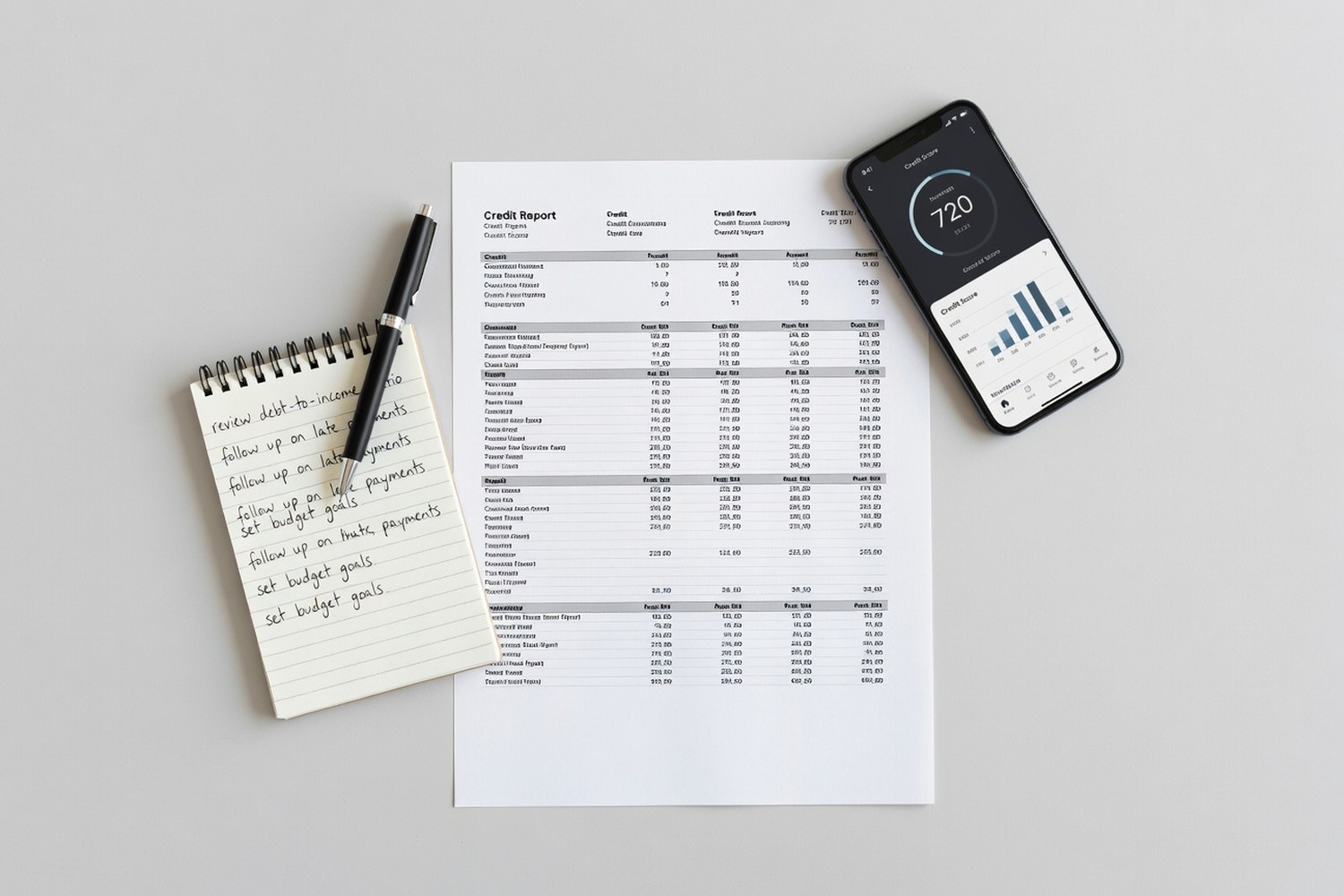
Before you start filling out prequalification forms, pull your own credit reports. This is a soft inquiry — it doesn’t affect your score — and you can do it for free at AnnualCreditReport.com. You’re looking for three things.
First, check for errors. The FTC has found that roughly one in five credit reports contains a material mistake. If a paid collection is still showing as unpaid, or an account that isn’t yours appears on your report, disputing it can boost your score by 20 to 100 points. Disputes typically resolve within 30 days through the credit bureaus.
Second, know your actual score. Most credit card issuers now provide your FICO score for free through their app or website. Your score determines which tier of rates you’ll qualify for — and the tiers aren’t subtle. Borrowers in the 740-plus range routinely see single-digit APRs. Drop below 670 and you’re looking at mid-teens or higher. Below 600, many mainstream lenders won’t approve you at all.
Third, check your debt-to-income ratio. Add up all your monthly debt payments (credit cards, car loans, student loans, mortgage) and divide by your gross monthly income. Most personal loan lenders want to see this below 40%. If yours is higher, paying down a credit card balance before applying could meaningfully improve your offers.
Where to Look: Banks, Credit Unions, and Online Lenders
Not all personal loan lenders are built the same. Each channel has distinct advantages depending on your credit profile, how fast you need the money, and how much you’re borrowing.
Online lenders dominate the market — 48.6% of personal loan borrowers go this route, according to TransUnion. Companies like SoFi, LightStream, Upstart, and Best Egg offer entirely digital applications, fast funding (often next-business-day), and the widest rate ranges. The catch? Origination fees. Some online lenders charge 1% to 12% of your loan amount, deducted from your proceeds before you receive anything. A $10,000 loan with a 6% origination fee means you only get $9,400 in your account but owe payments on the full $10,000. Always look at the APR — not just the interest rate — because it folds in those fees.
Credit unions are the hidden gem most borrowers overlook. Federal credit unions cap personal loan APRs at 18%, which means even if your credit is fair, you won’t get gouged. They also tend to charge zero origination fees. The National Credit Union Administration reports an average personal loan rate of 10.64% at credit unions — roughly 1.5 percentage points cheaper than the overall market average. The downside: you need to be a member, and funding can take a few extra days.
Banks offer competitive rates for existing customers, especially if you have a checking or savings relationship with them. The average bank rate for a two-year personal loan is 11.65%, per Federal Reserve data. Banks tend to be stricter on credit requirements (usually 680+), and their application process can be slower than online lenders. But if you’ve banked somewhere for years, ask about relationship discounts — some banks knock half a percentage point off for existing customers.
How to Prequalify Without Hurting Your Score
This is the part that stops most people cold. They worry that checking rates with multiple lenders will trash their credit score. It won’t — if you do it right.
Prequalification uses a soft credit inquiry. The lender checks your credit to show you estimated rates and terms, but the inquiry doesn’t appear to other lenders and doesn’t affect your score. You can prequalify with ten different lenders in one afternoon and your score won’t budge. The Consumer Financial Protection Bureau (CFPB) confirms that soft inquiries have zero impact on your creditworthiness assessment.
The hard inquiry happens later — only when you formally accept an offer and submit a full application. Even then, FICO’s scoring models are designed to protect rate shoppers. Multiple hard inquiries for the same type of loan within a 45-day window get treated as a single inquiry for scoring purposes. VantageScore uses a tighter 14-day window but applies the same logic. So even at the formal application stage, comparing two or three offers in quick succession barely registers.
Most major lenders — SoFi, LightStream, Upstart, Marcus, Best Egg, Discover, Prosper — offer prequalification through their websites. The form typically asks for your name, address, income, desired loan amount, and the last four digits of your Social Security number. You’ll get estimated rates within minutes. Some marketplace sites let you see offers from multiple lenders with a single form.
What to Compare When You Have Multiple Offers
Once you’ve gathered three or four prequalification offers, don’t just pick the lowest interest rate. The real cost of a personal loan depends on several factors working together.

APR vs. interest rate. The annual percentage rate includes both the interest rate and any origination fees, spread over the life of the loan. A 10% interest rate with a 6% origination fee has a higher APR than a 12% interest rate with no fees on a short-term loan. APR is the apples-to-apples number.
Monthly payment. A lower rate over a longer term can actually cost more in total interest than a higher rate over a shorter term. Run the numbers both ways. On a $10,000 loan, a 3-year term at 11% costs about $1,750 in total interest. Stretch that to 5 years at the same rate and you’ll pay roughly $3,000 — almost double — even though the monthly payment drops by about $130.
Origination fees. These range from 0% to 12% of the loan amount. Lenders like LightStream, SoFi, and most credit unions charge nothing. Others — particularly those serving lower credit tiers — can charge 6% or more. On a $20,000 loan, a 6% origination fee means $1,200 comes off the top before you see a dime.
Prepayment penalties. Most personal lenders don’t charge these anymore, but check the fine print. If you might pay off the loan early — from a bonus, tax refund, or side income — you want confirmation there’s no penalty for doing so.
Funding speed. If you need cash fast — for a medical bill, an emergency repair, or a time-sensitive purchase — funding speed matters. Some online lenders deliver funds same-day or next-business-day. Banks and credit unions might take three to seven business days. Ask upfront so you’re not caught waiting.
Autopay discount. Many lenders offer a 0.25% to 0.50% APR reduction if you set up automatic payments from a checking account. It’s free money — sign up for it and set a calendar reminder to make sure your checking balance covers the payment each month.
Red Flags That Should Make You Walk Away
Not every lender deserves your business. The personal loan market has grown so fast that questionable operators have crept in alongside reputable ones. Watch for these warning signs.
“Guaranteed approval” promises. No legitimate lender guarantees approval without checking your credit. That phrase in marketing materials is a red flag for advance-fee scams — the kind where you pay $200 upfront and never see a loan. Every real lender evaluates risk before extending credit. Period.
Upfront fees before approval. Legitimate origination fees get deducted from loan proceeds after approval. If someone asks for money before you’ve been approved — whether they call it a “processing fee,” “insurance fee,” or “good faith deposit” — walk away. That’s not how personal lending works.
APRs above 36%. Consumer advocates widely consider 36% the ceiling for an “affordable” loan. Anything above that enters payday-loan territory, where the math almost guarantees a debt spiral. Many states cap personal loan APRs at or below 36% for this reason. If the best offer you can find exceeds 36%, you might be better served by a credit union, a secured loan, or a 0% APR credit card balance transfer.
Pressure to sign immediately. Any lender pushing you to accept on the spot — before you’ve had time to read the terms or compare other offers — isn’t acting in your interest. Prequalification offers typically remain valid for 30 to 90 days. Take the time to compare.
Vague or missing fee disclosures. The Truth in Lending Act requires lenders to disclose the APR, total finance charge, and payment schedule before you sign. If a lender can’t clearly explain what you’ll pay, they’re either incompetent or hiding something. Either way, move on.
Can You Negotiate Personal Loan Terms?
Surprisingly, yes — but not in the way most people think. You can’t call up an online lender and haggle over your APR like you’re buying a used car. Their rates are algorithm-driven based on your credit profile. But you can negotiate indirectly, and the leverage is real.
If your bank or credit union offers you a rate, and you have a better prequalification offer from an online lender, show it to them. Banks with relationship managers — especially for customers with significant deposits or investment accounts — sometimes have discretion to match or beat competitive offers. Credit unions are even more flexible, since lending decisions are often made locally rather than by algorithm.
You can also negotiate the loan terms indirectly by adjusting what you’re asking for. Requesting a smaller loan amount, choosing a shorter repayment term, or adding a creditworthy co-signer can all result in a lower APR from the same lender. Some lenders — like Upgrade — offer explicit rate discounts for joint applications where a co-borrower’s credit strengthens the overall profile.
Your Next Steps: A Simple Action Plan
Shopping for a personal loan doesn’t have to be complicated. Here’s a straightforward sequence that takes about an hour and can save you hundreds — or thousands — in interest.
Step 1: Pull your credit report. Visit AnnualCreditReport.com and check all three bureaus. Dispute any errors you find. Know your score before lenders tell you what it is.
Step 2: Calculate what you actually need. Borrow only what’s necessary. Every extra dollar you borrow accrues interest for the entire loan term. If you need $8,000, don’t round up to $10,000 “just in case.”
Step 3: Prequalify with 3–5 lenders. Mix your sources: try at least one online lender, your primary bank, and a local credit union. This takes about 15 minutes total and uses only soft credit inquiries.
Step 4: Compare on APR, not interest rate. Build a simple comparison — even a notes app on your phone works — listing each lender’s APR, monthly payment, origination fee, and total loan cost. The best offer will be obvious.
Step 5: Read the fine print before signing. Check for prepayment penalties, late payment fees, and any conditions that could change your rate. Sign up for autopay if a discount is offered.
Personal loans are tools — useful when deployed strategically, expensive when grabbed carelessly. The fifteen minutes you spend comparing offers is the highest-return financial activity most people will do all year.
Rates and terms are subject to change. This content is for informational and educational purposes only and does not constitute financial advice. Always review the specific terms of any loan offer before accepting.
Frequently Asked Questions
Does prequalifying for a personal loan affect my credit score?
No. Prequalification uses a soft credit inquiry that doesn’t appear to other lenders and has zero impact on your score. The hard inquiry happens only when you formally accept an offer and submit a full application. Even then, multiple hard inquiries for personal loans within a 14- to 45-day window typically count as a single inquiry in most credit scoring models.
How many lenders should I compare before choosing a personal loan?
At least three, ideally from different channels — an online lender, your bank, and a credit union. Rate spreads between lenders for the same borrower can exceed 5 percentage points, which translates to thousands of dollars over a typical loan term. More comparisons generally mean better odds of finding the lowest rate available to your credit profile.
What’s the difference between APR and interest rate on a personal loan?
The interest rate is the annual cost of borrowing the principal. The APR — annual percentage rate — includes the interest rate plus any origination fees, spread over the life of the loan. A loan with a 10% interest rate and a 5% origination fee will have a higher APR than 10%. Always compare personal loan offers by APR, not interest rate, because APR reflects the true cost of borrowing.
What credit score do I need for the best personal loan rates?
Borrowers with FICO scores of 740 or above typically qualify for single-digit APRs — rates starting around 6% to 9% at the most competitive online lenders. Scores between 670 and 739 usually land in the 10% to 15% range. Below 670, expect rates above 15%, and below 600, many mainstream lenders won’t approve an unsecured personal loan at all. Improving your score by even 20 to 30 points before applying can meaningfully reduce your borrowing cost.
How quickly can I get funded after accepting a personal loan offer?
Funding timelines vary by lender type. Many online lenders deposit funds within one to two business days after you sign the loan agreement — some offer same-day funding. Banks typically take three to five business days, and credit unions may take up to a week. If speed is a priority, ask each lender about their estimated funding timeline before you apply.
References
1. Bankrate. “Average Personal Loan Interest Rates in March 2026.” bankrate.com
2. Consumer Financial Protection Bureau. “What Is a Credit Inquiry?” consumerfinance.gov
3. Federal Reserve Bank of St. Louis. “Finance Rate on Personal Loans at Commercial Banks, 24 Month Loan.” fred.stlouisfed.org
4. National Credit Union Administration. “Credit Union and Bank Rates 2025 Q4.” ncua.gov
5. TransUnion. “Consumer Credit Industry Snapshot, September 2025.” transunion.com
Keep Reading
• Best Personal Loans: Compare Rates Online
• Best Personal Loans for Debt Consolidation
• Best Personal Loans for Fair Credit (600–669 Score)
• Best Personal Loans for Good Credit (670–739 Score)
• Best Long-Term Personal Loans (5–7 Year Terms)