
- $500,000 is the exact ceiling for SBA Express loans — at this amount you get the fastest SBA processing (36-hour turnaround) with a 50% guarantee, or you can use Standard 7(a) for a 75% guarantee at max rates of prime + 5.5% (12.25%)
- Half a million dollars is a pivotal loan size: it’s small enough for SBA programs but large enough that banks and commercial lenders treat you as a serious mid-market borrower with access to customized terms
- SBA 7(a) at 11% over 10 years: $6,888/month with $326,560 total interest — SBA 504 at 6% for real estate drops the payment to $5,553/month with $166,333 total interest
- At $500K, the total cost gap between products reaches $180,000+ — an online loan at 25% over 3 years costs $181,631 in interest versus $117K for a 7-year bank loan at 9%
- Businesses need $1M-$2M+ annual revenue, 700+ personal credit, 3-5 years of operating history, and substantial collateral to qualify for a $500K business loan at competitive rates
Why $500K Is a Milestone Amount
Half a million dollars isn’t just a round number — it sits at the intersection of several lending thresholds that directly affect what you’ll pay. First, $500K is the exact ceiling for SBA Express loans. At $500,001, you lose access to the fastest SBA processing track entirely. Second, it’s still within the SBA $150K-$700K guarantee tier, so you get the 75% standard guarantee. Third, it’s the inflection point where conventional bank commercial lending departments start treating your application with the same attention they’d give a mid-market corporate client. The result: more options, more competition among lenders, and more room to negotiate than at any smaller amount.
But those advantages only matter if you exploit them. I’ve watched business owners borrow $500K from the first lender who said yes — usually an online platform that funded in 48 hours — and pay $180K in interest over 3 years. The same borrower, with the same credit profile, could have secured an SBA 7(a) at $327K in total interest over 10 years — with monthly payments that were less than half the online option. The online lender won because it was fast. The borrower lost because they didn’t spend two weeks getting competing quotes.
The businesses that borrow $500K successfully share a profile: $1M-$3M in annual revenue, 4-8 years of operating history, 720+ personal credit, and a specific high-return use case. They’re buying a building that eliminates $8,000/month in rent. They’re acquiring a competitor that adds $800K in immediate revenue. They’re building out a franchise with proven unit economics. They’re not guessing — they’ve done the projections, and the $500K generates measurable return that exceeds the cost of the debt.
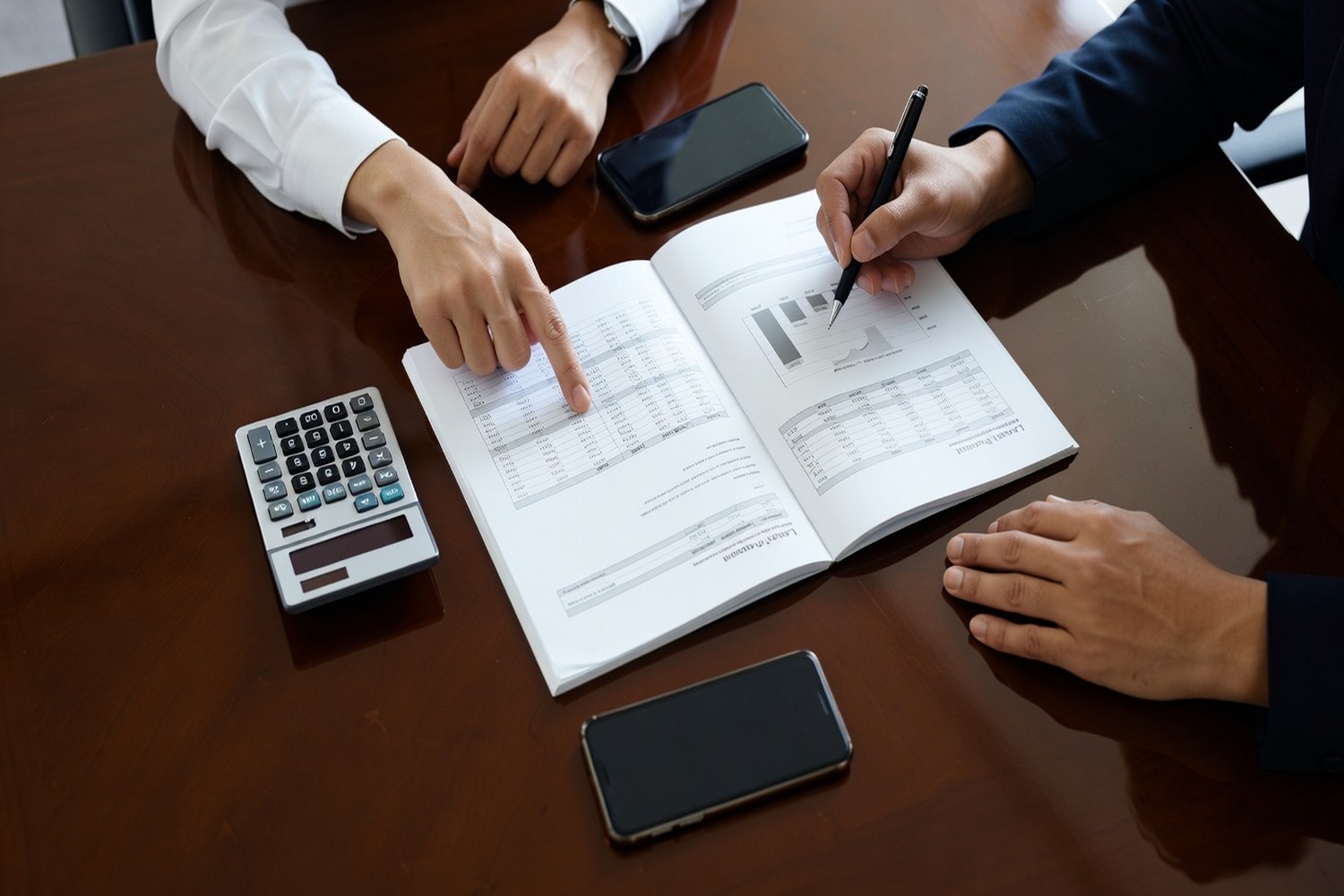
At $500K, the total cost difference between products exceeds $180,000 — two weeks of comparison shopping pays for itself many times over.
Financing Options Ranked by Cost
1. SBA 504 — 5%-7% fixed. The cheapest path for real estate or major fixed asset purchases. Structure: 10% down ($50K), 50% from a bank, 40% from a CDC backed by SBA. Fixed rates tied to the 10-year Treasury: 5-7%. At 6% over 10 years: $5,553/month, $166,333 total interest. Over 20 years: $3,582/month, $359,667 total interest. The 10-year option is cheapest total; the 20-year option minimizes monthly payment. Trade-off: fixed assets only, 60-90+ day timeline, CDC partnership required. For a $500K building purchase, 504 is almost always the right answer.
2. SBA 7(a) Standard — 9.75%-12.25%. In the $150K-$700K tier: 75% guarantee, max rate prime + 5.5% = 12.25% for terms over 7 years. Guarantee fee: 3% of $375K = $11,250. At 11% over 10 years: $6,888/month, $326,560 total interest. The 7(a) handles any business purpose — working capital, inventory, equipment, acquisition, franchise, debt consolidation. At $500K, expect thorough underwriting: full documentation, collateral review, and 45-90 day timeline.
3. SBA Express — same rate caps, 50% guarantee. $500K is the Express ceiling. Processing: 36-hour SBA turnaround versus 5-10 days for Standard. The lower guarantee (50% vs. 75%) means lenders absorb more risk, potentially adding 0.25-0.50% to your rate. On $500K over 10 years, that premium costs $9,500-$19,000 total. Worth it if a 3-4 week time savings makes or breaks your deal.
4. Bank commercial loan — 7%-12%. At $500K, you’re in the heart of community bank commercial lending. Banks that hold your deposits and have watched your business for 3+ years can offer terms that rival SBA — sometimes better, without the guarantee fee. A bank at 9% over 7 years: $7,843/month, $158,777 total interest. That’s $168K less in total interest than SBA 7(a) over 10 years (though with higher monthly payments). Banks also offer creative structures at this size: interest-only periods, seasonal adjustments, and step-up payments.
5. Equipment financing — 5%-18%. If your $500K is for specific assets, equipment financing delivers the biggest savings. A $500K fleet at 7% over 5 years: $9,901/month, $94,055 total interest. Same amount unsecured at 15%: $11,900/month, $213,953 total interest. Collateral discount: $119,898 saved. For pure asset purchases, nothing beats equipment financing on total cost.
6. Online term loan — 15%-35%. At 25% over 3 years: $18,935/month, $181,631 total interest. The monthly payment ($18,935) requires $189K-$237K/month in revenue ($2.3M-$2.8M annually). At $500K, an online loan as permanent financing is financially destructive for all but the highest-revenue businesses. Use only as a 30-60 day bridge with immediate refinancing to SBA or bank.
Lender Comparison Table
| Loan Type | APR Range | Max Term | Speed | Total Cost (est.) | Mo. Payment |
| SBA 504 | 5%-7% | 10-25 yr | 60-90 days | $666K (6%/10yr) | $5,553 |
| SBA 7(a) | 9.75%-12.25% | 10-25 yr | 45-90 days | $827K (11%/10yr) | $6,888 |
| Bank Commercial | 7%-12% | 5-10 yr | 2-6 weeks | $659K (9%/7yr) | $7,843 |
| Equipment | 5%-18% | 3-7 yr | 3-10 days | $594K (7%/5yr) | $9,901 |
| Online Term | 15%-35% | 1-5 yr | 1-3 days | $682K (25%/3yr) | $18,935 |
Total cost = principal + interest at representative rates. SBA rates based on current prime of 6.75%. March 2026.
What Half a Million Dollars Actually Costs
At $500K, the interest numbers are large enough to fund entire business initiatives. Understanding them prevents the single most expensive mistake at this loan size: choosing speed over cost.
SBA 504 at 6% over 10 years: $5,553/month. Total interest: $166,333. Total cost: $666,333. For qualifying projects (real estate, major equipment), this is unbeatable. The monthly payment is manageable for a business doing $665K+ in annual revenue. Over 20 years, the payment drops to $3,582/month but total interest climbs to $359,667 — you’d pay $193K more for the lower monthly payment. Choose the 10-year if cash flow allows; choose 20-year only if the lower payment is necessary for survival during the investment ramp-up.
SBA 7(a) at 11% over 10 years: $6,888/month. Total interest: $326,560. Total cost: $826,560 (plus $11,250 guarantee fee). That’s $327K in interest — more than 65% of the loan principal. The total cost approaches $838K for a $500K loan. These numbers sound alarming, but context matters: if the $500K buys a business doing $800K in annual revenue, the acquisition pays for itself in under 2 years while the loan amortizes over 10.
Bank commercial at 9% over 7 years: $7,843/month. Total interest: $158,777. Total cost: $658,777. The bank option costs $168K less in total interest than SBA 7(a) over 10 years. But the monthly payment is $955 higher ($7,843 vs. $6,888). Over 7 years, you’d need an additional $80K in cumulative cash flow to cover the higher payments — but you save $168K and are debt-free 3 years sooner. For businesses doing $1.5M+ in revenue, the 7-year bank option is mathematically superior.
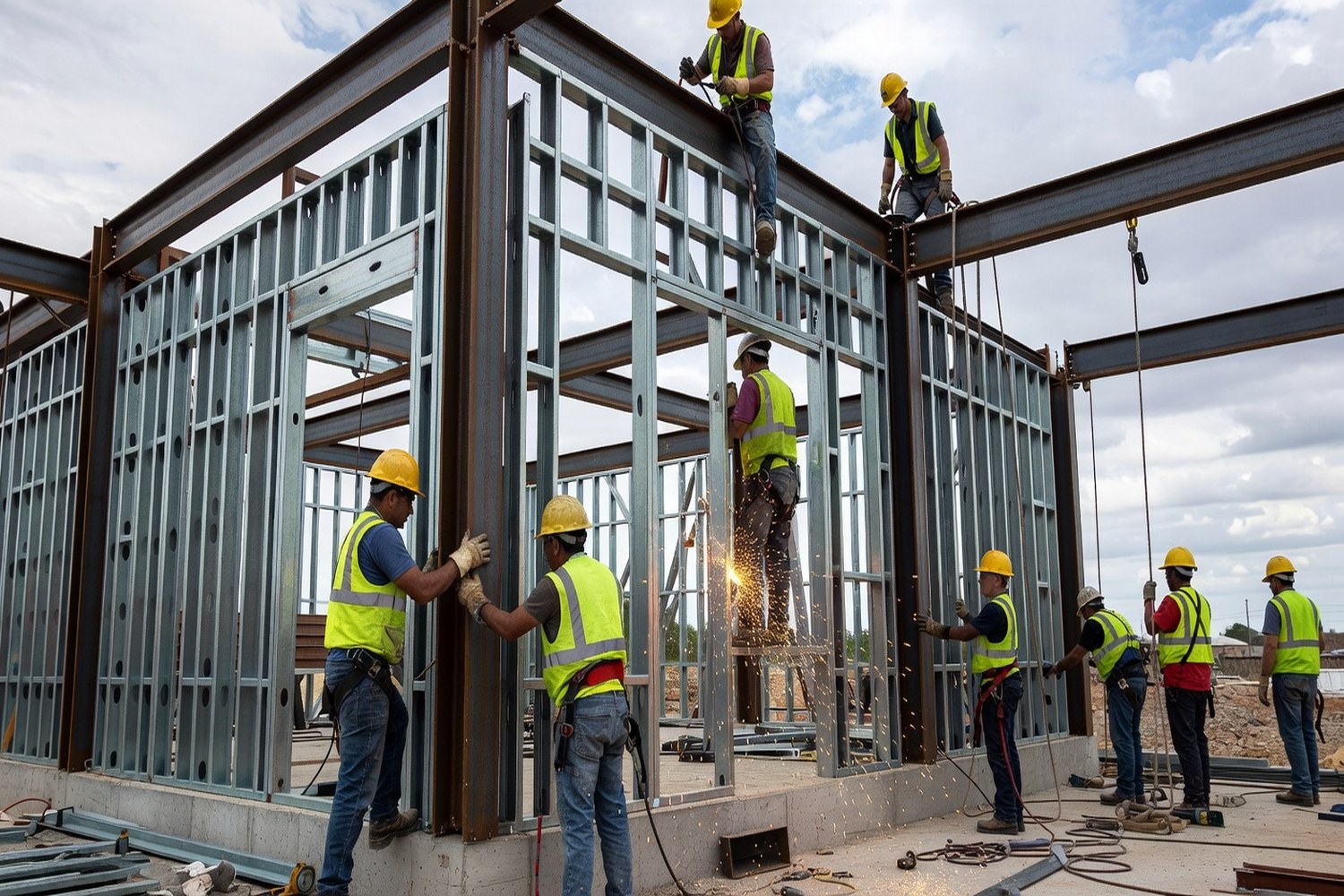
Multi-location buildouts, commercial real estate purchases, and business acquisitions are the most common uses for $500K business loans.
Qualification Requirements
Revenue. At $500K, lenders want $1,000,000-$2,000,000+ in annual revenue. The SBA 7(a) payment at 11% over 10 years ($6,888/month) should stay below 8-10% of gross monthly revenue = $68,880-$86,100/month, or $827K-$1.03M annually. Banks typically want revenue of 2-3x the loan amount for commercial loans at this size, so $1M-$1.5M minimum. For acquisitions, the combined entity’s projected revenue satisfies the requirement.
Credit score. SBA: 700+ personal is the practical minimum for $500K. Technically 680+ can qualify, but at $500K with 680 credit, lenders layer on additional requirements — more collateral, shorter terms, higher rates. 720+ gets preferred treatment and the fastest processing. At this amount, lenders review the full credit report: individual tradelines, utilization trends, inquiries, and any derogatory marks in the past 3-5 years. Banks: 720+ minimum for best rates. Online: 620+ at rates that make the math punishing.
Time in business. Four to five years is the practical minimum at $500K. Some SBA Preferred Lenders consider 3-year businesses with strong financials, but they’re exceptions. The risk calculus is simple: at $500K, a default costs the lender $125K-$250K (after guarantee recovery), so they want maximum confidence in the borrower’s stability and track record.
Collateral. At $500K, significant collateral is required by every lender. SBA: personal guarantee from all 20%+ owners plus available business and personal collateral. The SBA won’t decline solely for lack of collateral, but they’ll file a blanket UCC lien on everything available. Banks: specific pledged collateral covering 60-80% of the loan value — real estate, equipment, inventory, receivables. Equipment financing: the assets are the collateral. Fully unsecured $500K business loans essentially don’t exist in the legitimate lending market.
DSCR. 1.25x minimum, with most lenders at $500K preferring 1.4-1.5x. For the SBA $6,888/month payment, you need $8,610-$10,332/month in net operating income after all expenses and existing debt. Below 1.2x, approval at $500K is nearly impossible from any legitimate source.
What $500K Funds in Practice
Commercial real estate. A medical practice buying a $500K office condo eliminates $6,000-$8,000/month in rent and starts building equity. SBA 504 is the ideal vehicle: 10% down ($50K), fixed rate (5-7%), 20-25 year terms. The monthly 504 payment ($3,582 over 20 years at 6%) is often less than the current rent — the loan pays for itself from day one through eliminated rent expense.
Business acquisition. Buying a competitor doing $800K-$1.5M in revenue. SBA 7(a) covers acquisitions up to $5M, and at $500K you’re in the mid-range. The acquired business’s cash flow supports the debt, and the existing customer base provides immediate revenue. Some SBA lenders specialize in acquisition financing — Live Oak Bank, Celtic Bank, and Newtek are known for this.
Multi-unit franchise expansion. A franchise operator opening units 2 and 3 simultaneously. Combined buildout, equipment, and working capital for two locations runs $400K-$600K. SBA 7(a) is standard, and the existing unit’s performance data strengthens the application. Franchise lenders like ApplePie Capital and Benetrends specialize in multi-unit expansion.
Major equipment and fleet. A construction company acquiring heavy equipment ($300K excavator + $200K support equipment). A logistics company adding 10-15 delivery vehicles. A manufacturer installing a complete production line. Equipment financing at 7% over 5 years keeps total interest to $94K versus $327K on SBA 7(a) over 10 years. If the full $500K is for equipment, the savings are transformative.
How to Apply
Step 1: Define purpose with granular precision. At $500K, lenders expect a comprehensive use-of-funds breakdown with supporting documentation: “$500K: $280K commercial real estate purchase (appraisal attached), $130K buildout and renovation (contractor estimates attached), $90K equipment and fixtures (vendor quotes attached).” Every dollar mapped, every number sourced.
Step 2: Prepare institutional-grade documentation. At $500K: 3 years of business and personal tax returns, current YTD P&L + balance sheet + cash flow statement, 12 months of business bank statements, personal financial statement (SBA Form 413), detailed business plan with 3-5 year financial projections, debt schedule with all existing obligations, collateral documentation (property appraisals, equipment lists, A/R aging, inventory valuation), copies of all licenses, leases, franchise agreements, purchase contracts, and letters of intent. Organization matters — label everything clearly and provide a cover sheet listing all documents.
Step 3: Apply to 3-4 lenders simultaneously. One SBA Preferred Lender (SBA.gov Lender Match or SCORE referral). One community bank or credit union where you have an existing banking relationship. One equipment lender if applicable (Balboa Capital, LEAF Commercial Capital, or bank equipment division). One marketplace (Lendio) for a competing offer. At $500K, lender competition is your most powerful tool.
Step 4: Compare total cost of capital. SBA guarantee fee ($11,250), bank origination fees ($2,500-$10,000), online origination fees (1-6% = $5,000-$30,000), equipment closing costs (0-2%), appraisal fees ($500-$3,000 for real estate). Get the total-dollars-repaid number from every lender — principal + interest + every fee over the full term. That single number is the only honest comparison at this scale.
Frequently Asked Questions
What credit score do I need for a $500,000 business loan?
SBA: 700+ practical minimum, 720+ for best rates and processing. Banks: 720+ for preferred terms. Online: 620+ at 20-35% APR. At $500K, the rate difference between 700 and 740 credit can save $35,000-$60,000 in total interest over the loan term.
What revenue does my business need for $500K?
Most lenders want $1,000,000-$2,000,000+ annual revenue. The SBA 7(a) payment at 11% over 10 years is $6,888/month, which should stay under 8-10% of monthly gross revenue. DSCR of 1.25x minimum, with 1.4x+ preferred at this size.
How long does it take to get a $500K business loan?
Online: 1-3 days. Equipment: 3-10 days. Bank: 2-6 weeks. SBA Express: 30-45 days ($500K is the Express ceiling). Standard SBA 7(a): 45-90 days. SBA 504: 60-90+ days. Having complete documentation ready before applying is the single biggest factor in speed.
Can I use SBA Express for a $500K loan?
Yes — $500K is the exact Express ceiling. Express offers 36-hour SBA turnaround with a 50% guarantee (vs. 75% Standard). The lower guarantee may add 0.25-0.50% to your rate ($9,500-$19,000 over 10 years), but saves 3-4 weeks of processing time. Worth it when deal timing is critical.
Can I get a $500K business loan with bad credit?
Not through any legitimate lender at reasonable terms. Some online platforms accept 620+ but charge 25-35% — on $500K that’s $182K+ in interest over 3 years. SBA and bank loans are not realistic below 680 at this amount. If credit is below 700, investing 6-12 months in improvement before applying can save $50,000-$80,000 in total financing cost.
References
- SBA, “7(a) Loan Program,” sba.gov
- SBA, “504 Loan Program,” sba.gov
- Federal Reserve Bank of Kansas City, “Small Business Lending Survey Q3 2025,” kansascityfed.org
- SBA, “7(a) Fees Effective October 1, 2025 for FY2026,” sba.gov
Keep Reading
- Best Small Business Loans: Compare Rates & Apply Online
- SBA Loans: Compare 7(a), 504 & Microloan Programs
- $450,000 Business Loans
- Best Long-Term Business Loans
- Compare Fast Business Loans
Rates and terms are subject to change. This is not financial advice. All information is for educational and comparison purposes only. SBA rates based on current prime rate of 6.75% as of March 2026. Always compare multiple lenders and verify current terms before committing to business financing.