
How Personal Loans Affect Your Credit Score
A personal loan affects your credit score at three distinct stages: the application (hard inquiry, typically –5 to –10 FICO points), the new account opening



The personal loan market looks different than it did even two years ago. Total outstanding personal loans hit 67.5 million in 2025 — up 7% from the prior year — with nearly four in ten American adults now carrying one, according to TransUnion. The growth is driven by borrowers using personal loans to consolidate high-interest credit card debt, which makes sense: the average personal loan rate of 12.26% is roughly 9 percentage points cheaper than the average credit card rate.
The Federal Reserve cut rates three times in 2025 but held steady in early 2026, leaving the federal funds rate at 3.5%–3.75%. Personal loan rates have started drifting down from their post-pandemic peaks, but the movement is gradual. Borrowers with excellent credit (740+) are seeing rates as low as 6%–8% from the most competitive lenders. Fair-credit borrowers (580–669) are still looking at mid-teens to mid-twenties.
The biggest shift is where borrowers are going. Online lenders now account for 48.6% of personal loan originations, according to TransUnion — nearly half the market. Banks hold 21.6% and credit unions 20.3%. The convenience of a 5-minute online application with same-day prequalification has reshaped borrower expectations. If a lender can’t give you a rate quote in minutes, most people move on.
| Lender | APR Range | Loan Amounts | Orig. Fee | Best For |
|---|---|---|---|---|
| SoFi | 8.99%–29.99% | $5K–$100K | None | Good credit, no fees |
| LightStream | 6.49%–25.49% | $5K–$100K | None | Lowest rates, excellent credit |
| Upgrade | 7.74%–35.99% | $1K–$50K | 1.85%–9.99% | Fair credit, secured option |
| Best Egg | 5.99%–35.99% | $2K–$50K | 0.99%–8.99% | Secured loans, lowest starting rate |
| Prosper | 8.99%–35.99% | $2K–$50K | 1%–9.99% | Fair credit, co-borrower |
| Marcus (Goldman Sachs) | 6.74%–24.74% | $3.5K–$40K | None | Good credit, no fees, flexible payments |
| Discover | 7.99%–24.99% | $2.5K–$40K | None | Direct payoff for consolidation |
The lender comparison table looks neat, but the real question is simpler than it appears. Your credit score narrows the field immediately. With a 740+ score, you’re shopping LightStream, SoFi, and Marcus for the lowest no-fee rates. Between 670 and 739, Discover and Best Egg become competitive. Below 670, Upgrade and Prosper are your realistic options — and adding a co-borrower can meaningfully improve the rate.
After credit score, the decision usually comes down to speed versus cost. Online lenders like SoFi and Upgrade fund in one to two business days. LightStream can fund same-day for existing SunTrust/Truist customers. Credit unions offer the lowest rates — federal credit unions cap at 18% APR — but funding takes three to seven business days and you need to be a member.
Then there’s the fee question. SoFi, LightStream, Marcus, and Discover charge zero origination fees. Upgrade, Prosper, and Best Egg charge 1%–10% of the loan amount, deducted from your proceeds. On a $20,000 loan, a 5% origination fee means you receive $19,000 but pay interest on $20,000. That’s why APR — which folds in fees — is the only honest comparison number.
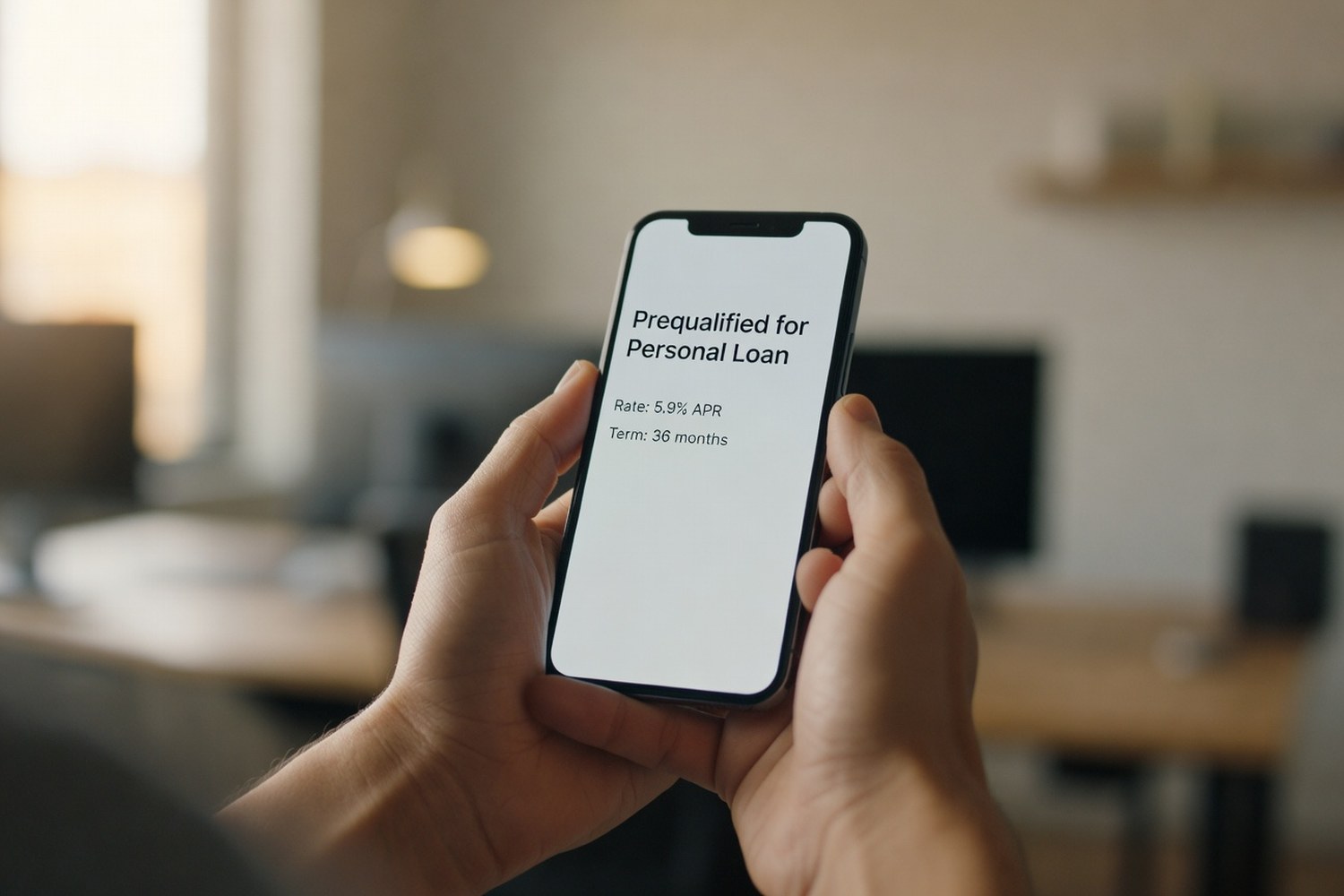
Your credit score is the single biggest factor in the rate you’ll get. Here’s what borrowers are actually seeing in early 2026, based on aggregate lender data.
Excellent credit (740+): 6%–10% APR. At this tier, no-fee lenders like LightStream and SoFi are hard to beat. You’re in the driver’s seat — lenders want your business. Shop aggressively and don’t settle for the first offer.
Good credit (670–739): 10%–16% APR. This is the most competitive tier in terms of lender options. You qualify at most major lenders, and the rate difference between the best and worst offer can easily exceed 5 percentage points. Prequalifying with three or four lenders is especially valuable here.
Fair credit (580–669): 16%–28% APR. Your options narrow to lenders like Upgrade, Prosper, Upstart, and some credit unions. A co-borrower with stronger credit can drop your rate significantly — Upgrade reports rate reductions of 1–10 points on joint applications. Consider whether a secured loan (using your vehicle as collateral) makes sense for the savings.
Poor credit (below 580): 28%–36% APR, if you qualify at all. At this level, a credit union membership or a secured personal loan might be your best path. Be extremely cautious of lenders offering rates above 36% — consumer advocates widely consider that the threshold for predatory lending.
Prequalification is the most valuable tool in the personal loan shopping process, and it’s free. You provide basic information — name, address, income, employment, and the last four digits of your SSN — and the lender runs a soft credit check to show you estimated rates and terms. No commitment, no impact to your credit score, no obligation to proceed.
The hard credit inquiry only happens when you formally accept a specific offer and submit a full application. And even then, FICO’s scoring model treats multiple personal loan inquiries within a 45-day window as a single event. VantageScore uses a 14-day window. Either way, shopping around is designed into the system — you’re not penalized for comparing.
Most major lenders — SoFi, LightStream, Upgrade, Prosper, Marcus, Discover, Best Egg, Upstart — offer prequalification through their websites. The process takes two to three minutes per lender. With a cup of coffee and fifteen minutes, you can have four or five real rate quotes sitting side by side.
One thing prequalification won’t tell you: the final rate. The estimated APR you see during prequalification is close — usually within a percentage point — but the final rate gets set after the hard credit pull and income verification during the full application. Treat prequalification rates as a reliable ranking of which lender will give you the best deal, even if the exact number shifts slightly.

Debt consolidation is the most common reason — and often the smartest. If you’re carrying $15,000 across three credit cards at 22% APR each, a personal loan at 11% saves you roughly $1,650 in interest per year. Plus, you go from juggling three payments to one fixed monthly payment with a clear payoff date. Some lenders (Upgrade, Discover, LendingClub) will even pay your creditors directly.
Home improvements make sense when the project adds value. A kitchen remodel or bathroom update that costs $12,000 financed at 10% over three years adds less than $2,000 in interest — and the improvement could add $15,000–$20,000 to your home’s resale value. Just don’t finance purely cosmetic upgrades with borrowed money.
Medical expenses that insurance won’t cover are a legitimate use, especially when the alternative is a medical credit card with a deferred-interest trap. A personal loan’s fixed rate and fixed term are transparent in a way that “12 months same as cash” medical financing often isn’t.
Major purchases — a wedding, a cross-country move, necessary vehicle repairs — can justify a personal loan when you’ve done the math and the monthly payment fits your budget. The key word is “necessary.” Financing a vacation or discretionary purchase with borrowed money at 12%+ interest rarely makes financial sense.
Origination fees above 6%. Some lenders charge up to 12%, which dramatically inflates the true cost. On a $10,000 loan, a 12% origination fee means you receive $8,800 but repay $10,000 plus interest. If the best offer you can find carries a fee above 6%, look at no-fee lenders or a credit union instead.
Variable-rate personal loans. They’re rare, but they exist. A fixed rate means your payment never changes regardless of what the Fed does. Variable rates can spike if interest rates rise — and you won’t know your total cost until the loan is paid off. Stick with fixed.
Loans from unfamiliar lenders with no physical presence. Check the Better Business Bureau rating and read recent reviews before providing your SSN. Legitimate lenders are transparent about their bank partners (Upgrade uses Cross River Bank and Blue Ridge Bank, for example). If a lender won’t tell you who’s actually issuing the loan, keep looking.
Borrowing more than you need. It’s tempting to round up — “$8,000 for the repair, but maybe $12,000 just in case.” Every extra dollar accrues interest for the full loan term. Calculate what you need, add a small buffer (5%–10%), and request exactly that amount.
Getting a good personal loan isn’t complicated, but it does require about an hour of focused effort. Check your credit score first — your bank or credit card app probably shows it for free. Then prequalify with three to five lenders across different channels: an online lender, a no-fee option, and your bank or credit union. Compare the APR (not interest rate) on each offer, factor in origination fees and funding speed, and pick the one that costs the least for your situation.
The difference between a good personal loan and an expensive one is almost always the same thing: whether the borrower compared offers or accepted the first one they found.
Rates and terms are subject to change. This content is for informational and educational purposes only and does not constitute financial advice. Always review the specific terms of any loan offer before accepting.
As of March 2026, the average personal loan rate is 12.26% according to Bankrate monitor data, based on a 700 FICO score, $5,000 loan, and 3-year term. The lowest available rates from top online lenders start around 6.20%–6.49% for borrowers with excellent credit and shorter terms. Credit unions average 10.64%, while commercial banks average 11.65%.
Most lenders offer personal loans from $1,000–$2,000 at the low end up to $50,000–$100,000 at the high end. The maximum you’ll actually qualify for depends on your income, credit score, and existing debt. Lenders like SoFi and LightStream go up to $100,000 for well-qualified borrowers, while Upgrade and Prosper cap at $50,000.
Online lenders are fastest — SoFi, Upgrade, and Best Egg typically fund within one to two business days after you accept an offer and clear verifications. LightStream offers same-day funding for certain applicants. Credit unions and banks take three to seven business days on average. If you need emergency funds, prioritize lenders that advertise next-day or same-day funding.
Prequalification (checking your rate) uses a soft inquiry and has zero impact on your score. The full application triggers a hard inquiry, which typically reduces your score by 2–5 points temporarily. Multiple hard inquiries for personal loans within a 14- to 45-day window are treated as a single inquiry by most scoring models, so shopping around causes minimal additional impact.
Shorter terms (2–3 years) mean higher monthly payments but significantly less total interest. Longer terms (5–7 years) reduce your monthly payment but increase total cost substantially. On a $15,000 loan at 11%, a 3-year term costs about $4,400 in interest while a 5-year term costs about $7,500. Choose the shortest term where the monthly payment fits comfortably in your budget.
1. Bankrate. “Average Personal Loan Interest Rates in March 2026.” bankrate.com
2. TransUnion. “Consumer Credit Industry Snapshot, September 2025.” transunion.com
3. Federal Reserve Bank of St. Louis. “Finance Rate on Personal Loans at Commercial Banks.” fred.stlouisfed.org
4. Consumer Financial Protection Bureau. “What Is a Credit Inquiry?” consumerfinance.gov
5. National Credit Union Administration. “Credit Union and Bank Rates 2025 Q4.” ncua.gov
• Best Personal Loans: Compare Rates Online
• How to Shop for a Personal Loan
• Best Personal Loans for Debt Consolidation
• Upgrade vs. Prosper: Which Lender Is Right for You?
• Best Personal Loans for Good Credit (670–739)
A personal loan affects your credit score at three distinct stages: the application (hard inquiry, typically –5 to –10 FICO points), the new account opening

The most common personal loan fee is the origination fee, which ranges from 1% to 10% of your loan amount and gets deducted before you

A personal loan is the cheaper choice for borrowing $3,000 or more when you need longer than 60 days to repay — the average personal

You can prequalify for a personal loan in under five minutes at most online lenders — SoFi, Upstart, Prosper, Best Egg, and Upgrade all let

Most personal loan lenders approve borrowers with a debt-to-income ratio (DTI) under 50%, though the best rates and terms go to applicants below 36%. SoFi,

The prime rate forecast for 2026 is one of the most closely watched financial data points of the year — and for good reason. Every