
Prime Rate Forecast 2026: Where Rates Are Headed After Fed Cuts
The prime rate forecast for 2026 is one of the most closely watched financial data points of the year — and for good reason. Every

PrimeRates provides access to personalized business loan offers through our simple and quick pre-qualification application. Once you’re pre-qualified, you can select the best offer for you and finalize the business loan application with the lender.
1
Our simple application takes less than 5-7 minutes to complete.
2
Choose the offer that best fits your needs by comparing loan amounts and terms.
3
Finalize your loan offer with the lender you selected to receive your funds.

Small businesses are often referred to as the lifeblood of the local economy. As a vital part of the community, small business owners help provide jobs, keep money flowing throughout the area, and contribute to economic growth and development.
In fact, in the state of North Carolina, more than 45% of the workforce (1.7 million North Carolinians) consists of employees working under a small business operation.
In addition, total reported new lending to North Carolina businesses via loans of $1 million or less exceeded $7.5 billion in 2019, and the rate of lending via small business loans has held fairly steady in the state since 2010.
We’ve compiled a quick guide for small business owners in the state of North Carolina to learn more about loans and other forms of financial assistance available to help your business grow and succeed.
There are many ways that your small business in North Carolina can benefit by taking out a loan. Small business loans help business owners gain access to the funds they need in order to start a business, cover operating expenses, pay for emergencies, and finance expansion costs.
Loans give business owners access to opportunities without needing to have cash up front.
Small business loan proceeds can be used to cover a variety of expenses ranging from day-to-day operations and staffing needs to real estate purchases and equipment costs.
Business owners in North Carolina have several financing options to take advantage of:
There are a variety of programs and resources available to business owners located in North Carolina.
The U.S. Small Business Administration (SBA) is a good starting point for any business to take advantage of resources and information about financing options including loans, investment capital, disaster assistance, surety bonds, and grants. SBA-backed loans are a popular option for many entrepreneurs.
In addition, business owners in North Carolina can utilize the following resources:
There are a variety of grants available to applicants in North Carolina. Grants are gifts of financial assistance designed to help business owners succeed and do not need to be paid back.
Many grant programs today focus on providing assistance to specialized sectors of the economy. For example, grant programs are available to help aid rural development or minority-owned businesses.
Small business grants can be obtained from government agencies, corporations, and organizations.
Local grant options in North Carolina include:
In addition to the grants listed above, business owners can also check state agencies, federal agencies like the SBA and USDA and even agencies at the municipal or county level as well.
Business owners in North Carolina should take advantage of the following tips when applying for a loan:
Consider your credit: It’s very important to check your credit score and verify the accuracy of the information on your credit report before applying for any loan, and business loans are no exception. Having a Prime credit score (660 or above) grants applicants access to the best loan offers and the lowest interest rates. If you have less-than-ideal credit, you can take steps to improve your score before applying or consider using a cosigner on your loan application.Gather your paperwork: In addition to a solid business plan, most lenders that offer small business loans will ask for a variety of additional paperwork to verify information about your business. Be prepared by gathering this documentation ahead of time. You will most likely need to prove how long you have been in business as well as what your current annual revenue is. This is because many lenders have minimum requirements before they will approve applicants for a business loan. For example, some financial institutions want business loan applicants to have been in business for at least 1 year. Financial documentation you might need includes: profit and loss statements, financial projections, earnings reports, tax returns, and bank statements.
Consider alternative lenders: Credit unions and online lenders can offer some of the best loan deals due to their decreased overhead. Business owners can take advantage of low interest rates and flexible loan terms by using these lenders. Credit union membership is typically based on your place of employment, education, or residency. Top-rated credit unions in the state of North Carolina include Navy Federal Credit Union, State Employees’ Credit Union, Fort Bragg Federal Credit Union, Corning Credit Union, Alliance Credit Union, Mountain Credit Union, and Carolinas Telco Federal Credit Union. Online lenders may be easier to qualify and can often deliver funding faster too.
To compare rates and get the best deal on your North Carolina small business loan, check personalized offers at PrimeRates. By submitting one application, you can receive offers that your business actually qualifies for – without impacting your credit score. PrimeRates is committed to helping businesses thrive with a little help from our powerful network of lending partners.
Unlock the best business loan offers in North Carolina. . . check offers online today!
The prime rate forecast for 2026 is one of the most closely watched financial data points of the year — and for good reason. Every

The SBA 7(a) loan is the gold standard of small business financing for a reason. Backed by the U.S. Small Business Administration, these loans offer
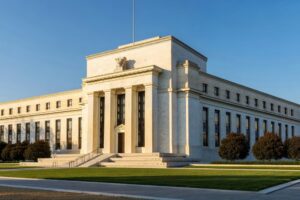
If you have a credit card, a mortgage, a personal loan, or any kind of variable-rate debt, the prime rate is quietly shaping how much

Every time the Federal Reserve adjusts interest rates, financial headlines light up with talk about the prime rate. But what does that actually mean for

If you have spent any time reading about interest rates, you have probably seen three terms used almost interchangeably: the prime rate, the federal funds

The prime rate has been the backbone of American consumer lending for the better part of a century. Today it sits at 6.75 percent. In