
How Personal Loans Affect Your Credit Score
A personal loan affects your credit score at three distinct stages: the application (hard inquiry, typically –5 to –10 FICO points), the new account opening


A sunroom sits in an interesting price sweet spot: expensive enough that most people can’t pay cash, but affordable enough that a personal loan handles it comfortably. It’s the rare home addition where you don’t need a construction loan or a second mortgage — you just need a reasonable personal loan and a contractor who knows what they’re doing.
The national average for a sunroom addition is $47,000, but that number hides an enormous range. A screened-in porch conversion (adding screens, a roof, and a door to an existing deck or patio) runs $4,000-$15,000 — barely a financing event. A three-season patio room (aluminum or vinyl frame with single-pane windows, no insulation, no HVAC) costs $8,000-$30,000. A four-season sunroom (insulated walls, double or triple-pane windows, HVAC connection or ductless mini-split) runs $30,000-$80,000. And a custom conservatory (glass roof, brick knee walls, high-end finishes) can push past $100,000.
Here’s the cost math most people don’t do until it’s too late: the sunroom structure is only 60-70% of your total cost. Foundation ($1,000-$6,000), permits ($200-$500), electrical ($1,500-$4,000), HVAC extension ($2,300-$8,000 for a four-season room), and interior finishes ($500-$5,000) add 30-40% on top of the quoted sunroom price. A $35,000 quoted sunroom becomes a $45,000-$50,000 project. Finance the total — not just the sunroom structure.
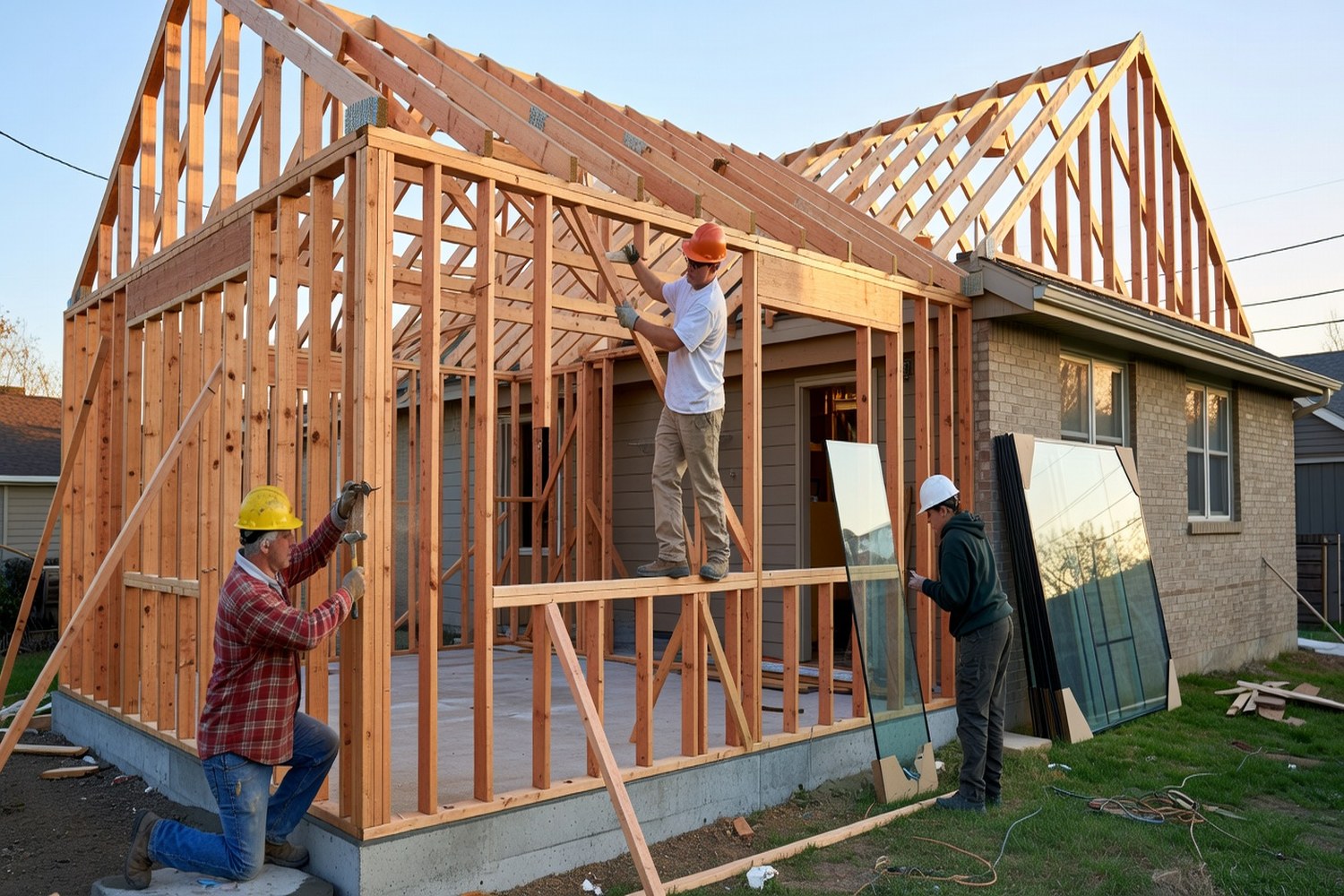
The sunroom structure is only 60-70% of total cost — add foundation, electrical, HVAC, and permits for a realistic financing target.
1. Personal loan (best for sunrooms under $50K). No collateral, no appraisal, funding in 1-3 days. LightStream offers up to $100K with terms up to 20 years for home improvement — keeping monthly payments low on larger sunroom projects. On a $40,000 four-season sunroom at 8% over 120 months: $485/month, $18,240 total interest. The simplicity is the key advantage: get approved, receive money, pay the contractor on your schedule. No construction draw process, no inspector visits, no staged disbursements.
2. Home equity loan (best for $40K+ sunrooms with equity). Lower rates (7-9%) and potential tax deductibility if used for home improvement. On $50,000 at 7.5% over 15 years: $463/month, $33,400 total interest — lower monthly payment than a personal loan but higher total interest due to longer term. Your home is collateral, closing takes 2-4 weeks, and you’ll need an appraisal. Best for: homeowners with significant equity who want the lowest possible rate and potential tax benefits.
3. HELOC (best for sunrooms built in phases). Some homeowners build a three-season room first, then convert to four-season later — or add the sunroom structure now and finish the interior next year. A HELOC’s revolving draw gives you access to funds as each phase progresses without paying interest on money you haven’t used yet. Variable rate (7-9%), draw period of 10 years.
4. Sunroom company financing (compare first, accept second). Patio Enclosures, Champion Windows, and most sunroom companies offer financing through GreenSky, HFS Financial, or similar partners. Convenience: you apply during the design consultation. The catch: in-house financing rates are typically 1-3% higher than what you’d get pre-qualifying independently. A $40,000 sunroom at 11% (company financing) vs. 8% (your pre-qualified rate) costs $3,900 more in interest over 7 years. Always get your own pre-qualification first, then compare to the company’s offer.
5. Prefab kit + personal loan (best for budget-conscious DIYers). Prefab sunroom kits from companies like EasyRoom, Temo, or SunPorch cost $10,000-$30,000 for the kit — roughly half the price of a custom-built sunroom. Add $2,500-$5,000 for foundation and assembly (some homeowners DIY the assembly). Total: $12,500-$35,000. A personal loan at 9% over 60 months on $20,000: $415/month, $4,912 total interest. Best for: three-season rooms where you want to minimize cost.
| Option | Rate | Amount | Term | Best For |
| LightStream | 6.49%-25.49% | $5K-$100K | 2-20 years | Lowest rate, longest terms |
| SoFi | 8.74%-29.99% | $5K-$100K | 2-7 years | No fees, same-day funding |
| Acorn Finance | 6.99%+ | Up to $100K | Up to 12 years | Multi-lender marketplace |
| Home Equity | 7%-9% fixed | Up to 85% LTV | 5-30 years | $40K+ sunrooms with equity |
| GreenSky (via contractor) | 9%-26% | Up to $65K | 2-12 years | Checkout convenience |
| Upgrade | 8.49%-35.99% | $1K-$50K | 2-7 years | Fair/bad credit (580+) |
Rates are general ranges as of early 2026. GreenSky rates depend on the contractor’s plan. Pre-qualify to see your specific offer.
LightStream — the standout for sunroom financing. Their home improvement category covers sunrooms explicitly, with rates from 6.49% and terms up to 20 years. The 20-year option is a game-changer for $40K-$60K sunrooms: $50,000 at 7.5% over 240 months is only $402/month versus $786/month over 84 months. Same-day funding, zero fees, Rate Beat guarantee. Requires roughly 695+ credit.
SoFi — best for sunroom projects where timeline is uncertain. Sunroom construction depends on weather, permit timing, and contractor scheduling. SoFi’s unemployment protection and no-fee structure give you flexibility if the project takes longer than expected. Rates from 8.74%, up to $100K, same-day funding. On $30,000 at 10% over 60 months: $637/month, $8,243 total interest.
Acorn Finance — multi-lender marketplace that many sunroom companies already partner with. If your contractor suggests Acorn, you can also go directly to acornfinance.com to compare offers from multiple lenders in one application. Rates from 6.99%, up to $100K, terms up to 12 years. One application, multiple offers — a more efficient comparison than applying at individual lenders.
Screened-in porch ($4,000-$15,000). The entry-level option: add screens, a roof, and a door to an existing deck or patio. No windows, no insulation, no HVAC — usable in warm months only, keeps bugs out. Can be DIY-assembled from a kit ($2,000-$5,000 materials) or contractor-built ($4,000-$15,000 installed). Barely a financing event — a 0% credit card or small personal loan handles this easily.
Three-season patio room ($8,000-$30,000). Single-pane windows (or operable panels) in an aluminum or vinyl frame. No insulation, no climate control — comfortable spring through fall in most climates, but too cold in winter and too hot in summer without supplemental heat/cooling. Prefab kits ($10,000-$20,000 installed) keep costs down. This is the sweet spot for personal loan financing: $15,000-$25,000 at 9% over 60 months is $311-$519/month.
Four-season sunroom ($30,000-$80,000). Insulated walls, double or triple-pane low-E glass, foam-core roof panels, and HVAC connection (ductwork extension or ductless mini-split). Usable year-round in any climate. Requires a proper foundation (concrete slab or frost-depth footings) and building permits. This is a real room addition — just with more glass than a standard addition. Finance with a personal loan (under $50K) or home equity (above $50K).
Custom conservatory ($60,000-$120,000+). Glass roof structure (either flat or curved), brick or stone knee walls, decorative ridgecaps, and high-end finishes. The architectural statement version of a sunroom. Requires structural engineering and specialized contractors. Finance with home equity or construction loan.
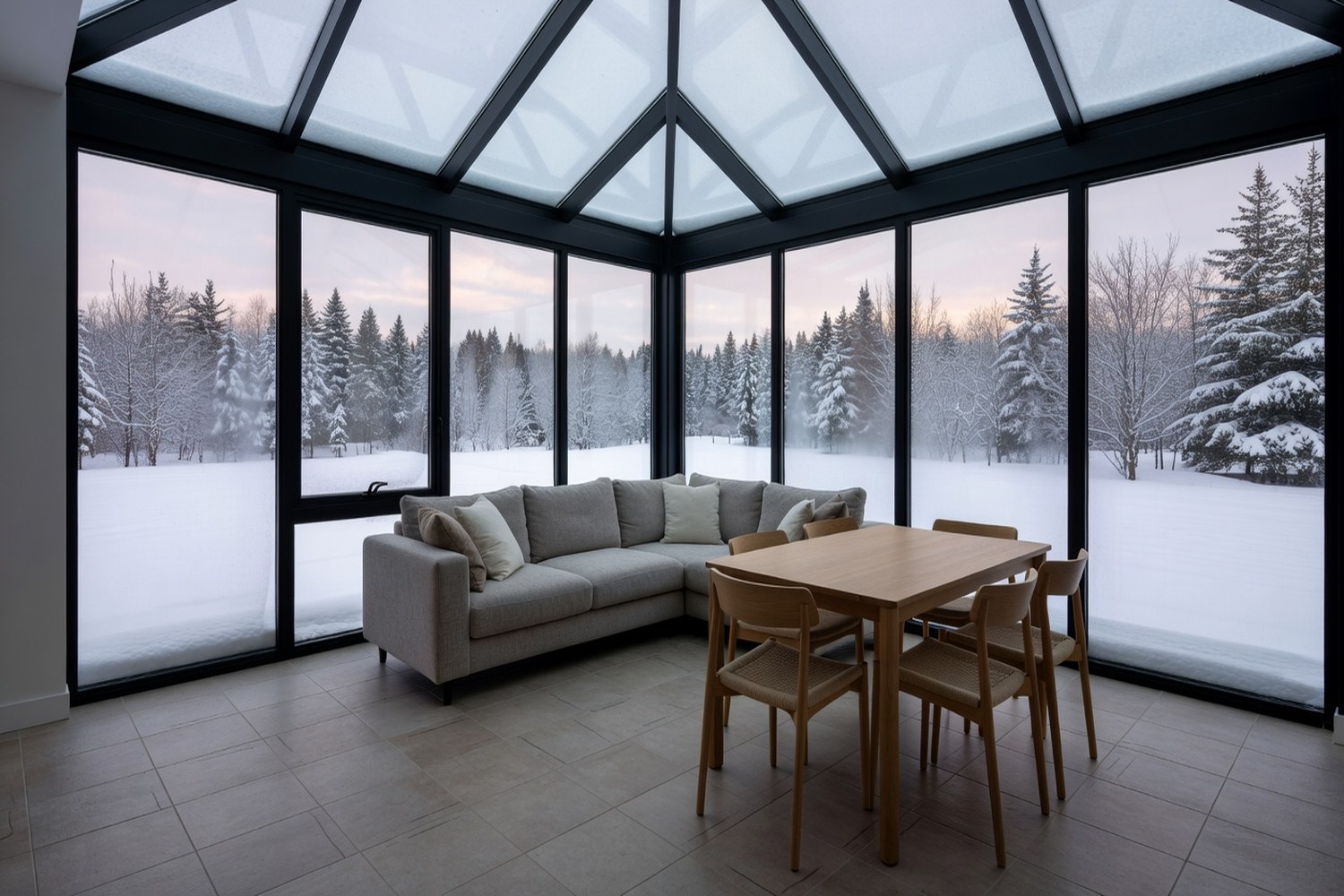
A four-season sunroom ($30,000-$80,000) adds year-round living space at roughly half the cost of a traditional home addition.
Yes — and the numbers are better than most people expect for a room that’s essentially a lifestyle addition.
Sunrooms recover 50-75% of their cost at resale, according to industry data. A $40,000 four-season sunroom adds approximately $20,000-$30,000 to your home’s value. Four-season rooms return more than three-season rooms because buyers see them as usable living space, not just a seasonal porch. In warm-climate markets (Florida, Arizona, Texas, Georgia), sunrooms can recover even higher percentages because outdoor living is a year-round priority.
The value goes beyond raw ROI. Sunrooms make homes sell faster — they’re a differentiating feature that stands out in listing photos and open houses. A home with a sunroom full of natural light photographs dramatically better than one without. In competitive markets, that visual appeal can be the difference between multiple offers and sitting on the market.
The worst ROI scenario: spending $80,000 on a custom conservatory in a neighborhood where homes sell for $250,000. The improvement exceeds what the market can support. A $25,000-$40,000 sunroom on a $350,000-$500,000 home is the value sweet spot — the improvement fits the price range and adds genuine buyer appeal.
Step 1: Decide three-season or four-season. This single decision determines your budget range ($8,000-$30,000 vs. $30,000-$80,000) and your financing path (small personal loan vs. larger personal loan or home equity). Be honest about how you’ll use the space — a three-season room you enjoy 7 months a year beats a four-season room you financed but rarely sit in.
Step 2: Get 2-3 contractor bids including all costs. Insist on all-in bids: foundation, structure, windows, electrical, HVAC (if four-season), permits, and interior finishes. Add 15% contingency for unforeseen issues (drainage problems, code-required upgrades). This is your financing target.
Step 3: Pre-qualify at 3+ lenders independently. LightStream (best rates), SoFi (no fees), Acorn Finance (multi-lender). If credit is below 650, add Upgrade. Takes 15-20 minutes. Do this before your contractor consultation so you have your financing established.
Step 4: Compare against contractor financing. When the contractor offers GreenSky or HFS financing, compare APR, monthly payment, and total cost against your pre-qualified offers. Use whichever costs less. If the rates are similar, the contractor’s option might be more convenient — but watch for deferred interest terms.
Step 5: Time the loan to construction. Sunroom construction takes 2-6 weeks for prefab, 4-12 weeks for custom. Apply for financing 2-4 weeks before the scheduled start date. Don’t fund months early while the project is in the permit stage.
Screened porch: $4,000-$15,000. Three-season room: $8,000-$30,000. Four-season sunroom: $30,000-$80,000. Custom conservatory: $60,000-$120,000+. The national average is $47,000. Add 15% contingency and 30-40% above the quoted structure price for foundation, electrical, HVAC, and permits.
For sunrooms under $50K: a personal loan from LightStream (6.49%+, terms up to 20 years) or SoFi (8.74%+, no fees). For $50K+ with home equity: a home equity loan at 7-9%. Always pre-qualify independently before accepting contractor financing.
Yes. Sunrooms recover 50-75% of their cost at resale. A $40,000 four-season sunroom adds $20,000-$30,000 in property value. Four-season rooms return more than three-season because buyers view them as usable living space year-round.
Three-season costs half as much ($8,000-$30,000 vs. $30,000-$80,000) and works well if you’ll primarily use it spring through fall. Four-season is worth the investment in cold climates where you want year-round use, or if you’re planning to sell and want maximum buyer appeal. You can convert three-season to four-season later for $3,000-$20,000.
Yes. Upgrade accepts 580+, Acorn Finance connects you with multiple lenders for various credit profiles. Expect 15-36% APR. For a $20,000 three-season room, even a 20% rate over 60 months ($529/month) costs less than the deferred interest penalty on many contractor financing plans.
Rates and terms are subject to change. This is not financial advice. All information is for educational and comparison purposes only. Sunroom costs vary significantly by type, size, materials, and region. Always get multiple contractor bids and verify current lender rates before committing.
A personal loan affects your credit score at three distinct stages: the application (hard inquiry, typically –5 to –10 FICO points), the new account opening

The most common personal loan fee is the origination fee, which ranges from 1% to 10% of your loan amount and gets deducted before you

A personal loan is the cheaper choice for borrowing $3,000 or more when you need longer than 60 days to repay — the average personal

You can prequalify for a personal loan in under five minutes at most online lenders — SoFi, Upstart, Prosper, Best Egg, and Upgrade all let

Most personal loan lenders approve borrowers with a debt-to-income ratio (DTI) under 50%, though the best rates and terms go to applicants below 36%. SoFi,

The prime rate forecast for 2026 is one of the most closely watched financial data points of the year — and for good reason. Every